
How to make peach gum dessert or tong sui, a Chinese jelly-like sweet soup that’s nourishing, and full of skin-loving ingredients.

If I could only choose one dessert to have for life, it would be Peach Gum Dessert, or 桃膠糖水 (táo jiāo táng shuǐ, also known as peach gum tong sui).
It’s light, nourishing, naturally sweet, and often praised as a beauty-boosting treat, thanks to its reputation for supporting collagen production.
And real talk: anything beauty… I’m in!
It’s the kind of dessert my friends and I would crave after dinner, when we want something light and not too rich, but comforting. We love it especially for late-night meetups, when all your typical dessert shops (i.e. ice cream and cakes) are already closed for the day, but Chinese dessert cafes remain open and bustling with people!
I started making peach gum at home a few years ago when I noticed dehydrated peach gum were being sold at the supermarket. Before that, it was something you’d only find at traditional Chinese medicine (TCM) shops or herbal stores.
It tastes amazing, the jelly-like texture is super satisfying and feels almost medicinal in the best way. The best part? It’s way easier to make than it looks.
What is Peach Gum Dessert (桃膠糖水)?
Peach gum is a natural resin harvested from wild peach trees.
It hardens into amber-like granules when dried, but once soaked overnight, it transforms into soft, jelly-like pearls with a bouncy, jelly-like texture! It doesn’t have any flavour just by itself.
It’s often used in traditional Chinese desserts, particularly sweet soups or tong sui (糖水), which are light, subtly sweet broths often served warm or cold.
While peach gum doesn’t contain collagen in the traditional sense (which comes from animal sources), it is high in plant-based polysaccharides. These help with skin hydration and may support the body’s own collagen production.
Whether or not the collagen claims are 100% proven, I love the idea of a dessert that’s filled with ingredients that are actually good for you.
In this version of peach gum dessert, the jelly is simmered with goji berries, lotus seeds, dried longan, and red dates – all common ingredients in Chinese medicinal cooking, each with their own benefits. Let’s get into it!
Table of Contents
- What is Peach Gum Dessert (桃膠糖水)?
- Why You’ll Love This Peach Gum Recipe
- Key Ingredients for Peach Gum Dessert
- Key Steps to Making Peach Gum Dessert
- How to Serve
- Tips & Tricks
- Storing and Reheating
- More Recipes Like This
Why You’ll Love This Peach Gum Recipe
- Super easy to make at home!
- Supports hydrated, radiant skin with nourishing ingredients
- Light and gentle on the stomach
- Can be served hot or cold depending on your mood or the weather
- Naturally gluten-free and vegan
Key Ingredients for Peach Gum Dessert
I’m able to purchase all of these ingredients easily at my local supermarkets (sometimes they’re even sold as a set!). Otherwise, they’re available at Chinese herbal TCM shops, Chinese Asian stores or online.
Here are the ingredients that we’re using to make this dessert today:
Peach Gum
- The star of the show. Once soaked and cooked, it turns into jelly-like pearls that are soft, slippery, and slightly chewy. It doesn’t have much flavour, but adds an incredible texture.
How to Buy and Choose the Best Peach Gum for Dessert
Not all peach gum is created equal! Some require a lot more cleaning, while others are much easier to prep and cook. Here’s what to look out for when buying peach gum:
1. Look for Food-Grade Peach Gum: Always check that it’s specifically labelled for cooking or food use. Avoid any cosmetic-grade peach gum meant for skincare or external use. Food-grade peach gum is safe to consume and usually sold in dried chunks or granules.
2. Look for Clearer, Amber-Coloured Chunks: The clearer and more transparent the gum, the cleaner it cooks! And less time spent picking out black specks or bark fragments. If you have the means, Grade A peach gum are the best and tend to have fewer impurities.
3. Avoid Too Many Tiny, Cloudy Bits: Larger, clearer ones are best. Anything tiny will tend to break down easily during cooking. They’re also a lot more cumbersome to pick out impurities.
4. BONUS! Look for Pre-Cleaned Labels (Optional but Handy!): Some brands sell “cleaned” or “triple-cleaned” peach gum, which means it has fewer impurities and is easier to prep. You’ll still need to soak and rinse it, but you’ll spend far less time picking out dark specks.
Everything Else
Goji Berries
- These tiny red berries are packed with antioxidants and add a natural, gentle sweetness. They’re also great for eye and skin health, and are a classic ingredient in Chinese herbal soups and desserts. I especially love goji berries! I have a big pack in my pantry at all times and I’d just toss them in my soups!
Lotus Seeds
- Mild in flavour and slightly starchy, lotus seeds give the dessert a bit more body and heartiness. In traditional Chinese medicine, they’re said to support digestion and calm the mind.
Dried Longan
- Sweet and slightly smoky, dried longan adds a comforting richness to the soup. It’s often used to support better sleep and reduce fatigue.
Red Dates / Jujubes
- These dried fruits are a staple in Chinese cooking and traditional remedies, believed to support blood circulation and boost energy levels. They’re slightly chewy and adds natural sweetness to the dessert.
Rock Sugar
- A common sweetener in Chinese desserts, rock sugar has a cleaner, more delicate sweetness than regular white sugar. It balances the flavours while still letting the natural sweetness of the dried fruits here shine.
What Happens If You Use Regular Sugar Instead of Rock Sugar?
Rock sugar has a more subtle, rounded sweetness, while regular granulated sugar (especially white sugar) can taste a bit sharper and more direct.
However, the texture and consistency won’t be affected. So don’t worry, it won’t mess up the peach gum, the jelly-like texture, or how the dessert comes together. The change is really in flavour, not function.
Optional but highly recommended
White Fungus / Snow Fungus
Often added to beauty soups for its jelly-like texture and skin-hydrating benefits. It’s sometimes called “plant-based bird’s nest” because of its reputation in TCM for boosting immunity and supporting glowing skin.
It is recommended to soak it in water for about 1 hour, or until it rehydrates.
My cheat hack is to use hot boiling water, which will soften it in 10 minutes. I let it complete its softening while simmering in the tong sui.
Once rehydrated, it turns soft and slightly crunchy with a cloud-like appearance. If you have some on hand, throw it in for extra texture and nutritional value.
Note: Don’t feel too stressed out that you don’t have this many ingredients in your tong sui! I’ve made so many variations of this dish, and to be honest, this version is the most ‘complete’ that I’ve made so far – simply for the sake of doing this blog post.
Key Steps to Making Peach Gum Dessert
1. Prep the Peach Gum
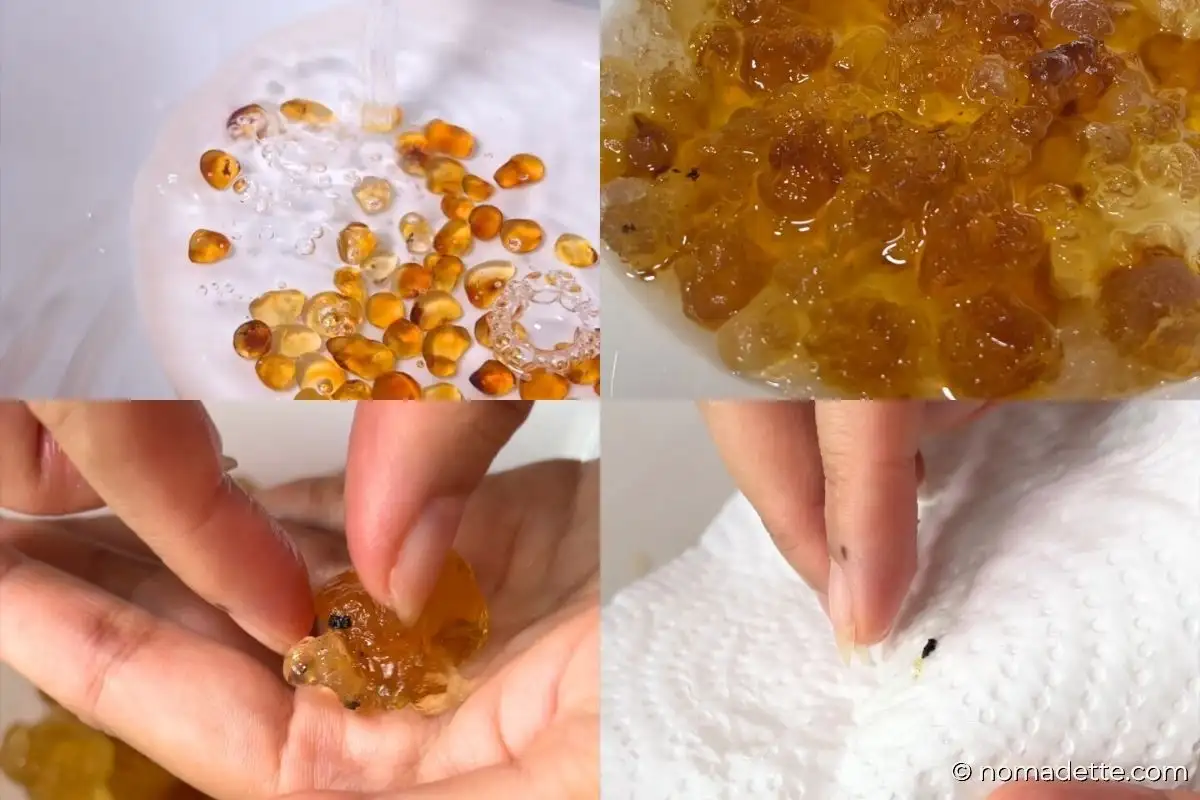
- Add peach gum to a bowl and pour water. Pour more than you think it needs – the peach gum will soak up the liquid and expand.
- Cover with a lid and let soak overnight. It needs 8 to 12 hours to fully expand. Be careful not to soak it too long or it may turn mushy or break down quicker when simmered later on.
NOTE: If you want to prep this even further beforehand, simply drain off the liquid so the peach gum will stop soaking more liquid.
- After soaking, pick out any impurities or dark specks. The easiest way to do this is to rinse it in a colander carefully so the bigger specks can wash off. Then pick the rest with fingers or tweezers.
- Have a paper towel on the side to swipe the speck off.
2. Prep the Rest of the Ingredients
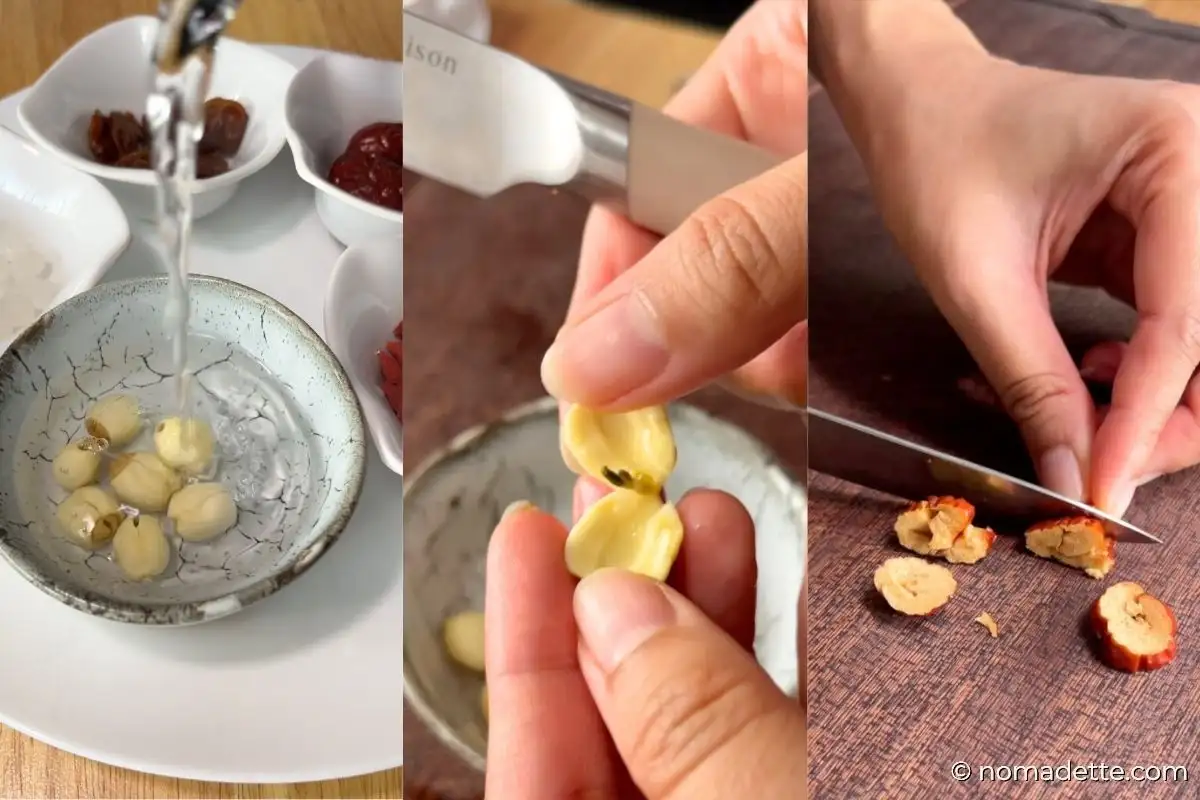
- Soak the lotus seeds in hot water for about 10 minutes to soften. Once soft, use a small knife or spoon to cut it in half – it will be very easy since it’s soft. If your lotus seeds have green cores, remove them to avoid any bitterness.
- Rinse goji berries, dried longan, and red dates.
Optional: you can keep the red dates whole, but I like to cut out the seed and slice it.
3. Simmer the Ingredients
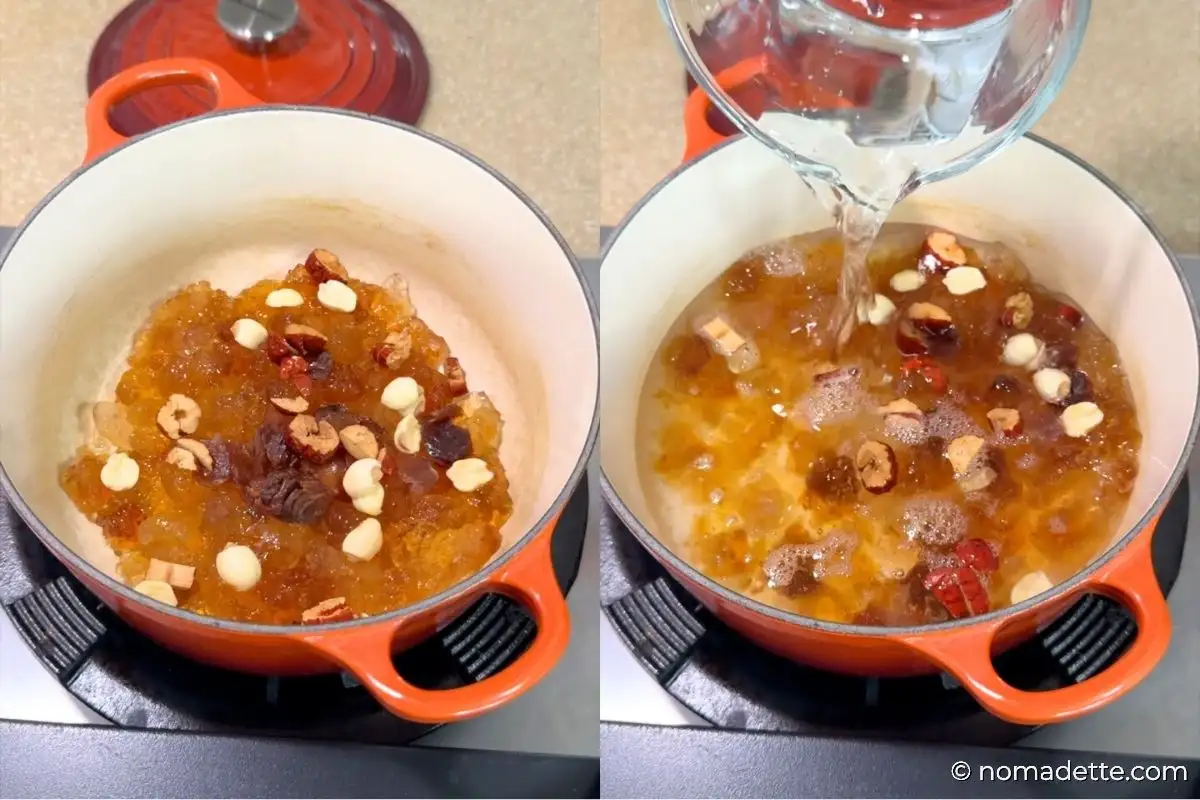
- Combine all the ingredients except goji berries and rock sugar in a pot with water.
- Simmer for 30 minutes until the flavours are infused and the ingredients are soft.
4. Add Sweetener
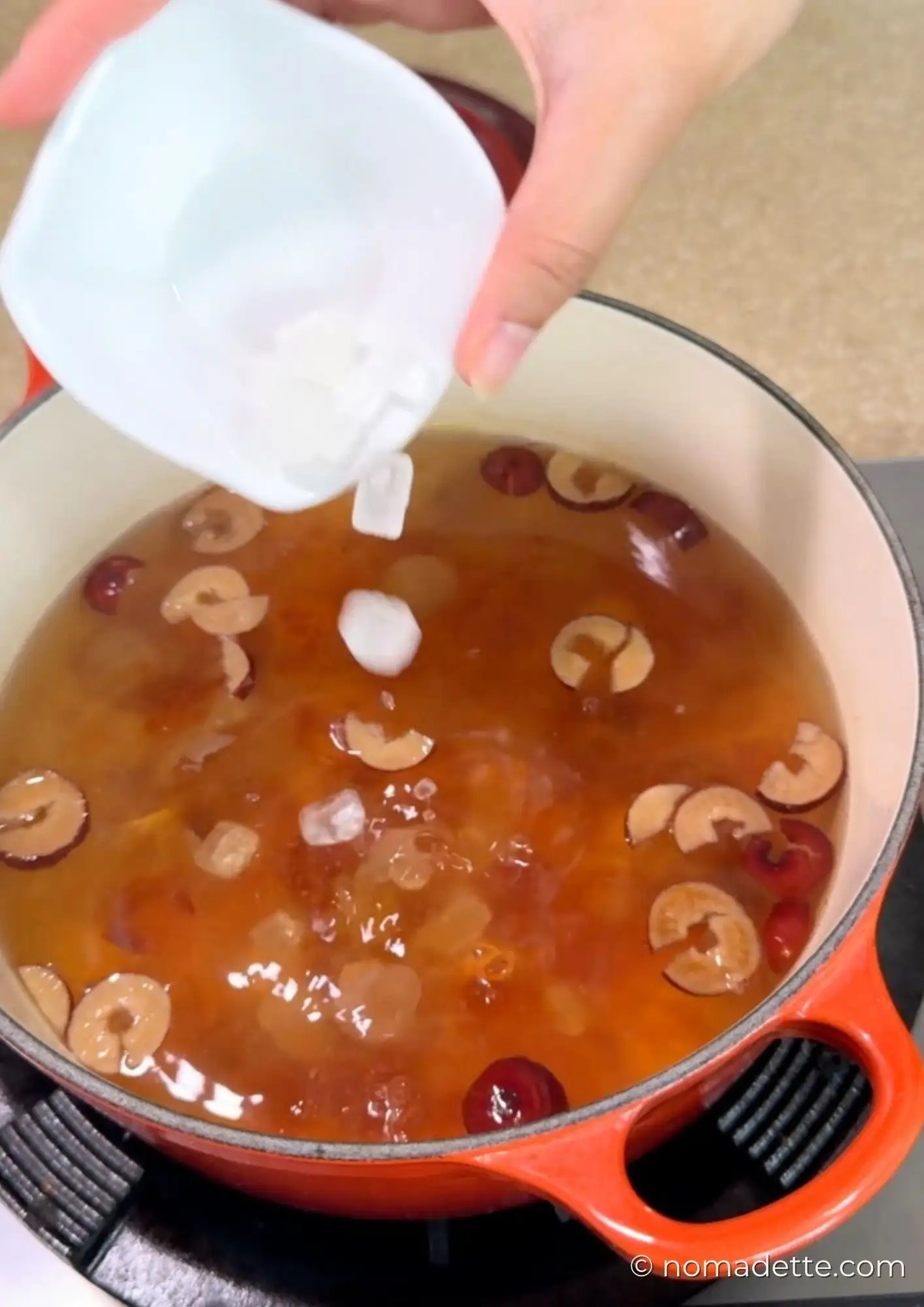
- Rock sugar is added during the last 10 minutes of simmering so it dissolves evenly.
5. Finish with Goji Berries:
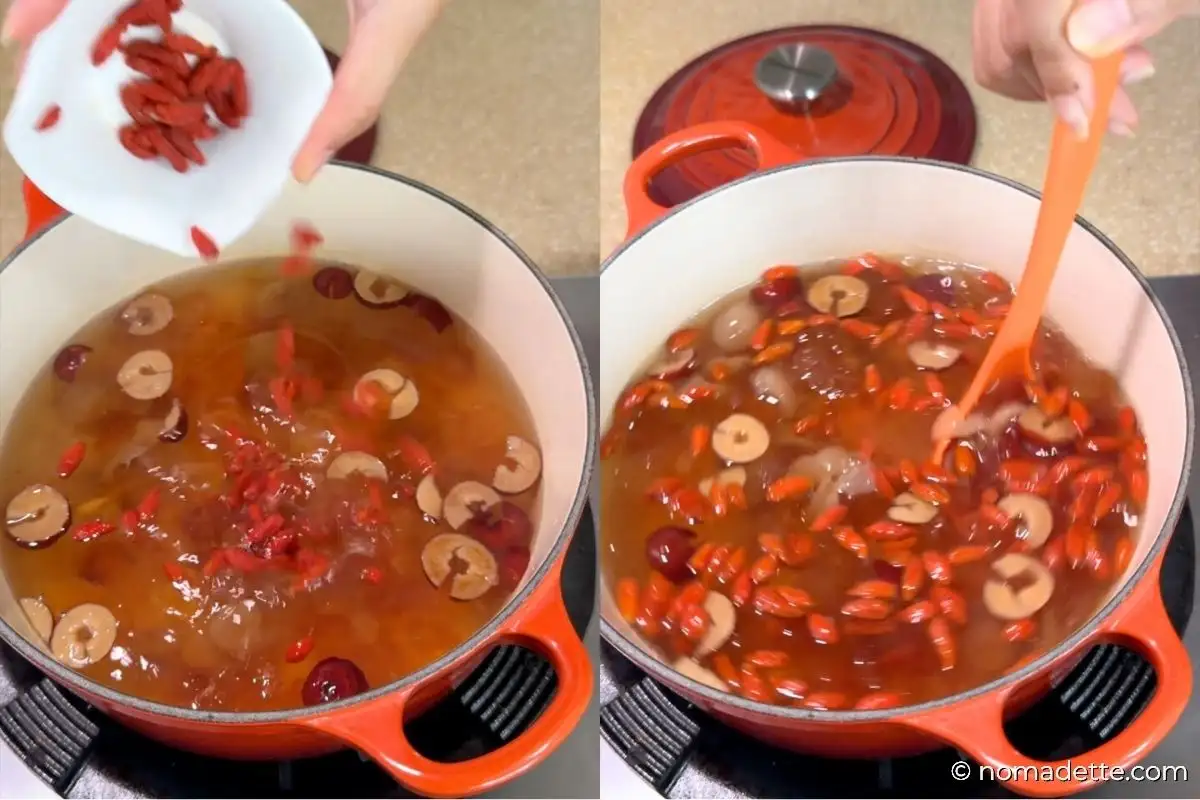
- Add goji berries and turn off the heat. Let them steep for a few minutes before serving; they will soften in the residual heat. Adding the goji berries last will help preserve their colour and tender texture.
- Serve warm or let cool before storing in the fridge to serve chilled. Enjoy!
How to Serve
- Serve it warm for a nourishing, comforting dessert, especially during cooler months or when you’re feeling under the weather.
- Serve it cold for a refreshing, cooling treat that’s perfect on hot days. This is my favourite way!
- For a twist, some like to add a splash of coconut milk or soy milk for added richness.
Tips & Tricks
- Avoid over-soaking the peach gum. Stick to 8 to 12 hours max.
- Always clean peach gum thoroughly after soaking. There might be natural impurities or bits of bark, so take the time to rinse and remove them.
- Adjust the sweetness to your preference. You can increase or reduce the amount of rock sugar or swap it out with palm sugar, honey or other natural sweeteners.
- Soak ingredients ahead of time for quick assembly during the week. Peach gum can be soaked in advance and stored in the fridge for a day or two. Make sure to drain off the liquid once it rehydrates before storing in the fridge until you’re ready to use them.
Storing and Reheating
Storing:
- Transfer the dessert into an airtight container and refrigerate. It keeps well for up to 3 to 4 days.
- This dessert is not suitable to freeze.
Reheating:
- Reheat gently on the stovetop or in the microwave. Add a splash of water if it thickens too much.
How To Serve Cold:
- Let it chill in the fridge and enjoy as is. I often find it tastes even better the next day as the flavours continue to deepen!
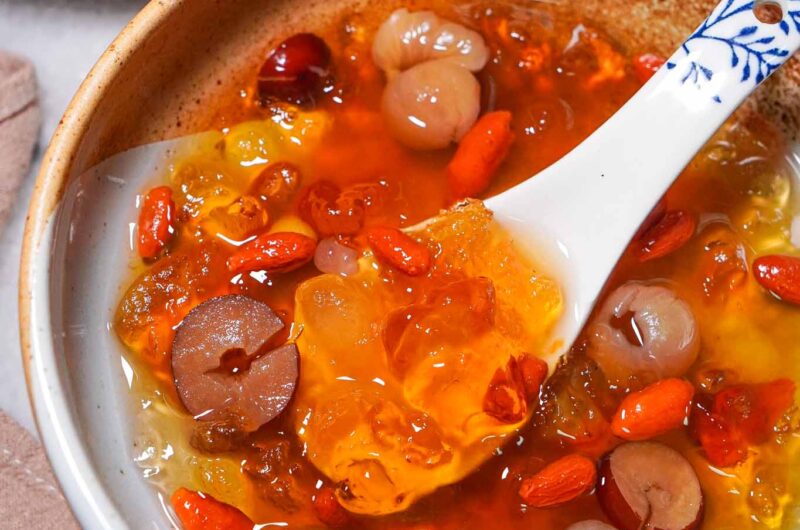
Peach Gum Dessert
2-4
servings35
minutesHow to make peach gum dessert, a Chinese jelly-like sweet soup that’s soothing, nourishing, and full of skin-loving ingredients.
Keep the screen of your device on
Ingredients
1/4 cup (35g) peach gum
1 tbsp (10g) dried goji berries
1 tbsp (8g) dried lotus seeds
1 tbsp (10g) dried longan
1-2 (5g) red dates, sliced or whole
1.5 tbsp (20g) rock sugar (or to taste)
4 cups (1 litre) water
Directions
- Prep the Peach Gum
- Place peach gum in a bowl and cover with plenty of water. It will expand a lot as it soaks. Cover with a lid and soak overnight, about 8 to 12 hours max. Try not to let soak any longer, as it may turn mushy or break down further when cooked.
- After soaking and peach gum has expanded, drain the remaining water. Gently rinse the peach gum in a colander. Pick out impurities or dark specks on the peach gum with your fingers or tweezers. Tip: Keep a paper towel nearby to wipe fingers clean as you go.
- Prep the Rest of the Ingredients
- Soak lotus seeds in hot water for about 10 minutes to soften. Cut or peel the lotus seed in half. If your seeds have a green core, remove it to avoid bitterness.
- Rinse dried longan, red dates, and goji berries clean.
- Red dates can be kept whole, option to remove the seeds and slice them for nicer presentation.
- Simmer the Ingredients
- In a pot, combine peach gum, lotus seeds, red dates, and dried longan with 1 litre (4 cups) of water.
- Bring to a gentle simmer and cook uncovered for about 30 minutes, until everything is tender and the flavours have infused.
- Add Sweetener
- Add rock sugar during the last 10 minutes of simmering and stir until fully dissolved.
- Finish with Goji Berries
- Once the heat is off, stir in the goji berries. Let them steep in the residual heat for a few minutes to soften.
- Serve warm, or let cool completely and refrigerate to enjoy it chilled.
Did you make this recipe?
Tag @nomadetteats on Instagram