

How to make Seafood Mee Goreng, or Singapore Malay-style spicy stir fried noodles

Today we’re making Mee Goreng, or simply fried noodles – Singapore Malay style. This dish is hands down one of my favourites, and also a guaranteed guest-pleaser at my dinner table. There’s just something about a steaming hot plate of spicy, smoky noodles that instantly feels comforting yet indulgent.
I have a simpler recipe here, but this is a levelled up and still easy version.
What is Mee Goreng
Mee Goreng is essentially a stir-fried noodle dish, but what makes it special is the bold, punchy flavour profile – a balance of spicy, savoury, and slightly sweet. The base is usually a mix of chili paste, sweet soy sauce (kicap manis), oyster sauce, and ketchup, which coats the noodles in a deep, glossy sauce.
I love loading mine with seafood – juicy prawns, tender squid, and slices of fishcake – but honestly, you can use any protein you like. Chicken, beef, tofu… it all works beautifully.
Now, depending on where you are in Southeast Asia, mee goreng can look and taste quite different:
- In Singapore and Malaysia, you’ll find Malay-style mee goreng, which is this recipe! There’s also a variation cooked by mamak stalls (Indian-Muslim eateries). In Singapore, the mamak version has a signature bright red hue: I have a recipe here.
- There’s also Chinese-style mee goreng, which is a little less fiery, sometimes cooked with char siu or sliced fishcakes.
- In Indonesia, you’ll come across mie goreng Jawa or mie goreng kampung, which are usually sweeter thanks to a heavier use of kicap manis, and often stir-fried with egg, cabbage, and chicken or prawns.
Every version is delicious in its own way, but the common thread is the irresistible wok-tossed noodles packed with flavour.
For me though, this Singapore Malay-style seafood mee goreng is unbeatable – saucy, spicy, smoky, and ridiculously satisfying. Let’s get cooking!
Why You’ll Love This Recipe
Key Ingredients for Mee Goreng
What Type of Noodle to use for Mee Goreng
The base of this dish! Yellow wheat noodles are bouncy and soak up sauces beautifully. Rinse them briefly in hot water to loosen and remove any oiliness before cooking.
I used fresh yellow Hokkien noodles, which are the standard noodle type to use for Mee Goreng. Other types of noodles include vermicelli and rice noodles. You can even use spaghetti or any other pasta noodles. This is an ultra versatile recipe.
Dried Chilli Paste
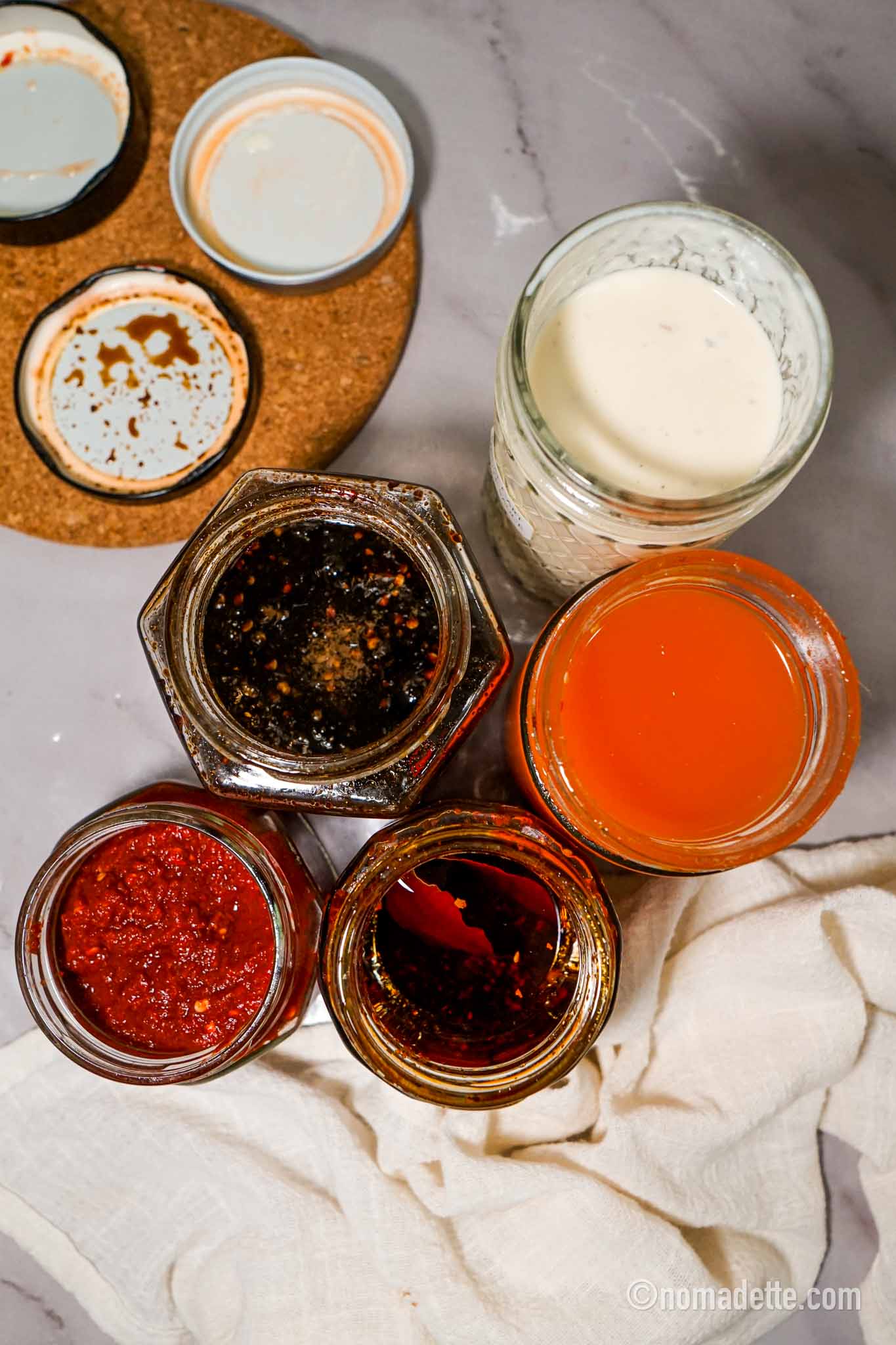
Dried Chilli Paste is also known as cili kisar or cili boh. In this recipe, I used store-bought dried chilli paste because I did receive a couple of messages asking about them. They are the same, but depending on the brand, will have added salt and sometimes even vinegar.
I prefer to make my own, but these are extremely convenient to have around. Simply keep track of salt levels. In this recipe, I did not add extra salt since the ready made version already has salt in it.
In the more Western parts of the world, it may not be as easy to find ready-made dried chilli paste. Look out for Sambal Oelek instead.
Sambal Oelek is made with fresh red chillies, but it will work in the recipe as well.
This is a popular brand of Sambal Oelek that you can use. I found this other brand as well, and it sounds like a more delicious choice as it has lime juice – which will add an amazing brightness to the dish.
Tip
Like your Mee Goreng extra spicy? Toss in a couple of bird’s eye chillies!
The Other Seasonings:
- Oyster Sauce, Dark Sweet Soy Sauce, and Tomato Ketchup – This trio makes the sauce glossy, savoury, sweet, and tangy all at once.
- Salt & Sugar – To fine-tune the seasoning at the end. Don’t skip the pinch of sugar – it balances the heat!
What Type of Proteins to Use For Seafood Mee Goreng?
In this recipe, of course I used seafood. Specifically, squid, prawns and fishcakes or fishballs.
You can use any protein of choice! I would always simply use whatever proteins I would like to clear in the fridge. Sliced chicken or beef, sausages, fried tofu – these are all excellent additions to Mee Goreng. Eggs add richness and texture when scrambled into the noodles, so it’s a must-have for me too.
No proteins? No problem! I love Mee Goreng without proteins too.
Key Steps to Making It
1. Cook the chili paste base
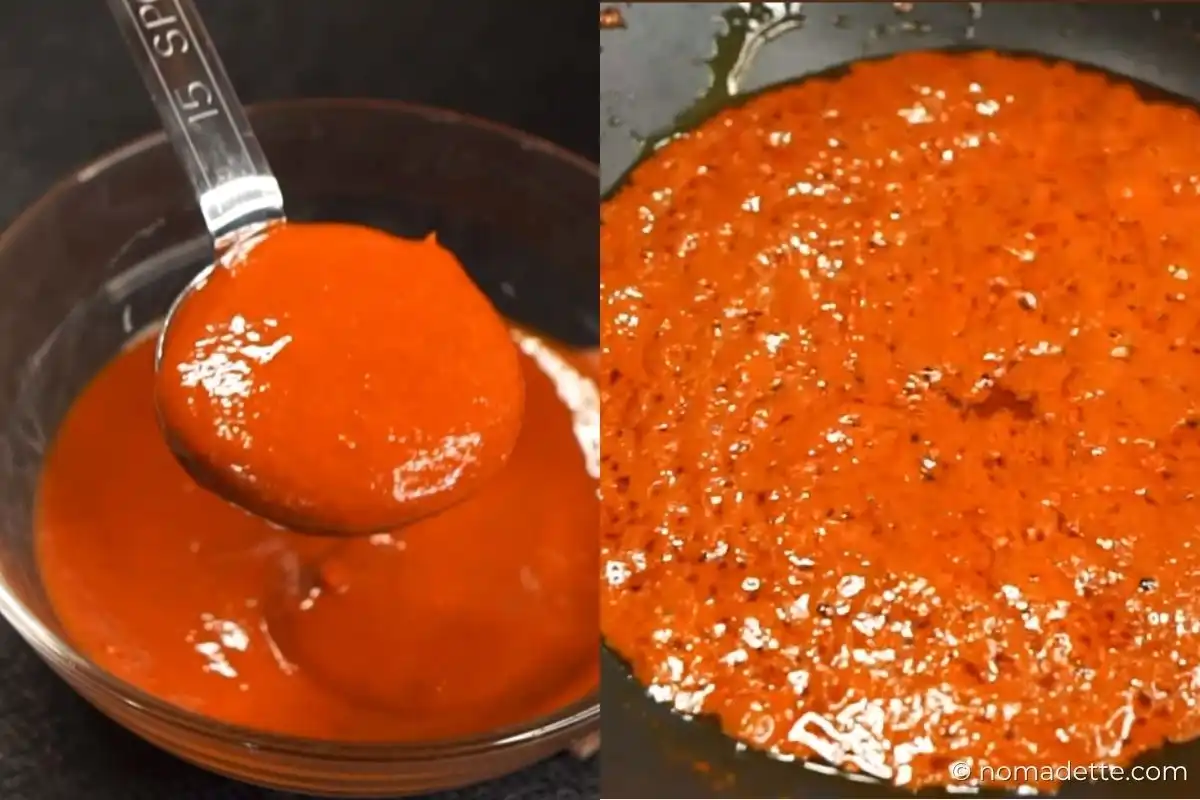
- Heat 2 tbsp oil in a wok or large pan over medium-low heat.
- Add the dried chili paste and sauté gently until the paste darkens and the oil turns red (the oil should “split” from the paste).
2. Add aromatics
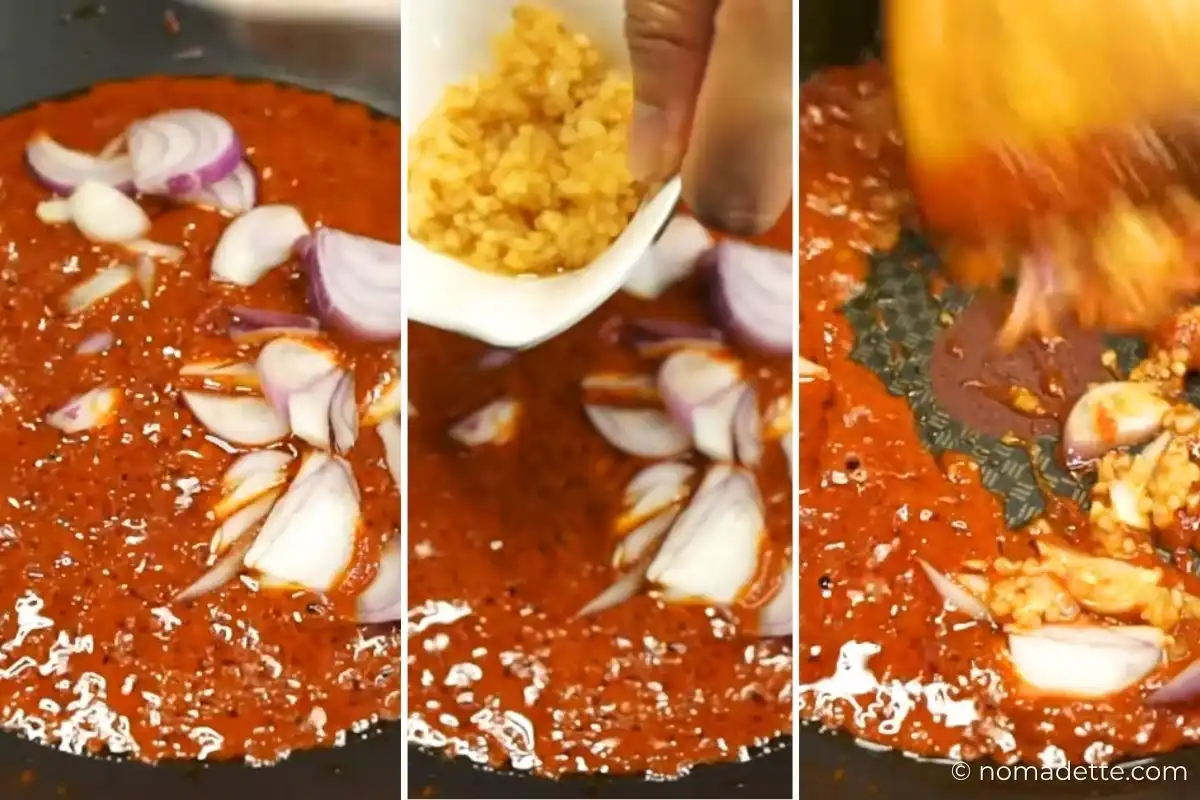
- Stir in the onion and garlic. Cook until fragrant and softened.
3. Cook the seafood
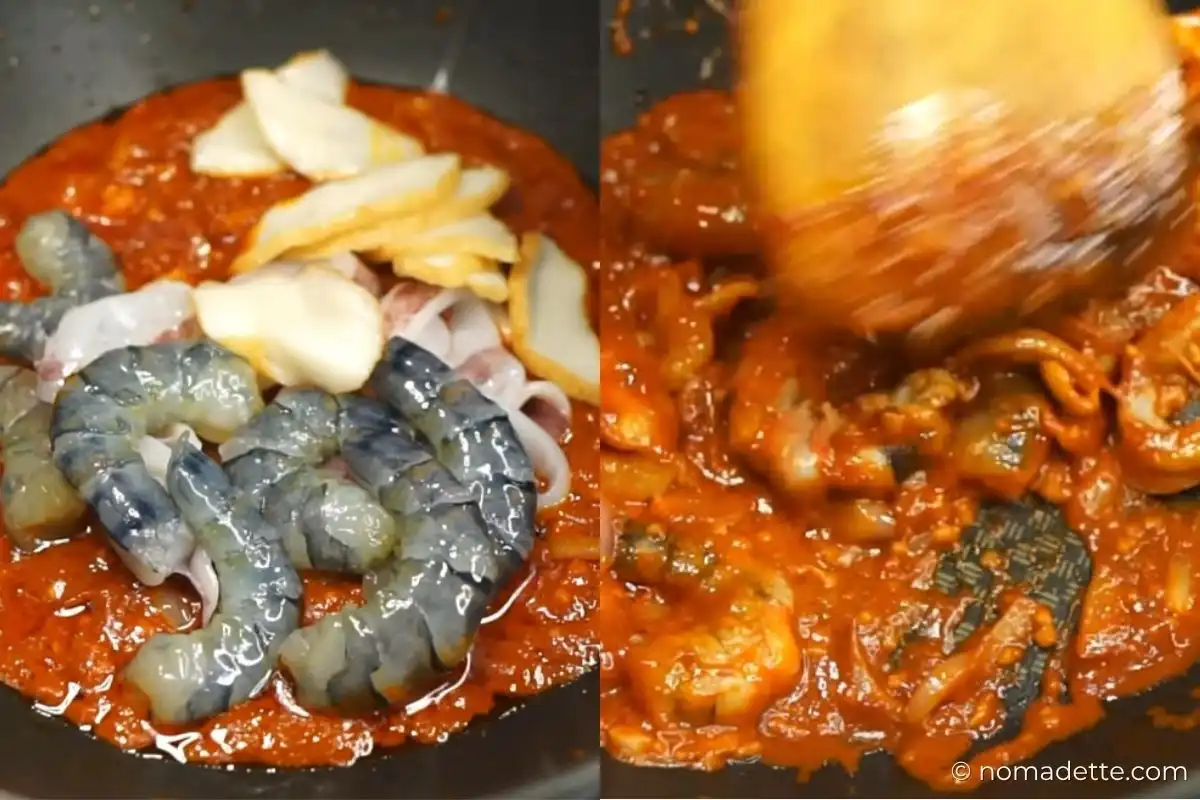
- Add prawns, squid, and fishcake. Stir-fry briefly, just until prawns start turning pink and seafood is lightly cooked.
4. Toss in noodles & sauces
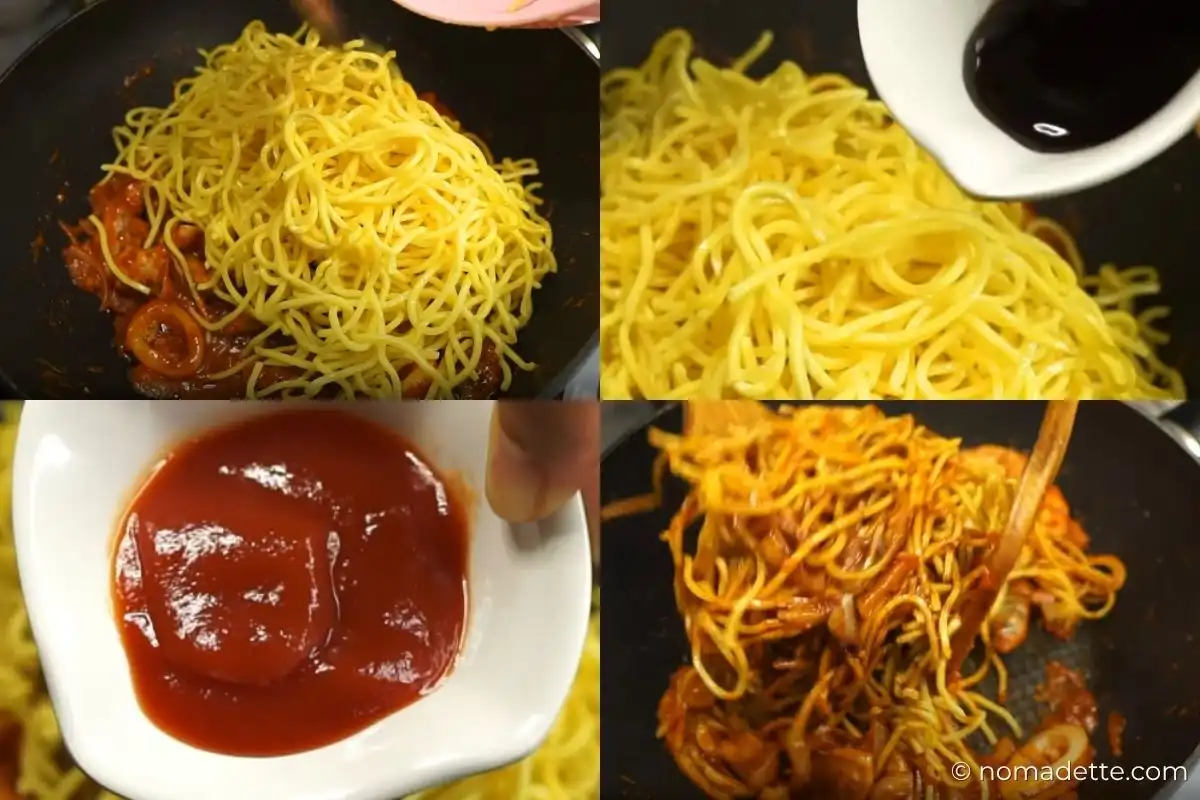
- Add the yellow noodles along with oyster sauce, dark sweet soy sauce, and tomato ketchup.
- Toss well to coat the noodles evenly in the sauce.
5. Scramble the eggs
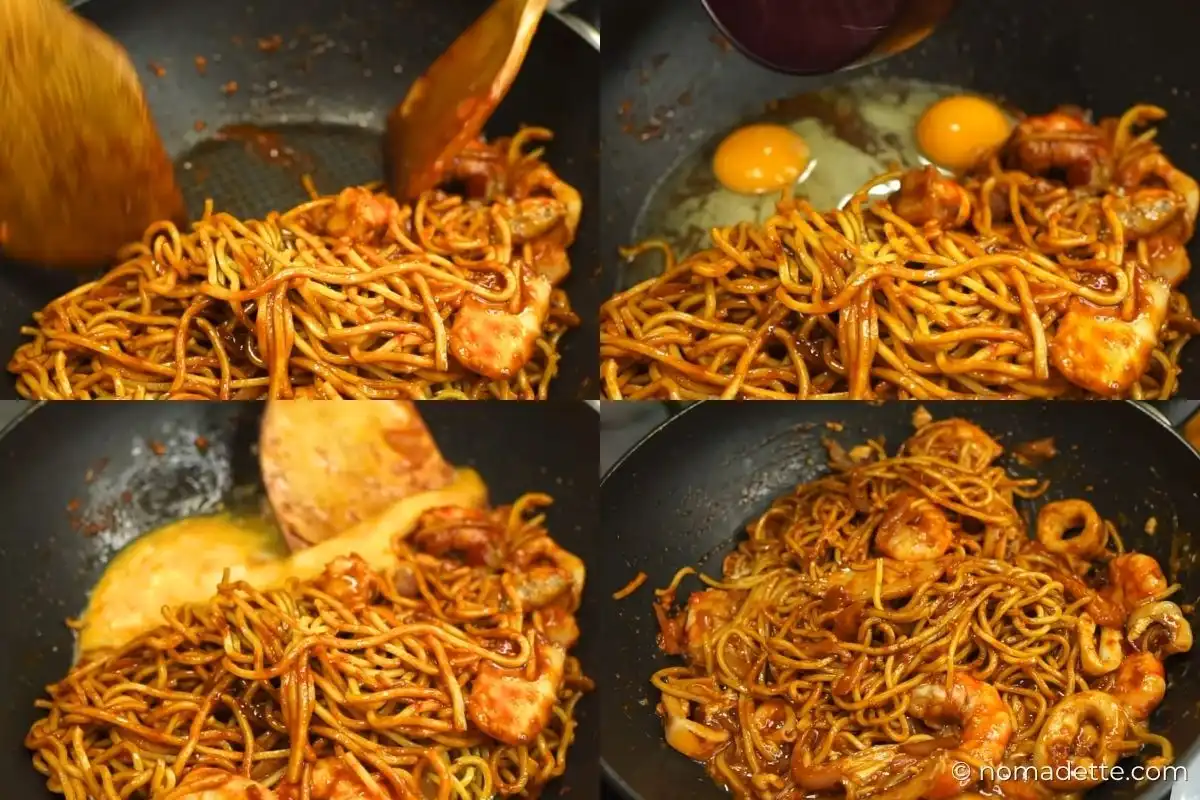
- Push noodles to one side of the pan. If the wok looks dry, drizzle in a little more oil.
- Crack in the eggs, scramble until just set, then mix through the noodles.
- If noodles feel too dry, splash in 2–3 tbsp water to loosen.
6. Finish with greens
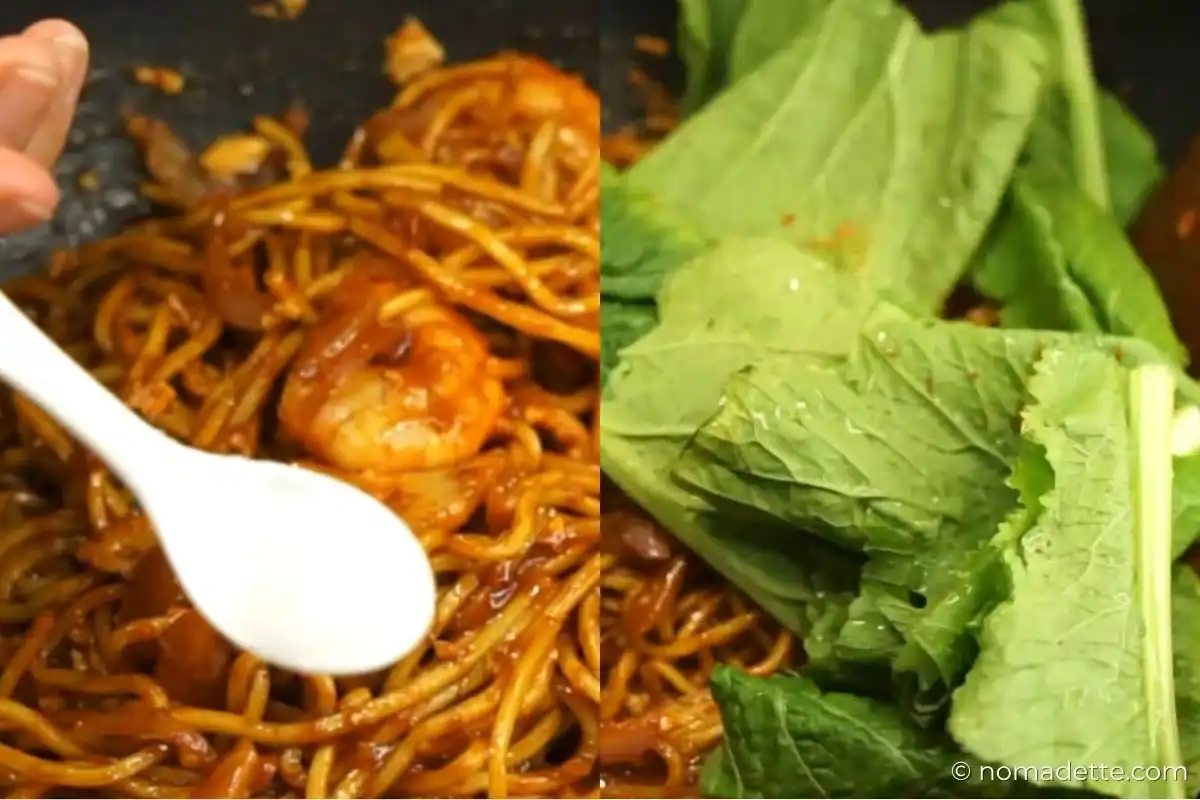
- Add the leafy vegetables. Stir-fry until just wilted.
- Taste and adjust seasoning with a pinch of salt and sugar if needed.
7. Serve hot
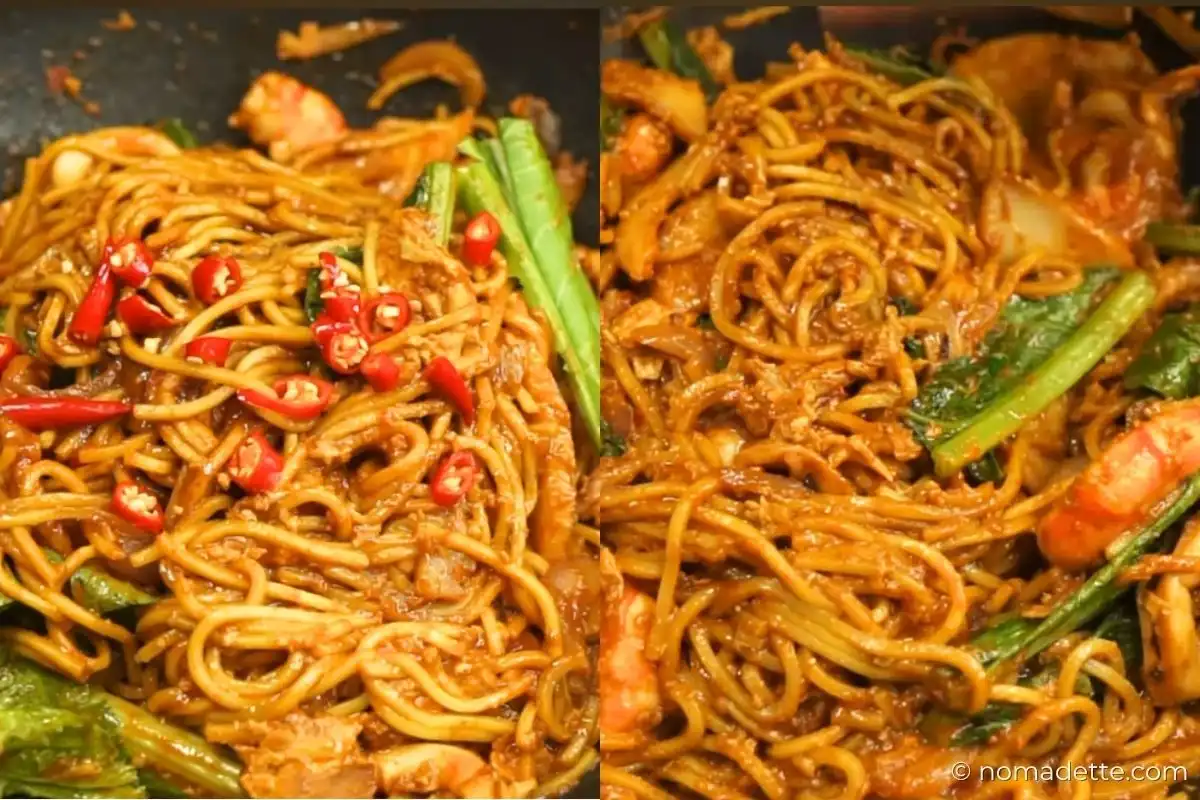
- Optional: garnish with cilantro, spring onions or fried shallots.
- Dish up immediately and enjoy your spicy, smoky plate of seafood mee goreng!
How to Serve
Mee Goreng is best served fresh and piping hot straight from the wok – that’s when the noodles are still springy, the sauce clings perfectly, and the seafood is juicy and tender.
- As a meal on its own – it’s hearty enough with the noodles, protein, and veggies all in one.
- With extra garnishes – squeeze over some lime for brightness, add a sprinkle of crispy shallots, or top with fresh cilantro and sliced chilies for an extra kick. I also love this with some fresh cucumbers to balance out the heat.
- With sides – pair with fried chicken wings, satay, or a simple clear soup if you’re cooking for a crowd.
How to Store & Reheat
If you happen to have leftovers (how even? This dish usually disappears fast!), here’s how to keep them fresh:
- Fridge – Store cooled noodles in an airtight container for up to 2–3 days.
- Not recommended to freeze as the noodles tend to turn mushy once frozen and thawed.
To Reheat:
- Stovetop (best method): Add the noodles to a hot pan or wok with a small splash of water or oil. Stir-fry for 2–3 minutes until heated through and loosened.
- Microwave: Place in a microwave-safe dish, cover lightly, and heat in 1–2 minute intervals, stirring in between. Add a drizzle of water if noodles seem dry.
Pro tip
If you know you’ll be reheating, undercook the veggies slightly when first making the dish so they don’t get soggy later.
Watch how to make Seafood Mee Goreng
More Recipes Like This
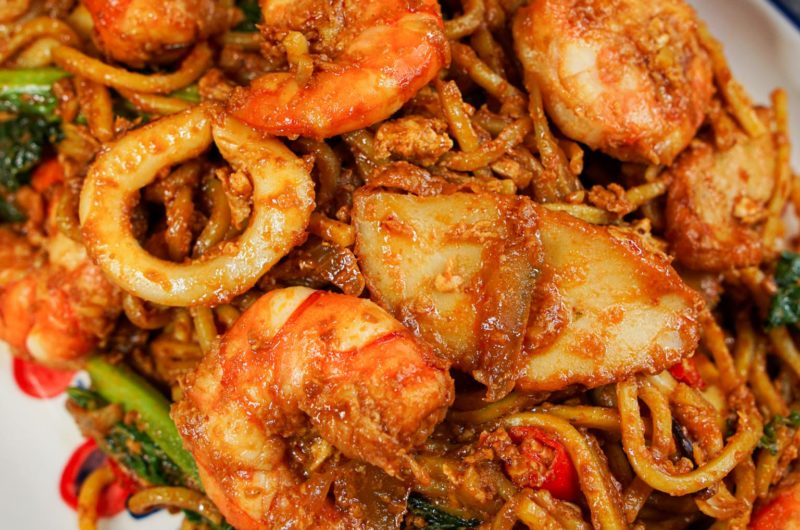
Seafood Mee Goreng Recipe
4
servings10
minutes15
minutesHow to make Seafood Mee Goreng, or Singapore Malay-style spicy stir fried noodles
Keep the screen of your device on
Ingredients
- Noodles & Sauce
400 g (14 oz) yellow noodles, rinsed and drained
1 tbsp oyster sauce
1 tbsp dark sweet soy sauce (kicap manis)
1 tbsp tomato ketchup
- Aromatics
2 tbsp oil
60 g (about ¼ cup) dried chili paste
2 cloves garlic, chopped
medium onion, sliced
- Seafood & Protein
8 medium prawns (shrimps), peeled and deveined
80 g (3 oz) squid, cleaned and sliced into rings
50 g (1.7 oz) fishcake or fishballs, sliced
2 eggs
- Vegetables
4–5 stalks leafy greens (bok choy, choy sum, or kailan), roughly chopped
- Seasoning
salt, to taste
sugar, to taste
2–3 tbsp water, if needed
Directions
- Cook the chili paste base
- Heat 2 tbsp oil in a wok or large pan over medium-low heat.
- Add the dried chili paste and sauté gently until the paste darkens and the oil turns red (the oil should “split” from the paste).
- Add aromatics
- Stir in the onion and garlic. Cook until fragrant and softened.
- Cook the seafood
- Add prawns, squid, and fishcake. Stir-fry briefly, just until prawns start turning pink and seafood is lightly cooked.
- Toss in noodles & sauces
- Add the yellow noodles along with oyster sauce, dark sweet soy sauce, and tomato ketchup.
- Toss well to coat the noodles evenly in the sauce.
- Scramble the eggs
- Push noodles to one side of the pan. If the wok looks dry, drizzle in a little more oil.
- Crack in the eggs, scramble until just set, then mix through the noodles.
- If noodles feel too dry, splash in 2–3 tbsp water to loosen.
- Finish with greens
- Add the leafy vegetables. Stir-fry until just wilted.
- Taste and adjust seasoning with a pinch of salt and sugar if needed.
- Serve hot
- Optional: garnish with cilantro, spring onions or fried shallots.
- Dish up immediately and enjoy your spicy, smoky plate of seafood mee goreng!
Did you make this recipe?
Tag @nomadetteats on Instagram


Is this the first dish in Singapore?