

Discover all my secrets to making perfect kremesan or Indonesian batter crispies at home: light, crispy, golden and utterly addictive!

Introduction
If you’ve ever had Indonesian fried chicken like Ayam Penyet or Ayam Goreng Kalasan, you’ve probably noticed that irresistible golden sprinkle scattered on top — light, crispy, and almost lace-like. That’s kremesan, or simply kremes.
Whenever I order Ayam Penyet, I always ask for extra kremesan… and if the plate actually comes with a handful, I consider it my lucky day. Vendors are never generous with kremesan, because it’s so precious!
For me, kremesan is the ultimate finishing touch. It turns a humble plate of chicken and rice into a complete experience: juicy fried chicken, fluffy rice, fiery sambal, and that addictive, shattering crunch in every bite.
That’s why I made it my mission recently to finally crack the code on proper kremesan. I’ve shared a version before, and while it was crispy and crunchy, and a no-fuss method of making kremes, it wasn’t quite there. It didn’t have that light, airy, lacy texture that makes kremesan so special.
The best part about kremesan? It’s not just a random byproduct of frying chicken — it’s made deliberately, with its own batter, to be as crisp and flavorful as possible. And once you learn the simple tricks behind it, you’ll want to scatter these golden crunchies over everything!
What is Kremesan?
Kremesan (sometimes called kremes) is a traditional Indonesian crispy topping made from seasoned flour and broth. The batter is poured into hot oil, where it splatters and forms delicate, bird’s-nest-like clusters. The result is a topping that’s light, golden, and shatteringly crisp.
It’s not meant to be eaten on its own like crackers, but rather as a garnish — scattered over fried chicken, rice, or even vegetables to add a fun crunch. Think of it as Indonesia’s answer to “crispy bits”! Sometimes I would just dollop some rice on a plate, have some sambal on the side, and drizzle kremesan over it and call it a day.
Why You’ll Love this Kremesan recipe
Key Ingredients to make Kremesan
- Tapioca starch – for that delicate airy crisp, tapioca starch or flour is A MUST. It gives that extra crispiness and lightness. Other alternatives would be rice flour or cornflour. This will give you super crispy kremes, maybe even too crispy?
- Egg – helps bind and create those delicate, airy webs.
- Seasoned chicken broth – the secret to making kremesan flavourful, not bland! I use the seasoned chicken poaching broth here. Some versions use powdered chicken stock for convenience.
- Baking Powder – this helps further create that airy texture, but optional. There is a difference, but very minor and not noticeable.
- Seasoning – you need just salt. If you fancy, a dash of pepper.
- Oil for frying – a neutral oil with a high smoke point (like vegetable or canola).
What if I don’t have seasoned chicken broth?
Traditionally, kremesan is made with seasoned chicken broth — usually the same broth from poaching chicken for Ayam Penyet. That’s what gives it a rich, savoury flavour.
But if you don’t have chicken broth on hand, you’ve got options:
- Use stock powder or bouillon cubes – Dissolve ½–1 teaspoon chicken stock powder (or ½ cube) in warm water. This is the quickest substitute. I would recommend flavouring the stock with turmeric powder, ground coriander powder, ground onion and ground garlic.
👉 The key thing is: the batter should be well-seasoned before frying. Kremesan itself doesn’t get salted afterwards, so if the liquid is bland, the crunchies will taste bland too.
Key Equipment for Effortless Kremesan
While kremesan might seem like a fancy, delicate topping, the tools you use make it much easier and more foolproof. Here’s what I recommend:
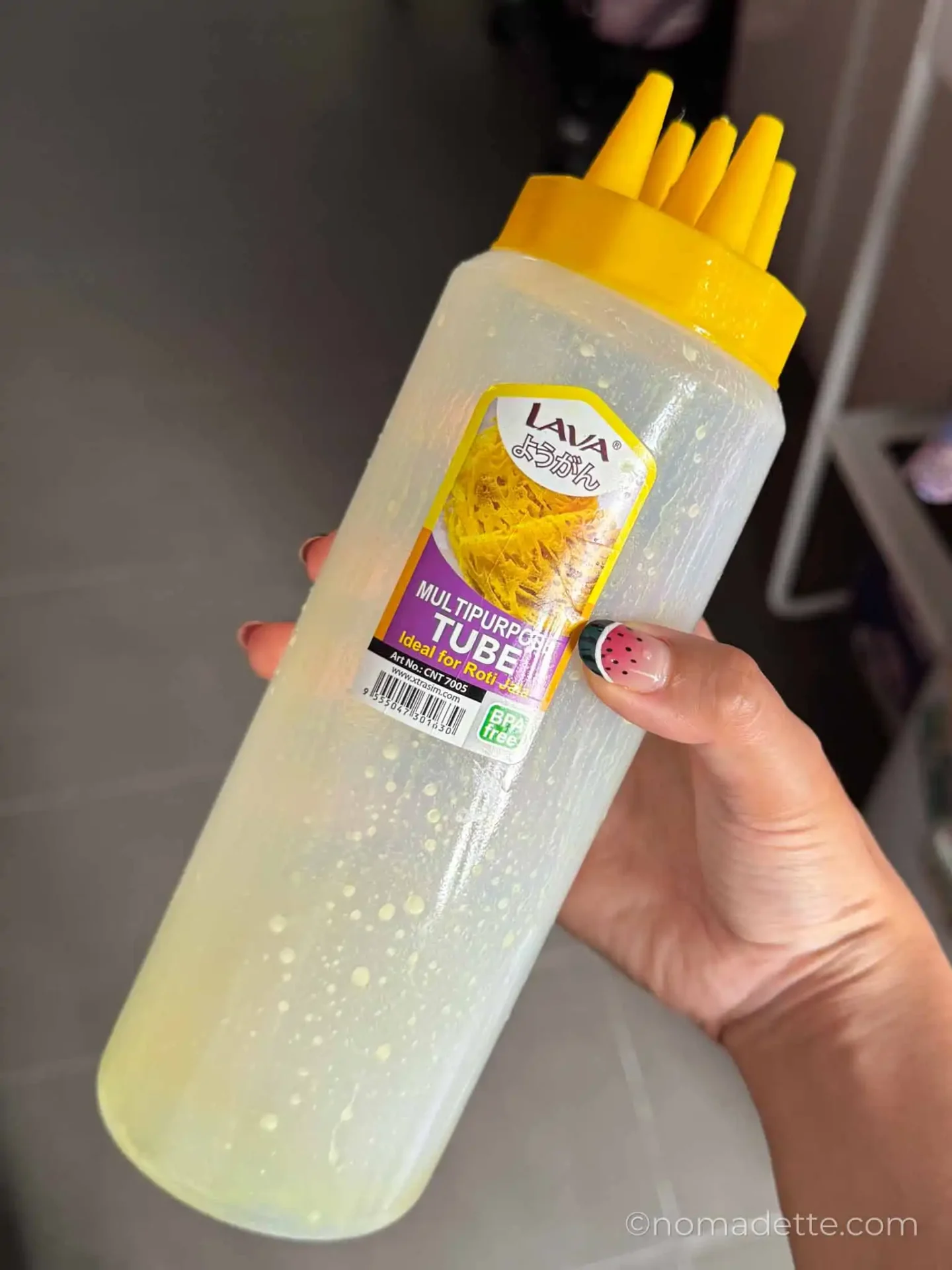
- Sauce bottle – This is a game-changer. A sauce bottle gives you a steady, thin stream of batter, making it easy to drizzle into the hot oil in delicate, lace-like webs. I use my roti jala (recipe coming up soon, make sure to join my mailing list for updates!) bottle, which has multiple spouts. You can also use a spoon or ladle with a thin spout if you don’t have a bottle, but the bottle gives more control and less mess.
- Blender – A blender is perfect for mixing the batter quickly and evenly. It also naturally creates bubbles in the batter, which help make the lacy, airy texture that’s signature to kremesan. If you don’t have a blender, whisking by hand works too — even though I have a blender, sometimes I just don’t want to faff about with a blender. Just make sure to stir the batter until it’s bubbly before frying.
- Slotted spoon or sieve – Once the kremesan is fried, you’ll need to scoop it out of the oil carefully. A slotted spoon works perfectly to drain excess oil. You can also use a fine-mesh sieve for smaller clusters, especially if you’re going for lots of delicate, tiny pieces.
Tip: Having the right tools doesn’t just make the process easier — it also helps you achieve that perfect light, airy, and crispy texture that makes kremesan so addictive.
Key Steps – How to Make Perfect Kremesan
1. Make the batter
- In a bowl, whisk together tapioca flour, egg, chicken broth, baking powder, if using, and salt. You can add all of these in a blender for quicker mixing.
- The batter should be thin and watery — like a light crepe batter. Gradually add more broth if needed.
- Transfer the batter into a sauce bottle for easy drizzling.
TIP: We want lots of foaming and bubbling of the batter – this helps to create that airy texture. If blending, the batter will be naturally be bubbly. If you did your mixing in a bowl, scoop the batter and pour it back into the bowl at a height to create more bubbles.These bubbles help create the lacey, airy texture.
2. Heat the oil
- To make kremesan, the oil must be HOT! Heat about 1–2 inches (2.5–5 cm) of oil in a wide frying pan over medium-high heat.
- To test if the oil is ready, drop in a little batter. It should sizzle immediately and float.
3. Drizzle the batter
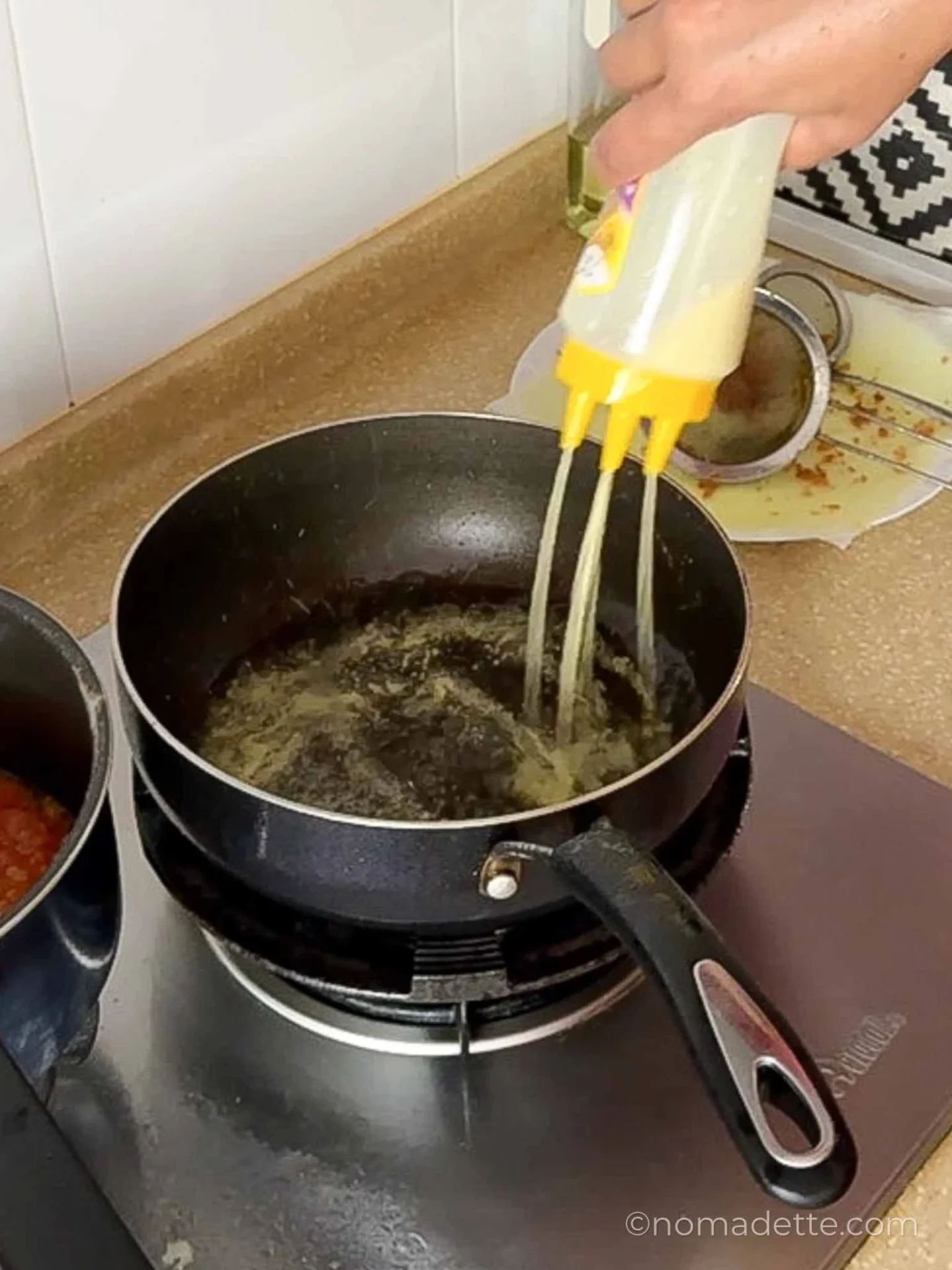
- Holding the bottle a slightly higher above the oil, drizzle a thin stream in a circular motion into the hot oil. The batter should scatter and form lace-like webs.
- Alternatively, use a spoon or a ladle with a thin spout, so that the batter will pour into the oil as a thin stream. Pour in a circular motion.
4. Fry until crisp
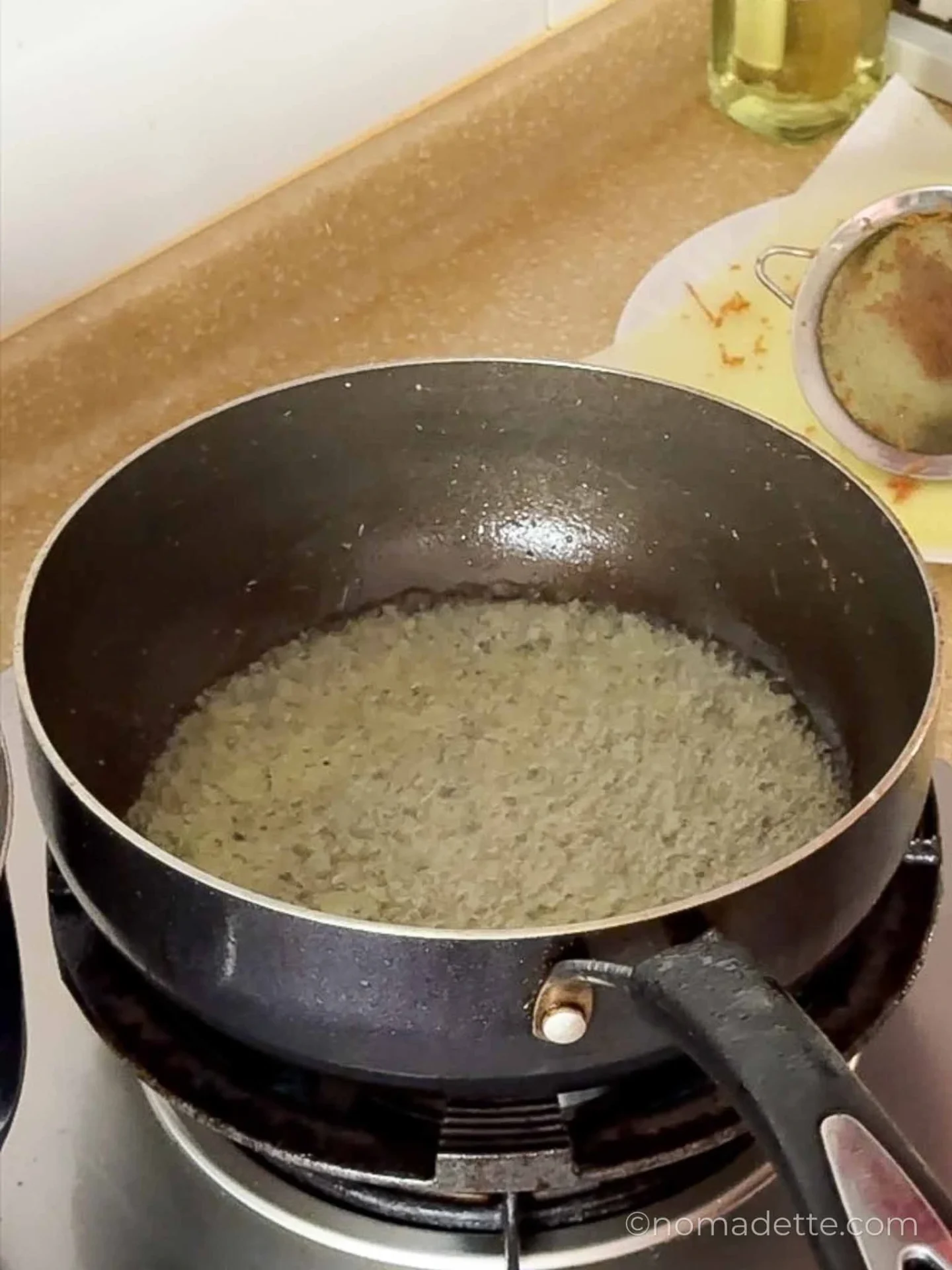
- Let the kremesan cook undisturbed until golden and crispy, about 1–2 minutes.
- Flip gently if needed, then remove and drain on paper towels. Use a slotted spoon or sieve spoon to easily scoop the kremesan without the oil.
- Continue frying until all the batter is used up. Before starting each new batch, give the batter a quick stir (or shake the bottle) to ensure it’s well-mixed, as it can separate while sitting.
NOTE: The cook time is QUICK! This recipe makes for a big batch of kremesan. If you want to make just enough for one meal, then feel free to stop anytime. The batter can be stored in the fridge over a few days as well.
5. Serve
- Break into smaller clusters and scatter over fried chicken, rice, or any dish that could use a crunchy boost.
How to Serve
Kremesan is most famously served with:
- Ayam Penyet (smashed fried chicken with sambal).
However, you can serve it over anything to add crunch and texture. My favourite ways are:
- Steamed white rice with a side of sambal for a quick, easy and satisfying meal.
- Over fried rice or noodles.
But you don’t have to stop there — kremesan is just as amazing sprinkled over fried tofu, tempeh, or even as a crunchy salad topping.
My Best Tips & Tricks to Perfect Kremesan
Storing and Reheating
Store
- Once cooled, kremesan can be stored in a paper towel-lined airtight container at room temperature for up to a week!
- OPTION: You can further dry the kremesan out in the oven at a low 100 °C or 212 °F for about 30 minutes to 1 hour. Spread the kremesan out in a pan, and let it sit. I don’t do this since it’s simply too much effort for me! Plus, the kremesan last long enough… as in, it’s gone QUICK!
- If it softens, it’s usually because of humidity. Do not store in the fridge.
Reheat
- To bring back the crunch, re-crisp in a dry skillet or toaster oven for a few minutes.
- Avoid microwaving, as it makes them soggy.
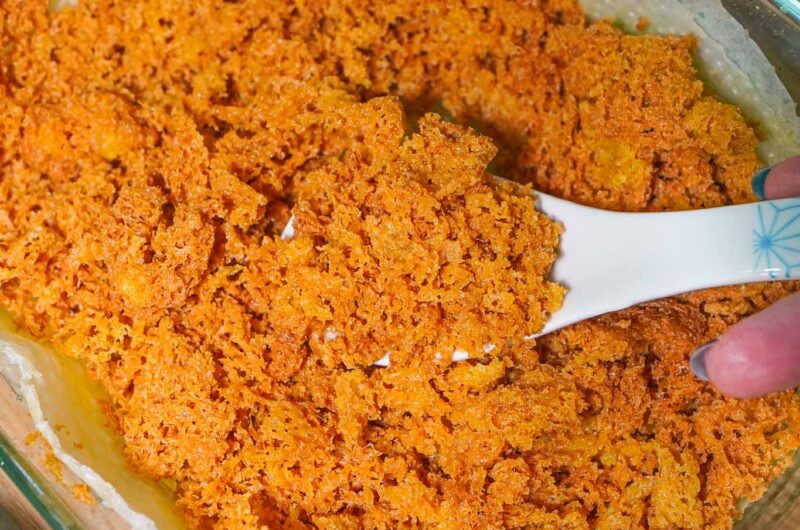
How to Make Kremesan (Indonesian Crispy Batter Topping)
4
servings5
minutes30
minutesDiscover all my secrets to making perfect kremesan at home: light, crispy, golden and utterly addictive!
Keep the screen of your device on
Ingredients
500 ml (2 cups) seasoned chicken broth
½cup (65 g) tapioca flour/starch
1 egg
½tsp salt, or to taste
1/2 tsp baking powder (optional)
neutral oil for frying (vegetable, canola, or peanut oil)
Directions
- Make the batter
- In a bowl, whisk together tapioca flour, egg, chicken broth, coriander, garlic powder, and salt. You can add all of these in a blender for quicker mixing.
- The batter should be thin and watery, like a light crepe batter. Gradually add more broth, if needed.
TIP: We want lots of foaming and bubbling of the batter – this helps to create that airy texture. If blending, the batter will be naturally be bubbly. If you did your mixing in a bowl, scoop the batter and pour it back into the bowl at a height to create more bubbles.These bubbles help create the lacey, airy texture. - Transfer the batter into a sauce bottle for easy drizzling.
- Heat the oil
- Heat about 1–2 inches (2.5–5 cm) of oil in a wide frying pan over medium-high heat. The oil must be hot.
- To test if the oil is ready, drop in a little batter. It should sizzle immediately and float.
- Drizzle the batter
- Holding the bottle a slightly higher above the oil, drizzle a thin stream in a circular motion into the hot oil. The batter should scatter and form lace-like webs.
- Alternatively, use a spoon or a ladle with a thin spout, so that the batter will pour into the oil as a thin stream. Pour in a circular motion.
- Fry until crisp
- Let the kremesan cook undisturbed until golden and crispy, about 1–2 minutes. The cook time is quick.
- Flip gently if needed, then remove and drain on paper towels. Use a slotted spoon or sieve spoon to easily scoop out all the kremesan bits and pieces without excess oil.
- Continue frying until all the batter is used up. Before starting each new batch, give the batter a quick stir (or shake the bottle) to ensure it’s well-mixed, as it can separate while sitting.
- Serve
- Break into smaller clusters, if kremesan is in one large chunk.
- Serve immediately – scatter over fried chicken, rice, or any dish that could use a crunchy boost! Or store in an airtight container.
Did you make this recipe?
Tag @nomadetteats on Instagram


)