

Learn how to make bright red Singapore mee goreng mamak at home! Includes easy one-pan method and traditional batch sauce version.
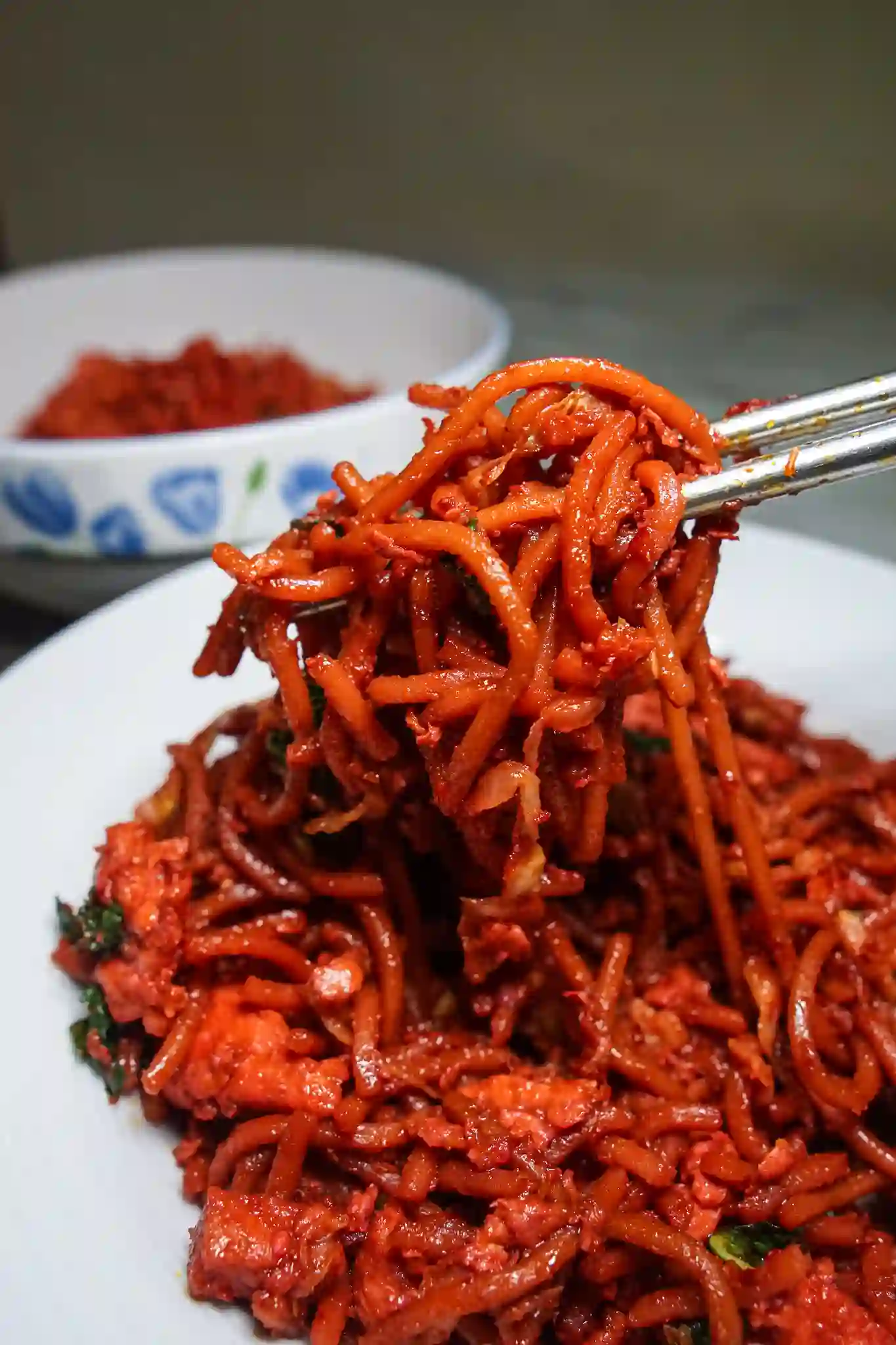
Mee Goreng Mamak is one of those iconic hawker dishes you’ll find all across Singapore’s Indian-Muslim stalls (also known as mamak stalls). It’s bold, saucy, slightly sweet, and it must have that unmistakably neon red hue!
When I first posted this recipe, I made it the traditional hawker way. In hawker stalls, the chilli sauce base is cooked in big batches ahead of time, then scooped and tossed with noodles to order. It’s fast, consistent, and what gives mee goreng that unmistakable stall-style flavour and glossy finish.
I’ve updated the recipe to include a simplified home-friendly take, adapted into a one-wok method so you can still get that same sweet-spicy-saucy mee goreng without the extra prep work. Both methods are great, depending on your needs!
Why you’ll love this recipe
What is Mee Goreng Mamak (Singapore vs Malaysian)
Mee Goreng Mamak is one of those iconic hawker dishes you’ll find all across Singapore’s Indian-Muslim stalls (mamak stalls). It’s bold, saucy, slightly sweet, and unmistakably red.
It’s technically inspired by Indian-Muslim cooking traditions, but the version we know today really evolved in Southeast Asia—especially Singapore and Malaysia—where fried noodles were adapted using local sauces, spices, and hawker-style wok cooking.
What makes the Singapore version stand out immediately is its bright red colour and glossy sauce-coated noodles, something you won’t always see in its Malaysian counterpart!
Singapore vs Malaysia Mee Goreng Mamak
This is where things get interesting.
In Singapore, Mee Goreng Mamak is typically:
- Bright red
- Slightly sweet, tangy, and saucy
- Often coloured with a touch of red food colouring for that signature look
In Malaysia, Mee Goreng Mamak tends to be:
- Darker in colour (more brown than red)
- More soy-forward and savoury
- Less emphasis on that bright red appearance
Same roots, different styling… very much shaped by local hawker preferences.
Key Ingredients
Noodles
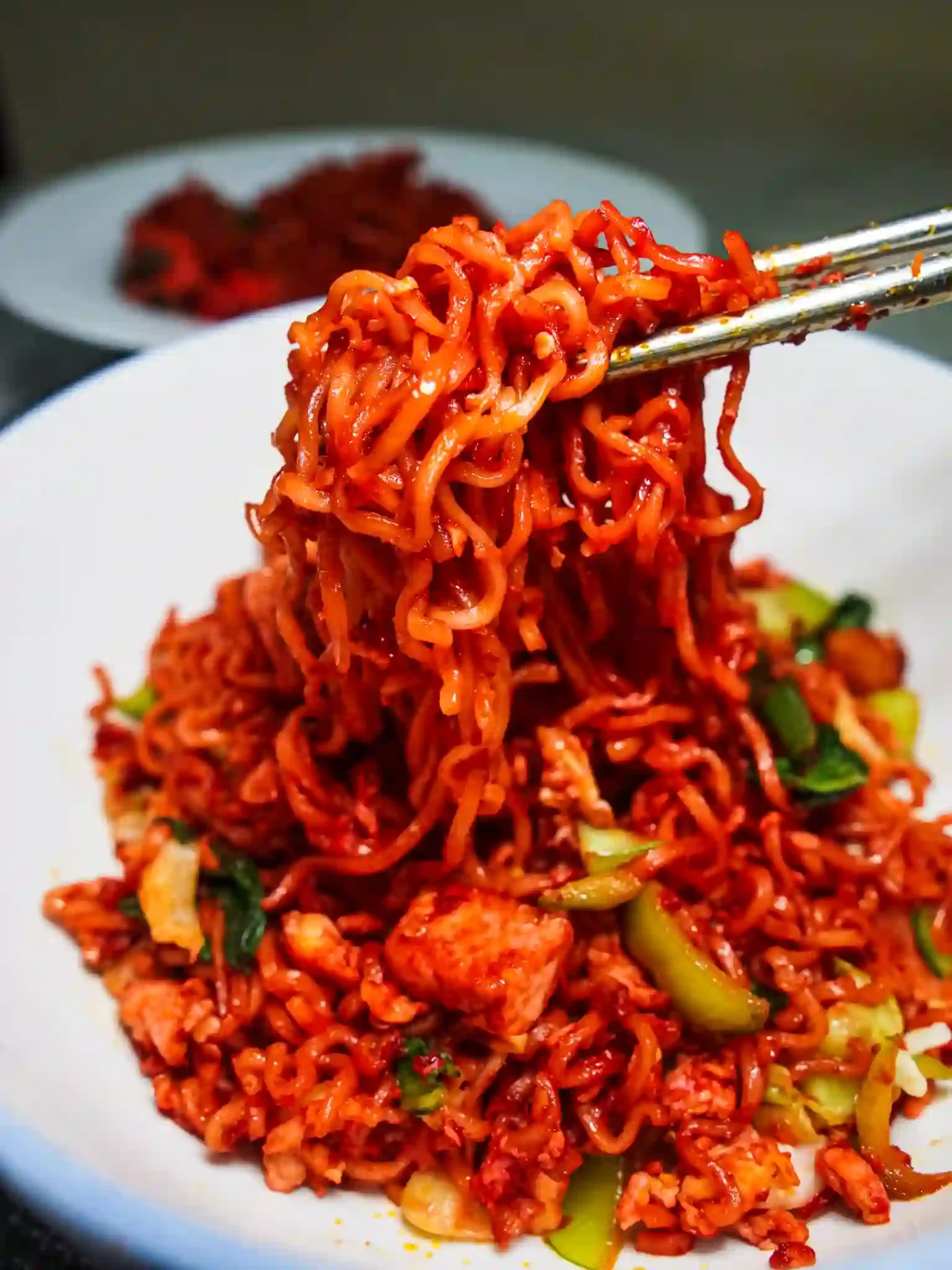
Yellow egg noodles are the standard base for Mee Goreng Mamak, but there are plenty of variations depending on preference or stall style.
Common options include:
- Yellow noodles (classic)
- Kway teow (flat rice noodles)
- Bee hoon / rice vermicelli
- Instant noodles (Maggi goreng style): Maggi Goreng, made using instant noodles, is especially popular for late-night hawker meals. It’s not the traditional version, but it’s become a category of its own in Singapore’s mamak culture. Whenever I go for late night Mamak stall suppers, you can be sure someone at the table has ordered up a plate of Maggi Goreng!
Protein
- Eggs
- Minced mutton, prawns, squid, chicken, fish cake, or tofu (optional, fully customisable like hawker stalls)
Vegetables
- Bean sprouts
- Cabbage
- Bok choy or mixed greens (optional, depending on what you have on hand)
Chilli paste (the flavour base)
The heart of the dish — slow-cooked until rich, deep, and aromatic:
- Dried red chillies (soaked, adjust according to spice tolerance)
- Shallots or onion
- Garlic
- Water (for blending)
Sauce base
This is what gives mee goreng its signature glossy, sweet-spicy finish:
- Dark sweet soy sauce (kicap manis)
- Ketchup
- Chili sauce
- Salt
- Red food colouring (optional, for signature hawker-style colour)
- MSG (optional, but highly recommended for authentic hawker flavour)
NOTE ON Spiciness
Despite its bold colour, Mee Goreng Mamak is not necessarily spicy.
Most stalls keep it fairly mild unless requested otherwise. If you want heat, you’ll usually need to ask for:
- “extra spicy”, or
- fresh chopped bird’s eye chilies tossed in during cooking
That’s when it really wakes up.
Why this recipe has two versions (one pan and batch hawker-style)
This dish actually exists in two cooking styles:
- One-Pan Home Version → wins on speed & simplicity
- Batch Hawker Version → wins on authenticity & control
One Pan
- Fast (30 minutes or less)
- One wok, minimal washing up
- Beginner-friendly
- Still delivers bold hawker-style flavour
- Best for everyday cooking
- Use a bigger wok for easier tossing and less mess!
Batch Hawker Version (Authentic Stall Method)
- Closer to how mamak stalls operate
- Better control of ingredients per serving
- Faster cooking once prep is done
- Better for meal prep or feeding a crowd
- More consistent flavour (like hawker stalls)
- The chilli base is cooked in advance for deeper flavour and faster cooking later. Less sogginess, more crisp edges
- It will take slightly longer than one-pan
Both taste great — they just serve different needs.
How to serve
Mee Goreng Mamak is best served:
- Hot straight from the wok
- With a wedge of lime or calamansi
- Topped with sliced fresh chilies if you like heat
- Optional side of cucumber relish (ketchup-tossed cucumbers and onions)
It’s typically eaten on its own as a full meal, but you can also pair it with fried chicken or fried sunny side up egg a fuller hawker-style spread.
Cucumber Relish
A common side served with Mee Goreng Mamak is a simple ketchup-tossed cucumbers and onions.
At its most basic, it’s just:
- Sliced cucumbers
- Sometimes sliced onions
- Tossed in tomato ketchup
That’s it.
When left to sit, the vegetables release water and soften slightly, creating a light, sweet-tangy side that balances the richness of the noodles.
For best results:
- Mix and refrigerate for at least 1 hour
- Overnight is even better for that soft, slightly pickled texture
Watch How to Make It
This is my earlier way of making Mee Goreng Mamak, closer to how hawker stalls prepare it using a batch-cooked sauce base.
It’s more authentic to stall-style cooking, but for an easier home version, I now prefer a simplified one-pan method.
Check out my other recipes!
- Halal Bak Chor Mee (Singapore minced meat noodles)
- Mee Rebus (Noodles in a savoury sweet potato gravy)
- Char Kway Teow (Singapore fried rice noodles with blood cockles)
- Singapore Hor Fun Noodles (Singapore noodles in egg gravy)
- Halal Kolo Mee (Dry egg noodles in savoury chicken oil with char siu chicken and minced meat)
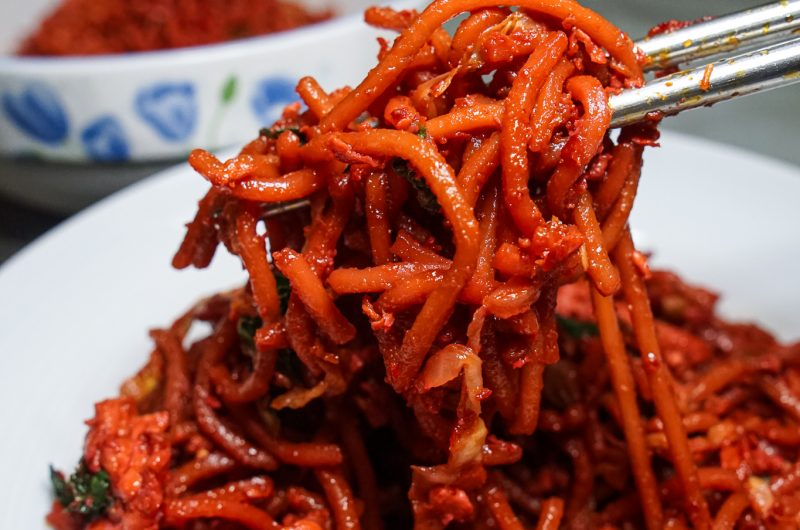
Mee Goreng Mamak (Singapore-Style)
4
servings30
minutes10
minutesLearn how to make bright red Singapore mee goreng mamak at home! Includes easy one-pan method and traditional batch sauce version.
Keep the screen of your device on
Ingredients
- Noodles & protein
600 g yellow noodles
4 eggs
100 g protein (tofu, chicken, prawns, fish cake, or mutton mince)
50 g vegetables (bean sprouts, cabbage, bok choy)
2 tbsp oil, with extra on the side
- Chilli paste
20 g dried red chillies (adjust according to spice tolerance), soaked to soften
60 g shallots or 1 onion
4 –5 garlic cloves
60 ml (¼ cup) water, for easier blending
- Sauce
5 tbsp (75 ml) dark sweet soy sauce (kicap manis)
5 tbsp (75 ml) ketchup
3 tbsp (45 ml) chili sauce
1 tsp salt (or to taste)
0.5 tsp MSG (optional, but recommended for hawker-style flavour)
2 tsp red food colouring (optional)
Directions
- One-Pan Home Version
- Combine sauce: Mix kicap manis, ketchup, chili sauce, salt, MSG, and colouring in a bowl. Set aside.
- Make chilli paste: Blend soaked chillies, shallots, garlic, and water until smooth.
- Fry chilli base: Heat oil over low-medium heat. Cook paste 10–15 mins until dark, thick, and oil separates.
- Cook protein: Push sauce to one side. Scramble eggs to cook. If using other proteins such as chicken, add first before eggs and stir-fry in wok until just cooked.
- Add noodles: Add noodles and vegetables. Pour in sauce.
- Toss: Stir-fry over high heat until evenly coated. Add 1–2 tbsp (15–30 ml) water for easier tossing, if needed.
- Finish: Toss until glossy, hot, and well coated. Serve immediately.
- Hawker Version (Batch Cooking)
- Make chilli paste: Blend chillies, shallots, garlic, and water until smooth.
- Cook chilli base (batch): Fry in oil over low heat until dark, thick, and oil separates.
- Cook sauce base: Stir in kicap manis, ketchup, chili sauce, salt, MSG, and red food colouring. Simmer briefly until glossy. Set to one side.
- Cook protein: In a separate pan, add oil over medium-high heat. Scramble eggs to cook. If using other proteins such as chicken, add first before eggs and stir-fry in wok until just cooked.
- Cook noodles, veggies and sauce: Add noodles, vegetables and the cooked pre-made sauce. Each serving of noodle (150g) is about 2-3 tablespoons of pre-made sauce.
- Toss: Toss noodles with sauce over high heat. Add splash of water for easier tossing, if needed.
- Finish: Once noodles glossy, hot, and evenly coated, Mee Goreng Mamak is ready. Serve immediately.
Did you make this recipe?
Tag @nomadetteats on Instagram


)