

Craving a quick spicy kick? Try Sambal Balado in 2 ways – traditional and healthy no-oil, perfect as a condiment or sambal base.

Jump to Recipe
Introduction
Whenever I need a quick hit of something spicy to instantly make a meal more exciting, I whip out a quick and easy sambal balado. I love my sambal, but let’s be real — it’s can be a whole process to make. When I just need something fast, spicy, and addictive, this is always what I turn to.
It’s spicy, tangy, and incredibly moreish, but also made with simple, whole ingredients like chillies, tomatoes, garlic, and shallots. Not only does it wake up your taste buds, it’s also packed with ingredients that are naturally rich in antioxidants and compounds known to support anti-inflammatory benefits… something I definitely appreciate when I’m eating this almost daily.
Since it’s the new year, I’ve been in a clean-eating mode. So when I was craving some sambal, I started making a healthier, no-oil version of sambal balado at home. Still addictive, just without the oil and frying!
This is also such an ultra versatile condiment! Use it as a sauce side, or as a base for stir fries. Whether you prefer the traditional fried version or a lighter no-oil option, I’ve got you in this post.
What Is Sambal Balado?
Sambal balado is a classic Indonesian chilli sambal, most commonly associated with Minang (Padang) cuisine. It’s known for its vibrant red colour, bold heat, and rich aroma — especially when the sambal is cooked in oil.
At its core, sambal balado is made from just a few simple ingredients: chillies, aromatics, tomatoes, and seasoning. These are pounded (or blended) into a slightly coarse paste and can be used either as a standalone condiment or cooked further to coat other ingredients.
You’ll often find sambal balado paired with:
- eggs (telur balado)
- fried eggplant (sambal terong)
- fried fish, fried chicken, or fried tofu
Unlike sharper, raw-tasting sambals, sambal balado is made with cooked base ingredients, which are softened first before being pounded. This cooking step gives the sambal its deeper flavour, smoother heat, and more rounded finish.
Why You’ll Love This Dish
Key Ingredients
- Red chillies – the base of the sambal! Big, red chillies have a mild to medium heat spice level. In Indonesia, curly red chillies (cili kerinting) are used, but red chillies are more widely available here. Feel free to use whichever’s available to you.
- Bird’s eye chillies (optional, but recommended!) – Red chillies are mildly spicy, and the real spicy kick comes from bird’s eye chillies! Adjust the amount according to your spice tolerance. 1-2 chillies are a good baseline for most.
- Tomatoes – balance the spice and add body to turn this saucy.
- Shallots or onion – sweetness and depth
- Garlic – savoury aroma
- Salt & sugar – essential for balance
- Lime juice (optional) – Optional, although to me a squeeze of lime at the end is essential for the immediate brightness! Especially for the no-oil version.
- MSG (optional) – I never need to add this, but I fear I’d get the wrath of most Indonesians if I don’t include this in. A dash of this for that hit of addictive umami. Alternatively, use chicken stock powder or mushroom seasoning.
- Oil (traditional version only) – Neutral oil for aroma and that signature glossy finish
Key Steps to Making Sambal Balado
Traditional Sambal Balado (Fried)
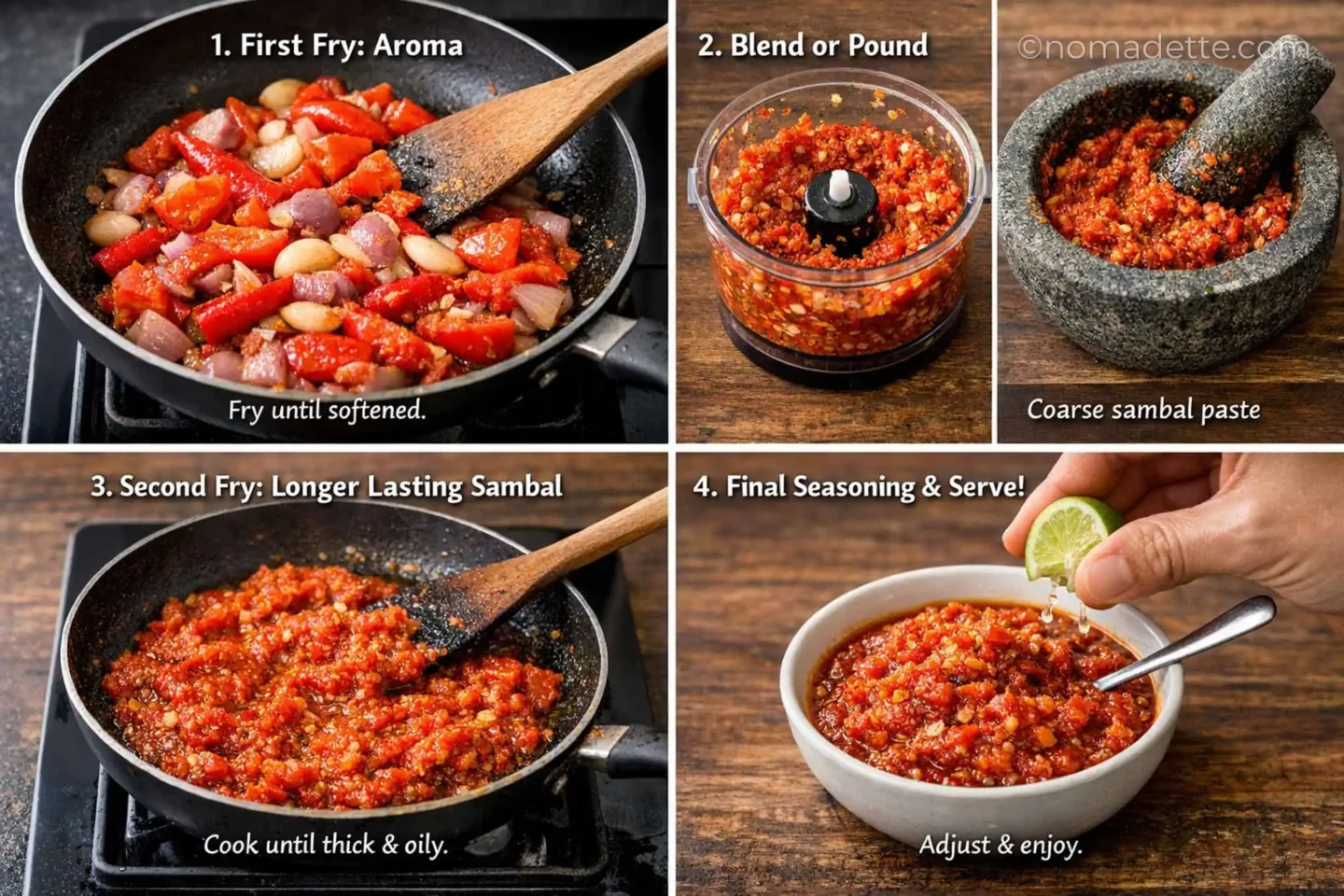
1. Ingredient Prep
- Roughly chop the chillies and shallots into large chunks
- Quarter the tomatoes
- Peel the garlic
2. First Fry: Aroma
- Heat the oil in a pan over medium heat.
- Add the chillies, shallots, garlic and tomatoes.
- Fry gently for about 2-3 minutes, until the ingredients are softened and fragrant. We’re aiming for aroma (and you will start to smell chillies, yum!), not browning.
- Remove from heat and let the mixture cool slightly.
3. Blend or Pound
- Add to a food processor or blender, or a pestle and mortar.
- Pulse the food processor, or pound into a slightly coarse paste.
NOTE: If using a pestle and mortar, it’s easier to pound or mash the ingredients bit by bit.
4. Second Fry: Longer Lasting Sambal
- Return the sambal paste to the pan over medium-low heat. There should still be oil in the pan and/or the paste, but you may add some oil, if needed.
- Add salt, sugar, and msg, if using.
- Cook, stirring regularly, for 5–10 minutes, until:
- the sambal thickens
- the colour deepens
- oil begins to separate and rise to the surface
5. Final Seasoning and Serve!
- Taste and adjust seasoning.
- Once satisfied with flavour, turn off the heat. Add a squeeze of lime juice if desired. Enjoy!
Why the two-step frying process?
Frying the ingredients before blending helps soften the aromatics and draw out their flavour and aroma. The second fry concentrates the sambal, reduces excess moisture, and gives it that thick, glossy finish. This not only results in a deeper, more rounded flavour, but also lowers the risk of a watery sambal — meaning a tastier sambal with a longer shelf life.
HOWEVER, if you’re after an ultra-quick version and don’t mind a slightly sharper flavour, you can take the one-step route: by blend the raw ingredients first and fry everything in one go.
If you’re using a mortar and pestle, though, I’d still recommend frying the larger chunks briefly to soften them first — it makes pounding much easier.
Healthy No-Oil Sambal Balado (Boiled)
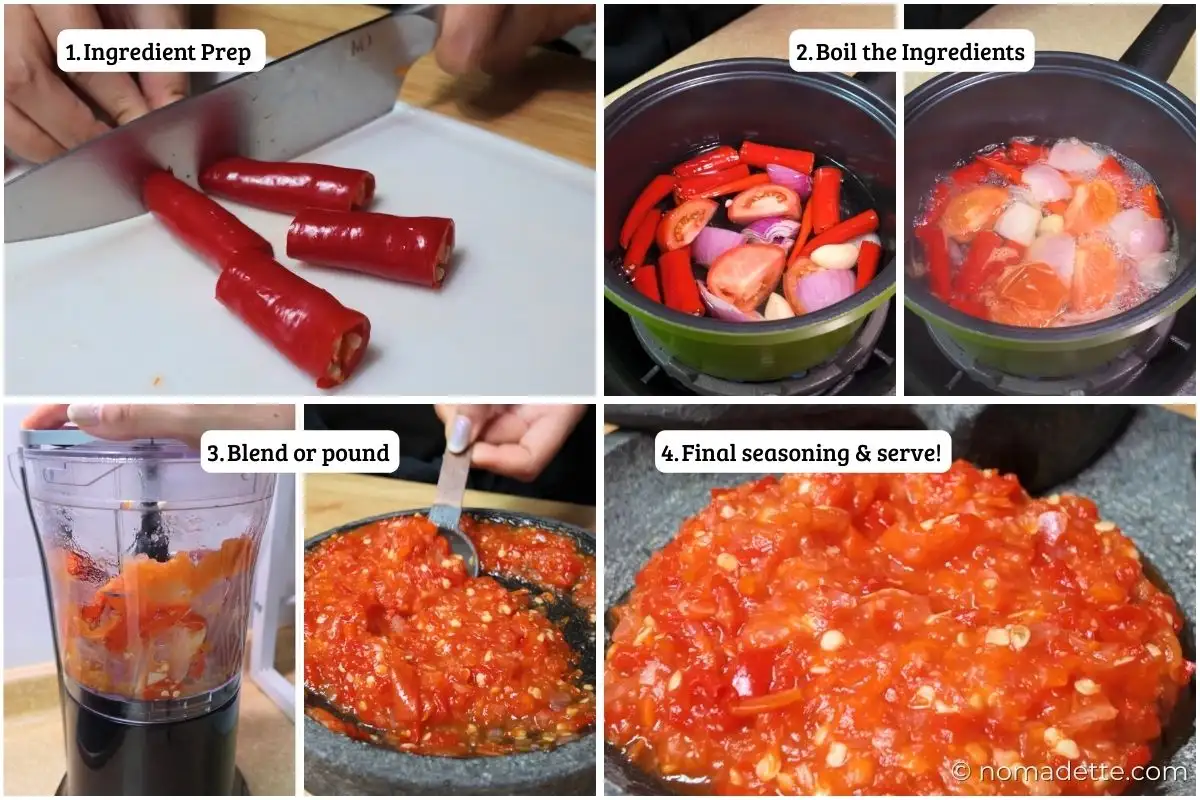
1. Ingredient Prep
- Roughly chop the chillies and shallots into chunks
- Quarter the tomatoes
- Peel the garlic
2. Boil the Ingredients
- Bring a small pot of water to a gentle boil.
- Add the chillies, tomatoes, shallots, and garlic.
- Boil for about 5 minutes, until everything is softened.
3. Blend or Pound
- Drain, reserving a little of the cooking water.
- Add to a food processor or blender, or a pestle and mortar with:
- salt
- sugar
- msg (if using)
- a splash of reserved cooking water until slightly saucy. You shouldn’t need much liquid — tomatoes are very juicy.
- Pulse the food processor or blender to get a coarse texture, or pound on the pestle and mortar.
4. Final seasoning and serve!
- Taste and adjust seasoning.
- Finish with lime juice if you like.
How to Serve Sambal Balado
Sambal balado is incredibly versatile and works with almost anything. Some of my favourite ways to enjoy it include:
- Serve with steamed rice and a protein
- Spoon over fried or soft-boiled eggs
- Pair with grilled chicken or fish
- Toss with tofu or tempeh
- Add to rice bowls or noodles to bump up the spice level
My Favourite Way to Serve It
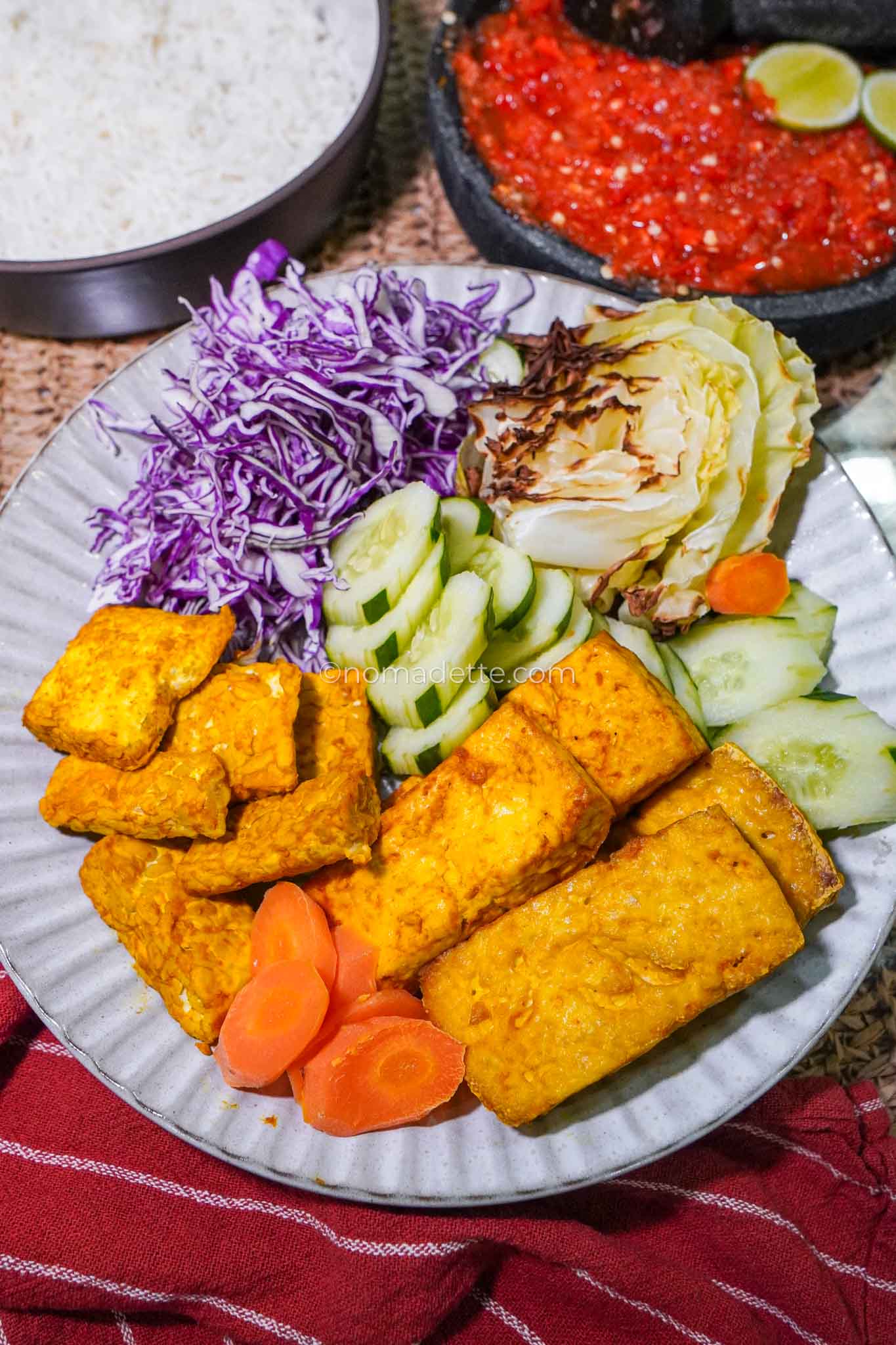
One of my go-to ways to enjoy sambal balado is as a Sambal Balado Veg & Tofu Tempeh Platter.
I keep things simple:
- a platter of simply cooked vegetables (air fried, steamed, blanched, or lightly sautéed)
- fried tempeh and tofu for protein, marinated with just turmeric and salt, then air fried for convenience
- finished with generous spoonfuls of sambal balado on the side
It’s simple, satisfying, and lets the sambal shine! Perfect for when you want something nourishing without overthinking dinner. Also a great way to clear the fridge.
Using Sambal Balado as a Stir-Fry Base
Sambal balado isn’t just a condiment; it makes an incredible ready-made stir-fry base when you need dinner fast. Because it’s already packed with chillies, aromatics, and tomatoes, you can skip most of the prep and go straight to cooking!
How to Use It
- Heat 1–2 tbsp sambal balado (traditional or no-oil) in a pan over medium heat
- Add your protein or veggies of choice such as:
- eggs (boiled or scrambled first)
- chicken, beef, squid, shrimp, fish
- tofu or tempeh (fry/air fry first for best results!)
- mushrooms, eggplant, green beans, cabbage, okra
- Stir-fry to coat until nearly cooked! Add a small splash of water or stock if you prefer a bit of a sauce.
- Season lightly only if needed. Sambal balado is already seasoned and brings plenty of flavour!
Think of sambal balado as your shortcut flavour bomb. One spoonful replaces chillies, garlic, shallots, and tomatoes in a regular stir-fry, making it perfect for busy weeknights.
Tips & Tricks
Storing & Reheating
- Storage
- Traditional version: up to 5–7 days in the fridge (although I’ve found that it usually lasts longer for me)
- No-oil version: up to 3–4 days in the fridge
If sambal smells off, please discard.
- Reheating
- Reheat gently over low heat
- Add a splash of water if needed for the no-oil version
- Make-ahead tip
- Flavours deepen overnight, making this great for meal prep! Whenever I make a batch, I make extra so I can store in the fridge for next time.
More Recipes Like This
- Ayam Geprek | Indonesian Smashed Chicken with Spicy Sambal
- How to Make Sambal Geprek
- Sambal Cabe Ijo | Indonesian Green Chilli Sambal
- Ayam Penyet | Crispy Fried Chicken with Spicy Sambal
- Gado Gado
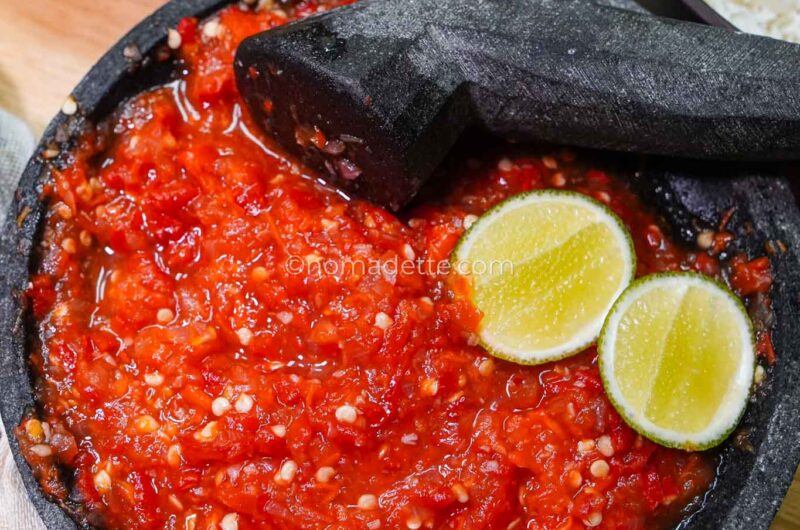
Sambal Balado 2 Ways! (Traditional Fried & Healthy No-Oil Version)
2
servings10
minutes15
minutesCraving a quick spicy kick? Try Sambal Balado in 2 ways – traditional and healthy no-oil, perfect as a condiment or sambal base.
Keep the screen of your device on
Ingredients
6 –8 medium red chillies (about 80–100 g)
2 –3 bird’s eye chillies (optional, about 5–8 g)
2 small tomatoes (about 160–180 g)
1 red onion or 3-4 shallots (about 80–100 g)
2 cloves garlic (about 6–8 g)
1 tsp salt, to taste
1/2 tsp sugar or gula melaka
1/2 tsp MSG or chicken stock powder (optional)
lime juice, to taste (optional)
- For the traditional version only
4 –5tbsp neutral oil or coconut oil (about 60–75 ml)
Directions
- Traditional Sambal Balado (Fried)
- Heat oil in a pan over medium heat.
- Add red chillies, bird’s eye chillies (if using), onion, garlic, and tomatoes. Fry gently for about 2-3 minutes until softened and fragrant. Remove from heat and cool slightly.
- Add the ingredients to a food processor or pestle and mortar. Blend (pulse for a coarse texture) or pound (or mash) into a slightly coarse paste. If using a pestle and mortar, add a few ingredients at a time for easier mashing.
- Return the sambal paste to the pan over medium-low heat. There should still be oil in the pan and/or the paste, but you may add some oil, if needed.
- Add salt, sugar, and msg, if using.
- Cook for another 5–10 minutes, stirring regularly, until thick, glossy, and oil begins to separate.
- Taste and adjust seasoning. Add lime juice if desired.
- Healthy No-Oil Sambal Balado (Boiled)
- Bring a small pot of water to a gentle boil.
- Add chillies, bird’s eye chillies (if using), tomatoes, onion, and garlic.
- Boil for 5–7 minutes until softened.
- Drain, reserving a little of the cooking water.
- Add the ingredients to a food processor or a pestle and mortar. Blend (pulse for a coarse texture) or pound until slightly coarse. Add 1-2 tbsp reserved water, if needed, for easier processing.
- Season with salt, sugar, msg (if using).
- Taste and adjust seasoning. Finish with lime juice if desired.
Did you make this recipe?
Tag @nomadetteats on Instagram


)