

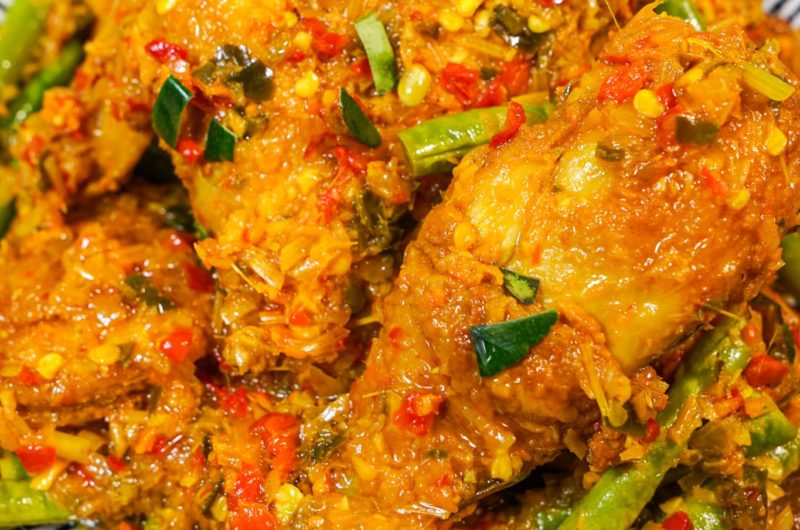
How to make Ayam Pad Phed, a Thai-inspired Malaysian chicken stir fry with bold spices, fresh herbs and fiery chilli flavour. So good with rice!
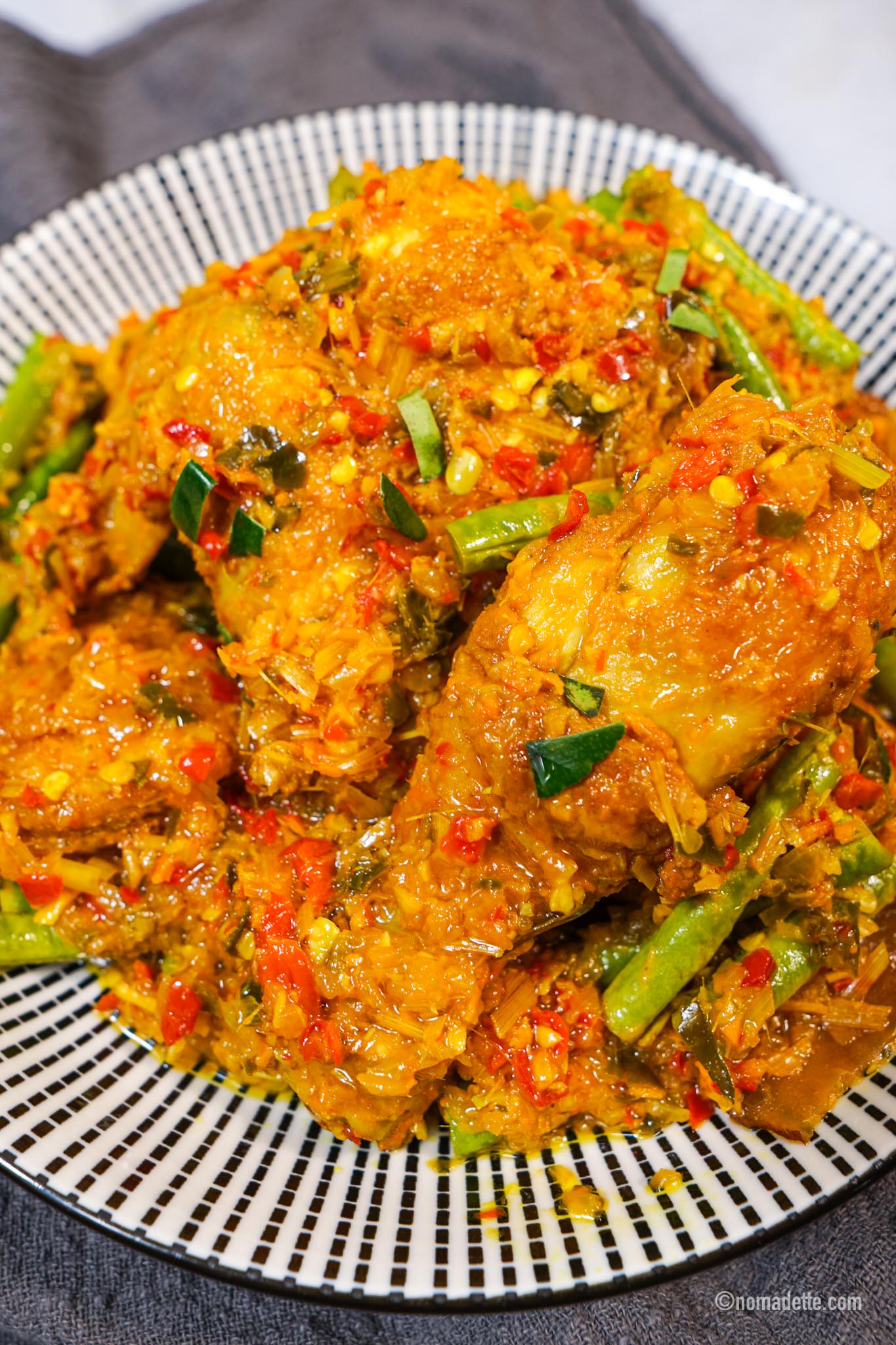
If there is one dish I keep coming back to whenever I want something bold, spicy, and incredibly satisfying with rice, it’s this Ayam Pad Phed (Pad Phet Chicken / Phat Phet Gai / Pad Ped Gai).
This is a Thai-Malaysian spicy chicken dish that begs for a big bowl of steamed rice… a true rice-stealer, ‘tambah nasi’ kind of dish! The spicy, savoury sauce clings to every grain, and I guarantee you’ll be going back for seconds.
It’s everything I love about Southeast Asian cooking: layers of fresh aromatics, fiery chillies, bright lemongrass and makrut lime leaves, with the earthy warmth of turmeric all cooked together into one incredibly flavourful dish.
The best part? Despite the long list of aromatic ingredients, Ayam Pad Phed is actually a simple dish to make at home. Once the aromatic paste is prepared, everything comes together quickly in one pan for a meal that tastes like it came from a restaurant.
Jump to Recipe
What is Ayam Pad Phed?
Ayam Pad Phed is a spicy and aromatic Malaysian chicken stir fry with roots in Thai cuisine.
It’s one of many Thai-inspired dishes that Malaysians adapted into their cuisine, and made it their own. Other Thai-Malaysian dishes include Ayam Paprik (Pad Prik Chicken Stir Fry) and Nasi Pattaya (Omelette-wrapped Fried Rice).
The name is derived from Thai:
- Ayam = chicken (or ‘gai’ in Thai)
- Pad = stir fry
- Phed (Pet) = spicy
Although inspired by Thailand’s famous Pad Phet Gai, the Malaysian version is prepared quite differently. Instead of relying on curry paste, it uses a blend of fresh aromatics such as lemongrass, fresh turmeric, makrut lime leaves and chillies to create a dish that’s fragrant, spicy and deeply savoury.
This is the Malaysian version, and it’s the recipe I’m sharing here. If you’re looking for the authentic Thai Pad Phet Gai, I’ll be sharing that recipe separately.
Ayam Pad Phed vs Pad Phet Gai
It’s easy to assume these are the same dish, but there are a few key differences.
Thai Pad Phet Gai is typically made with red curry paste, giving it a richer, deeper curry flavour. It often includes ingredients like fingerroot (krachai), fresh green peppercorns and Thai basil, and is usually prepared with boneless sliced or minced chicken.
Malaysian Ayam Pad Phed, on the other hand, skips the curry paste altogether. Instead, it relies on a fresh aromatic blend of ingredients like lemongrass, fresh turmeric and chillies, with makrut lime leaves and dried tamarind (asam keping) adding brightness and tang. Bone-in chicken is also commonly used, making it a heartier family-style dish.
Both dishes are spicy, fragrant and delicious, but Malaysian Ayam Pad Phed has developed its own identity over time with flavours that are distinctly Malaysian rather than simply a copy of the Thai original.
Why You’ll Love This Recipe
Key Ingredients
Chicken
- Bone-in chicken is traditionally used in Ayam Pad Phed and gives the dish extra flavour during cooking. If you prefer, boneless chicken thighs work just as well and cook a little faster.
- The chicken is lightly seasoned with turmeric and salt before frying, which helps develop flavour and gives the chicken its beautiful golden colour.
Aromatics
This dish is incredibly easy to make – the hardest part in fact is in rounding up the base ingredients. These are Southeast Asian pantry staples, and can easily be found at Asian markets.
- Makrut Lime Leaves: To give Ayam Pad Phed its bright, citrusy aroma. They add a floral, almost perfume-like fragrance that cuts through the richness of the chicken and chilli paste. Slice them very thinly so they distribute evenly throughout the dish. If you’re using frozen leaves, tear them in whole.
- Onion, Garlic & Ginger: These are the foundation of the aromatic paste.
- Lemongrass: Lemongrass is another key ingredient, and this adds fragrance as well. We only need the white inner core. To prepare this, cut off the tops, and the root bottom, and peel the hard outer layer. Then slice the inner white core thinly, it should slice easily. Watch the video for a closer look at this!
- Bird’s Eye Chillies: It’s not Pad Phet Gai if there’s no spice! The Bird’s Eye Chillies add that all-important heat. Real Pad Ped Gai uses solely bird’s eye chillies.
- Red and Green Chillies: in this recipe, you would notice I added red and green spur chillies instead for a much milder heat. The spur chillies add a mild, sweet spice to the dish, while adding bulk. If you are big on spice, then go ahead and use just bird’s eye chillies!
- Turmeric: In this recipe, I used fresh turmeric. You can in fact replace this with turmeric powder, which is a lot more accessible. I usually use turmeric powder.
Seasonings
The sauce is intentionally simple so the aromatics remain the star.
You’ll need:
- Fish sauce for savouriness
- Palm sugar to balance the heat
- Dried tamarind slices (asam keping) for a gentle tang
What is Asam Keping?
Asam keping, also known as asam gelugur, are dried slices of the Garcinia fruit commonly used in Malaysian cooking as a souring agent.
Although often confused with tamarind pulp, they are different ingredients with different flavours. Asam keping has a cleaner, sharper acidity, while tamarind pulp is fruitier and sweeter.
If you can’t find asam keping, substitute with about 1 teaspoon concentrated tamarind paste. The flavour will be slightly different but still delicious.
Vegetables
Long beans are the traditional vegetable used in Ayam Pad Phed. They add freshness and crunch while soaking up the aromatic sauce beautifully.
Regular green beans make an excellent substitute if long beans aren’t available. Other vegetables you can use include:
- Carrots
- Thai eggplant or baby eggplant
- Bell peppers
- Broccoli or broccolini
- Snow peas or sugar snap peas
Key Steps to Make Ayam Pad Phed

1. Prepare the Aromatic Base
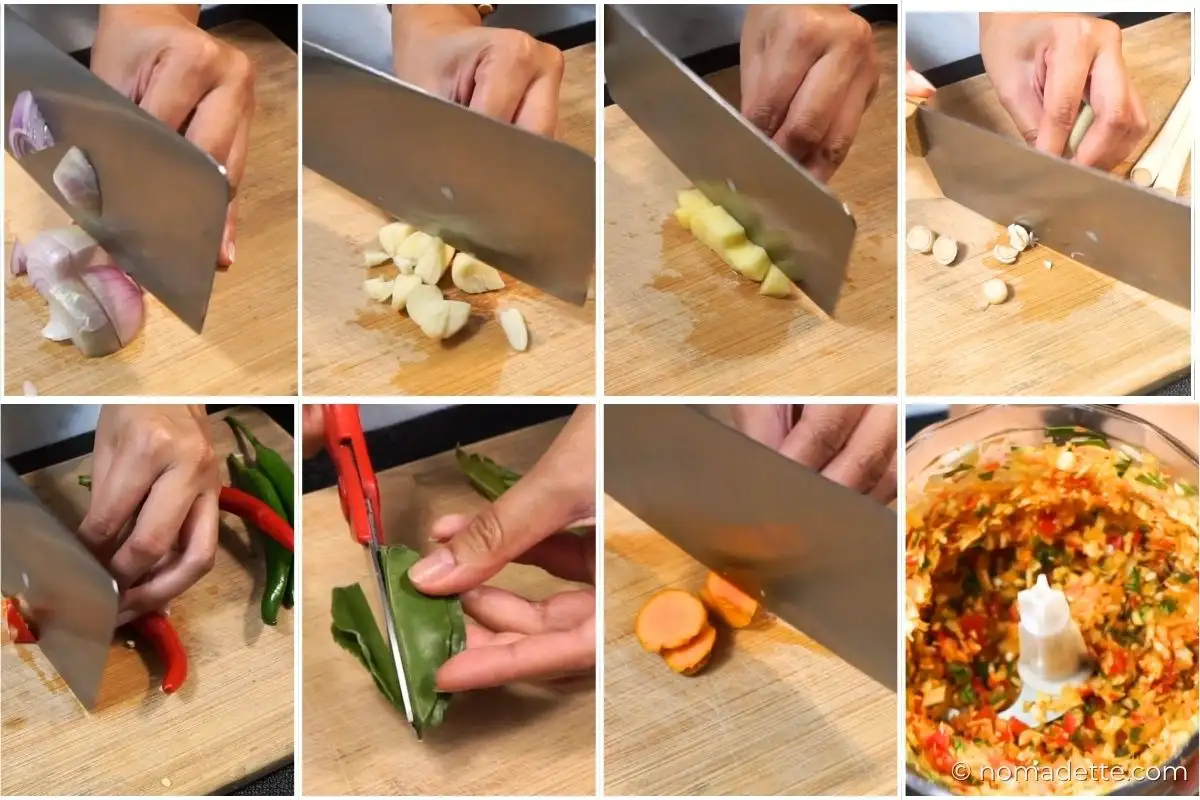
- Roughly chop the ingredients for the aromatic base, then pulse in a food processor until you have a coarse paste.
- Alternatively, pound everything together using a mortar and pestle. A blender can also be used, although it will produce a smoother paste.
2. Marinate and Fry the Chicken
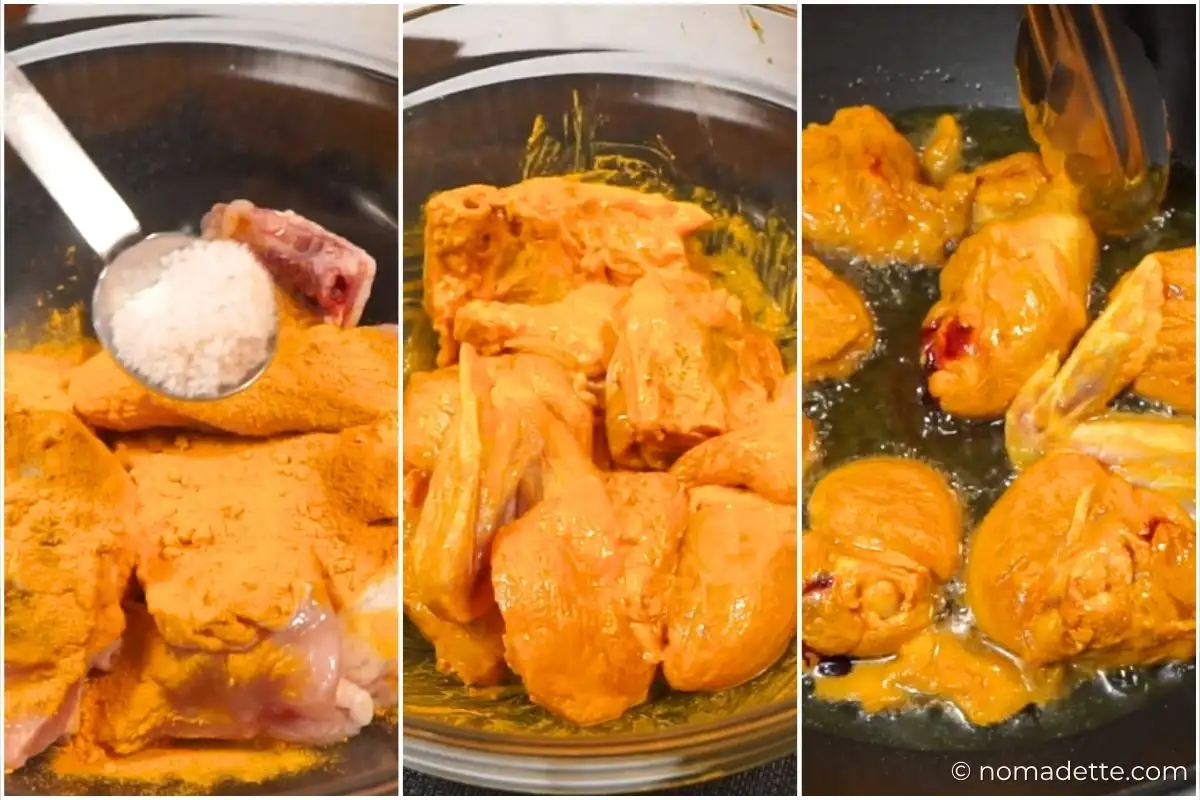
- Rub the chicken with the turmeric and salt until evenly coated.
- Let it marinate for at least 10 minutes. There is no need to refrigerate overnight, but you can for deeper flavour.
- Heat the oil over medium heat. Once hot, fry the chicken for about 10 minutes, or until lightly golden and just cooked through.
- Remove and set aside.
Pre-Frying the Chicken
I only make Pad Ped Gai this way: by frying the chicken pieces first! This takes an extra step, but it makes a big difference to me. Frying the turmeric-marinated chicken first will solidify the texture of the chicken. I find that frying it first, deepens the flavour of the turmeric. This is helpful especially if you’re not marinating the chicken overnight. Frying it till golden and cooked will remove that ‘fishy’ chicken flavour.
This is optional though. Not frying it first will undoubtedly save you a couple of steps and some time, but do note you’ll have a different chicken texture.
3. Cook the Aromatic Base
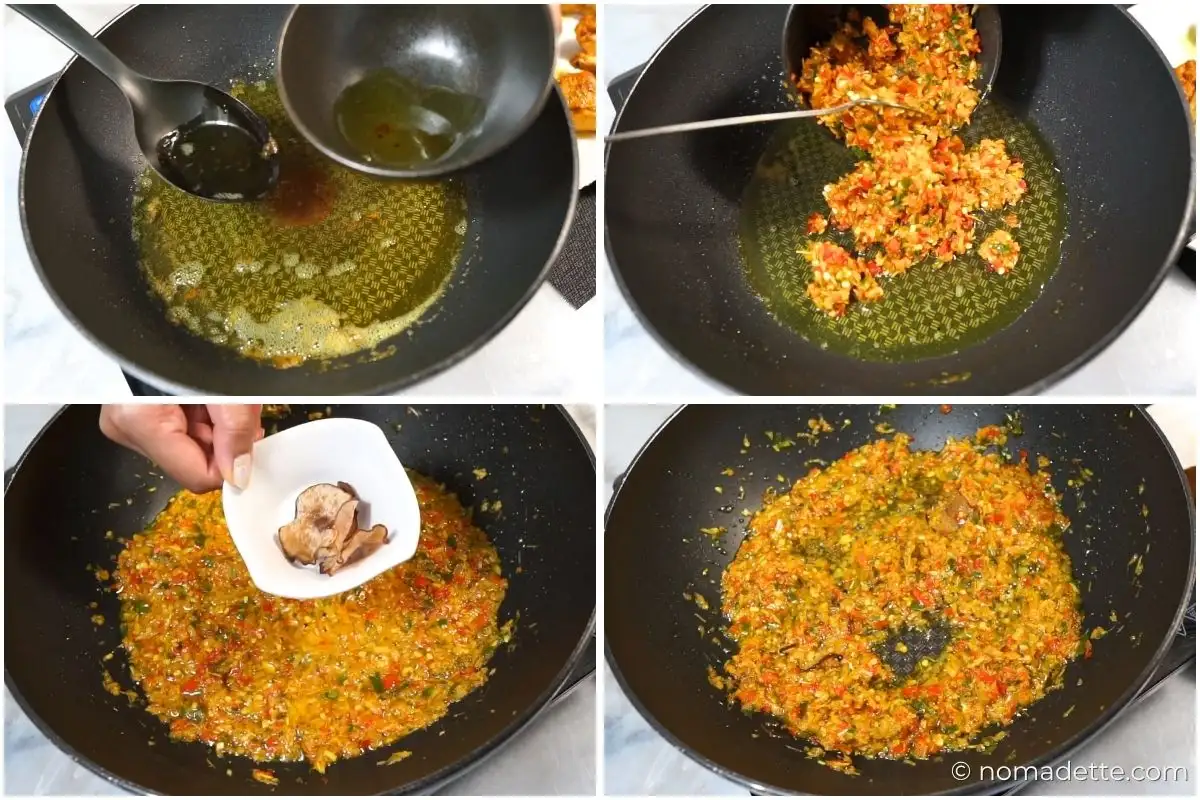
- Carefully remove most of the frying oil, leaving about 3–4 tablespoons in the pan.
- Return the pan to medium heat and add the aromatic paste.
- Stir-fry for 8–10 minutes, stirring frequently, until fragrant, the onions have softened, and the paste has darkened slightly. The oil should begin separating around the edges.
- Stir in the dried tamarind slices.
4. Make the Sauce
- Add the water, fish sauce, salt, and palm sugar.
- Stir well and bring the sauce to a gentle simmer.
5. Finish the Dish
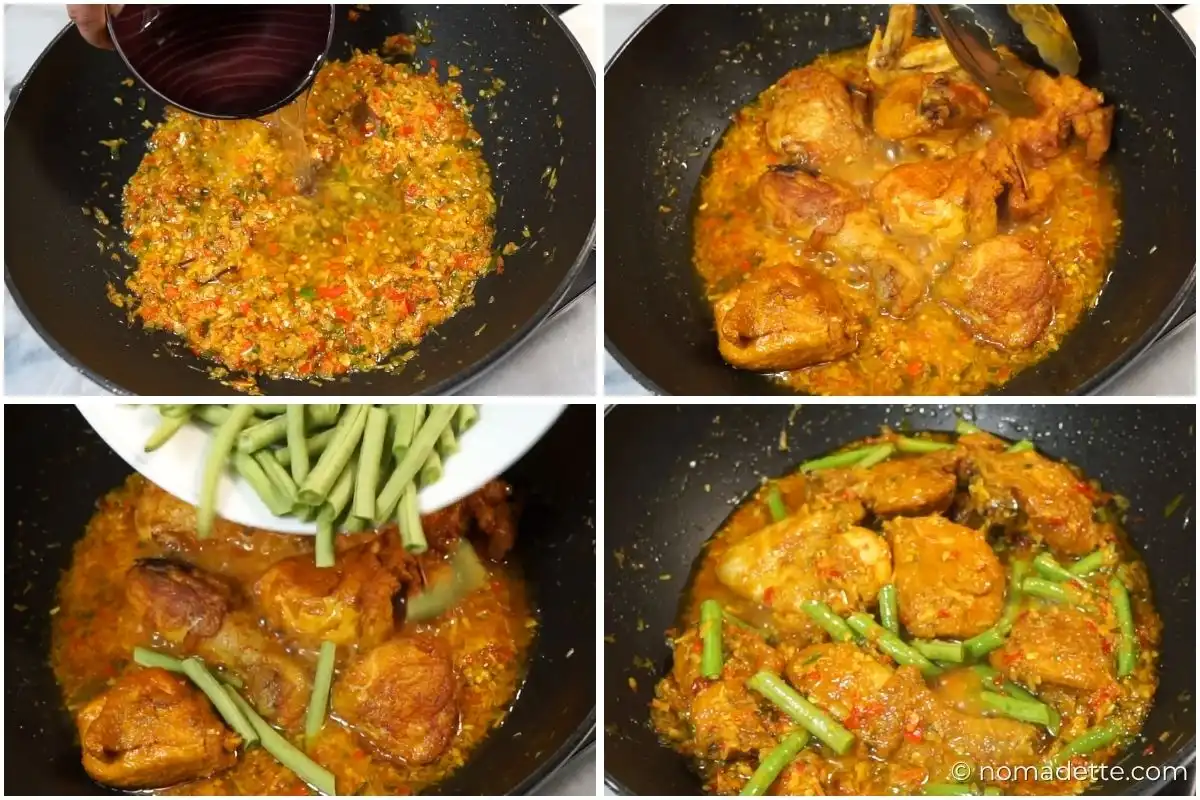
- Return the fried chicken to the pan along with the long beans. Toss everything together until the chicken is evenly coated.
- Simmer for about 5 minutes, or until the long beans are just tender and the sauce has thickened slightly to coat the chicken.
- Serve immediately with steamed rice.
How to Serve
Ayam Pad Phed is best served hot with freshly steamed jasmine rice to soak up all of the delicious sauce.
For a complete Malaysian-style meal, pair it with:
- Steamed rice
- A simple stir-fried vegetable
- Fried egg
- Fresh cucumber
- Sambal on the side for extra heat
Tips & Tricks
Storing & Reheating
- Store leftovers in an airtight container in the refrigerator for up to 3 days.
- To reheat, warm gently in a pan over medium heat with a splash of water until heated through. Alternatively, microwave until piping hot.
- Ayam Pad Phed also freezes well for up to 2 months. Thaw overnight in the refrigerator before reheating.
Watch How To Make Ayam Pad Phed
More Recipes Like This
If you love this recipe, you might enjoy these too:
Ayam Pad Phed (Thai-Malaysian Spicy Chicken Stir Fry)
4
servings15
minutes15
minutesHow to make Ayam Pad Phed, a Thai-inspired Malaysian chicken stir fry with bold spices, fresh herbs and fiery chilli flavour. So good with rice!
Keep the screen of your device on
Ingredients
- Chicken
600 g (1.3 lb) chicken, bone-in pieces or ½ small chicken, cut into serving pieces
1 tbsp ground turmeric
1 tsp salt
1/2 cup cooking oil, for frying
- Aromatic Base
1 medium onion, roughly chopped
2 –3 cloves garlic
10 g (1-inch) ginger
3 stalks lemongrass, white parts only, sliced
10 g fresh turmeric, or 1 tsp ground turmeric
2 Thai bird’s eye chillies
4 red or green big chillies
10 makrut lime leaves, finely sliced
- Sauce
2 slices dried tamarind (asam keping)
1 tbsp fish sauce
½ tsp salt, or to taste
1 tsp palm sugar (or regular sugar), or to taste
1/2 cup (120 ml) water
- Vegetables
100 g long beans, cut diagonally into 5 cm (2-inch) lengths
Directions
- Prepare the Aromatic Base
- Roughly chop the ingredients for the aromatic base, then pulse in a food processor until you have a coarse paste.
- Alternatively, pound everything together using a mortar and pestle.
- Blender can also be used, although it will produce a smoother paste.
- Marinate and Fry the Chicken
- Rub the chicken with the turmeric and salt until evenly coated. Let it marinate for at least 10 minutes, or refrigerate overnight for deeper flavour.
- Heat the oil over medium heat. Once hot, shallow fry the chicken for about 10 minutes, or until lightly golden and just cooked through. Remove and set aside.
- Cook the Aromatic Base
- Carefully remove most of the frying oil, leaving about 3–4 tablespoons in the pan.
- Return the pan to medium heat and add the aromatic paste. Stir-fry for 8–10 minutes, stirring frequently, until fragrant, the onions have softened, and the paste has darkened slightly.
- Stir in the dried tamarind slices.
- Make the Sauce
- Add the water, fish sauce, salt, and palm sugar.
- Stir well and bring the sauce to a gentle simmer.
- Finish the Dish
- Return the fried chicken to the pan along with the long beans. Toss everything together until the chicken is evenly coated.
- Simmer for about 5 minutes, or until the long beans are just tender and the sauce has thickened slightly to coat the chicken.
- Serve immediately with steamed rice.
Notes
- Bird’s eye chillies provide the heat, while spur chillies add colour and body to the dish. Reduce the bird’s eye chillies for a milder version.
- Boneless chicken thighs can be substituted for bone-in chicken. Reduce the frying time accordingly.
- Leftovers keep well in an airtight container in the refrigerator for up to 3 days.
Did you make this recipe?
Tag @nomadetteats on Instagram


)
Love it, the culinary interaction between Thailand and Malaysia has always been fascinating to. In Southern Thailand, the curry paste that is used for pad ped is quite similar to the aromatic blend in your recipe, and chicken is bone in, however cut into smaller slices by most Buddhist cooks and left whole by most Thai Muslims.
Feel free to check out my recipe for Southern Thai Pad Ped:
https://www.curiouscuisiniere.com/pad-ped-gai-southern-thai/
It would be great to work together, feel free to contact me via email ilanim10@gmail.com
Cheers!
Thanks for the input Ilan! I would love to try the Thai Pad Ped soon!