

How I make my easy ikan bilis stock (dried anchovy stock), with minimal ingredients! This umami-rich homemade stock is perfect for soups, stews, noodles, dashi-style recipes, and more. With easy storage and freezer tips!
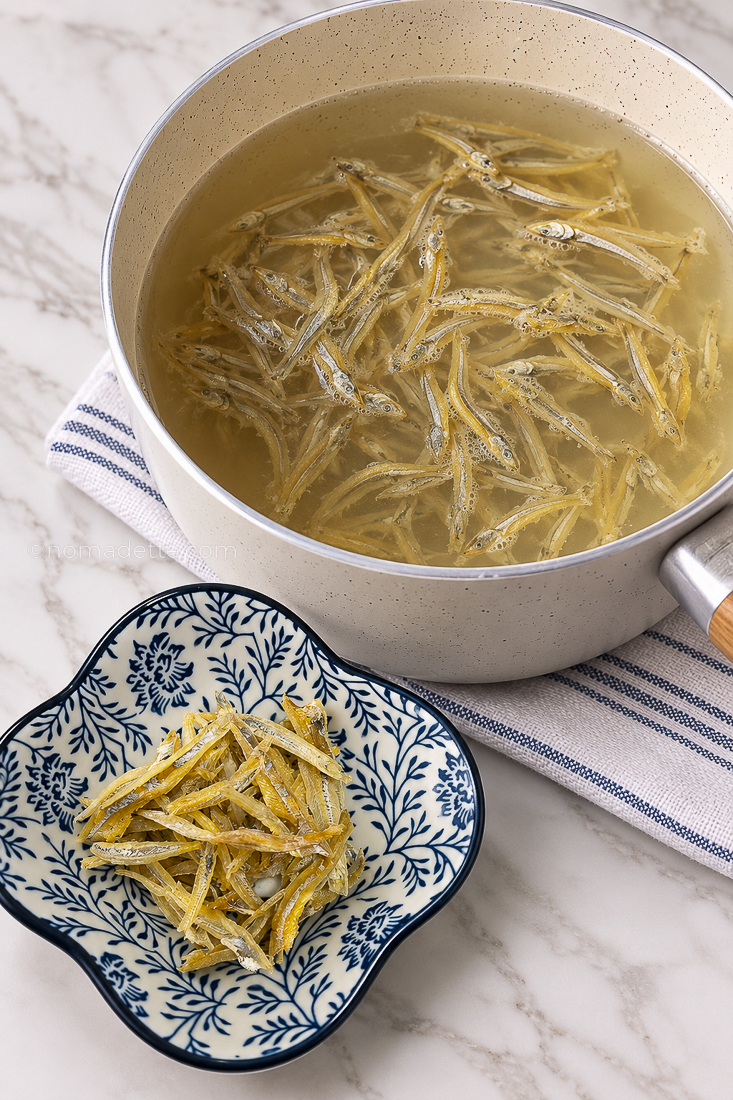
No offense to stock cubes, but I love a good homemade stock with minimal, clean ingredients.
Chicken stock can be a real labour of love that takes time, space, and a little planning. Dried anchovy stock, on the other hand? So easy. It gives me that homemade-stock goodness with hardly any effort.
Ikan bilis stock is one of my favourite weeknight stocks to have in the fridge. It’s savoury, slightly briny, and packed with umami. I use it whenever a recipe calls for dashi, and I find it especially useful in soups, stews, noodles, and all sorts of Asian dishes.
And since dried anchovies are something I always have in my pantry, I can make a batch whenever I need it. If I don’t have a pitcher of stock in the fridge, I usually have some frozen and ready to go in my freezer.
If you’ve never made ikan bilis stock before, this is my easy, fuss-free method.
What Is Ikan Bilis Stock?
Ikan bilis stock is a simple stock made by simmering dried anchovies in water. Ikan bilis is the Malay term commonly used for small dried anchovies, which are a staple ingredient in many Southeast Asian kitchens.
The resulting stock has a clean, savoury umami flavour with a gentle brininess. It’s not intensely fishy, nor is it particularly light or delicate. I’d say it’s somewhere happily in between: flavourful enough to add depth to a dish, but mild enough to use as an everyday stock.
I use it much like I would use dashi or another light savoury stock. It’s especially handy when I want to add a little extra flavour without doing much extra work.
Key Ingredients
What Kind of Dried Anchovies Should I Use?
Quick answer: use whatever dried anchovies are easily available to you!
I usually use the small dried anchovies commonly sold as ikan bilis in Singapore and Malaysia. However, you don’t need to track down a specific type of anchovy to make this stock.
You can also use larger Korean dried anchovies. They’re much bigger than the small ikan bilis I typically use, but they work just as well for this method.
What does “split fish” mean?
You may come across dried anchovies labelled as “split fish.” This simply means the anchovies have been split open, usually lengthwise, as part of the cleaning and preparation process. They’re still perfectly suitable for making ikan bilis stock, so there’s no need to look specifically for whole anchovies.
How to Prepare Dried Anchovies?
Do I Need to Clean the Ikan Bilis?
Nope! This is one of the reasons I love making this stock.
I use the ikan bilis whole, exactly as they are. There’s no need to remove the heads or guts, and I don’t spend time cleaning or prepping each anchovy individually.
This is especially true when I’m using the small ikan bilis commonly found in Singapore and Malaysia. They’re so small that there’s really no need for all that extra fuss, especially since we’re going to strain them out and discard them after making the stock anyway.
If you’re using larger Korean dried anchovies, you may come across recipes that recommend removing the heads and innards first. You can do this if you prefer, particularly if you’re concerned about bitterness, but I personally don’t bother when making stock.
THe only Prep needed
I give the ikan bilis a very quick rinse under cool running water to remove any dust or debris that might be lingering on them.
But don’t soak them or wash them for too long. We don’t want to rinse away too much of that natural saltiness… that’s all flavour!
A quick rinse is all they need before going into the pot.
Ratios
As a general guide, I use:
- about 5g (about 1 tablespoon) dried anchovies per 1 cup (240 ml) water.
The exact amount doesn’t have to be precise, as dried anchovies vary quite a bit in size and saltiness.
Feel free to adjust the ratio depending on how strong you like your stock.
what I ACTUALLY Do for larger batches
When I’m making stock for the week, I don’t bother measuring out smaller amounts.
Since dried anchovies are usually sold in 100g packs, I prefer to use up the whole pack when making my stock:
- 100 g (3.5 oz) dried anchovies to 2 litres (8½ cups) water
This makes a slightly more concentrated, flavourful stock that I can portion and use throughout the week, or freeze for later. You can easily adjust the concentration by diluting with water if needed.
I like this method because dried anchovies are often sold in 100 g packets, so I can use up the whole packet in one go… no half-open bags left in the fridge!
Stock Upgrade with Aromatics
Can you add aromatics to the ikan bilis stock? Absolutely! The basic ikan bilis stock is intentionally fuss-free to make it ultra versatile, but if I’m in the mood to add a little more flavour, I’ll throw in some aromatics while the stock simmers.
Some of my favourites are:
- Onion
- Crushed garlic
- Slices of ginger
- Spring onion roots
- Aromatic vegetable scraps and discards that I’ve saved for making stock
Just add them to the pot along with the ikan bilis and water, then simmer as usual.
Do keep in mind that adding aromatics will gently change the flavour of your stock. However, if you’re using simple aromatics like onion, garlic, ginger, or spring onion roots, the flavour shouldn’t drastically affect the final dish. You’ll simply get a little more flavour and complexity in your stock.
This is also a great way to use up those aromatic discards that might otherwise go into the bin. I like saving things like spring onion roots and other suitable vegetable scraps in the freezer, then adding them to my next batch of stock.
How to Make Ikan Bilis Stock
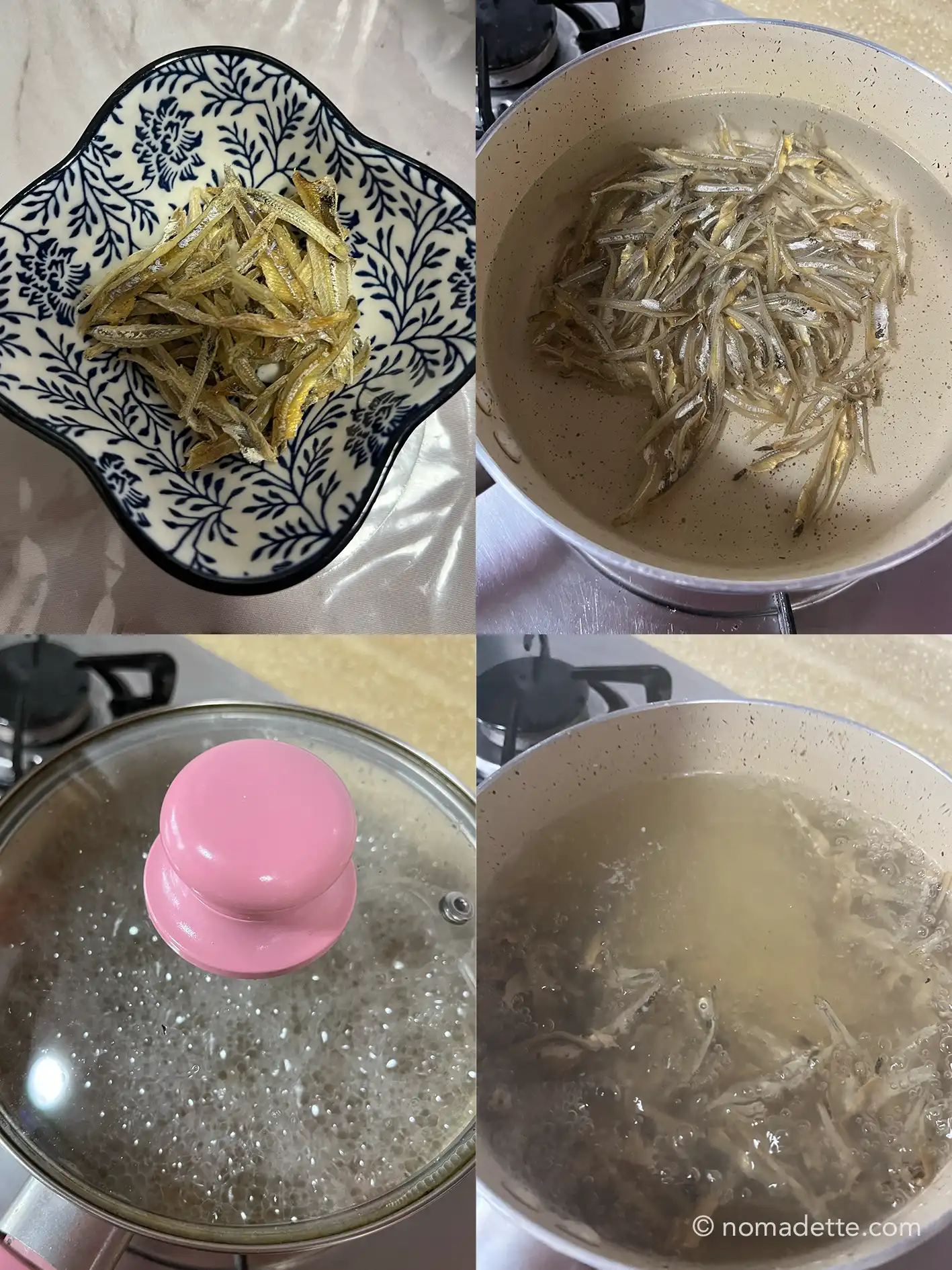
1. Give the dried anchovies a quick rinse
Rinse them briefly under cool running water to remove any surface dust or debris. Don’t soak or wash them for too long, we want to keep that natural saltiness for flavour.
2. Add the ikan bilis and water to a pot.
There’s no need to remove the heads or guts or do any other preparation. Just add the whole dried anchovies directly to the pot.
3. Bring to a boil.
Place the pot over medium-high heat and bring the water to a boil.
4. Simmer for 20 minutes.
Once boiling, reduce the heat to a gentle simmer. Let the ikan bilis simmer for 20 minutes to extract their savoury, umami flavour.
5. Strain.
Strain the stock through a fine-mesh sieve to remove the ikan bilis. Your ikan bilis stock is ready to use!
Storing and Freezing
I usually keep a batch of ikan bilis stock in the fridge for the week, but if I’ve made a larger batch, I’ll freeze the rest for later.
In the fridge
I have a dedicated stock pitcher that I use only for storing homemade stocks. I’ll pour in whatever stock I’m planning to use throughout the week. I highly recommend having a separate stock pitcher… you really don’t want to be sipping on iced tea with a taste of anchovies!
If I’ve made more than one type of stock, I’ll store them separately in glass containers instead.
I keep ikan bilis stock in the fridge for up to 1 week.
In the freezer
Zip Lock Bags
My favourite way to freeze stock is in zip-lock freezer bags. They’re easy to stack, which saves precious freezer space, and you can portion the stock based on how much you’ll typically use.
I like to freeze the bags flat so they take up very little room. Just make sure you seal the bags really well!
When I’m ready to cook, I can take a frozen portion straight from the freezer and add it directly to the pot. There’s no need to defrost it first—the frozen stock will melt as the pot heats up.
If I need to thaw it quickly, I can also microwave it.
Ikan bilis stock in the fridge can be kept for up to 1 week. If it smells overly fishy or tangy, discard.
Freezer-Safe Containers
If I’m freezing a large amount of stock that I know I’ll use all at once, I’ll use a freezer-safe container instead.
You can also freeze stock in silicone meal-prep cubes for smaller portions, although I personally don’t use them.
Frozen ikan bilis stock can be kept for up to 3 months. If it smells overly fishy or tangy, discard.
Ways of Using Dried Anchovy Stock
My rule of thumb is simple: if a recipe calls for dashi or a light savoury stock, ikan bilis stock is usually a great option.
I use it in all sorts of dishes, especially Asian soups and stews.
Southeast Asian dishes
Ikan bilis stock is also great for all sorts of Southeast Asian soups and broths.
I use it for:
- Sayur bening, a simple vegetable soup
- Tom yum
- Vegetable soups
- Noodle soups
- Rice porridge and congee
- Seafood soups
- Hot pot base
Korean and Japanese
Dried anchovy stock is a common base in Korean cooking, so ikan bilis stock works particularly well in Korean soups, stews, and noodle dishes.
- Soondubu jjigae — one of my favourite ways to use ikan bilis stock
- Tteokbokki
- Korean noodle soups
- Eomuk-guk (fish cake soup)
- Kimchi jjigae
Traditional Japanese dashi can be made in several different ways, including with dried fish. I use ikan bilis stock whenever I want a savoury, fish-based dashi-style broth.
- Udon
- Soba
- Agedashi Tofu
- Chawanmushi
- Japanese simmered dishes
Basically, whenever you want to add a little more umami to a dish without much effort, reach for your ikan bilis stock.
Keep in mind that ikan bilis stock will have a slightly different flavour from classic kombu and bonito dashi, but it’s a convenient pantry-friendly alternative when you want that savoury depth.
Frequently Asked Questions
Can I USE The Instant pot to make ikan bilis stock?
Of course! But only in large batches. The ratios remain the same.
For a larger batch:
- 100g dried anchovies (ikan bilis)
- 2 litres (about 8 cups) water
- Add the rinsed ikan bilis and water to your pressure cooker.
- Pressure cook on High for 10 minutes, then allow a natural release for 10–15 minutes.
- Strain the stock through a fine sieve and cool completely before storing.
That’s it!
If you’re making a smaller amount of stock, I wouldn’t recommend using the instant pot… it’s overkill for the amount of stock you’re making. You won’t be saving that much time, and you would also risk over-boiling the anchovies, resulting in a fishy and cloudy stock.
Do I need to wash ikan bilis before making stock?
I recommend giving them a very quick rinse under cool running water to remove any surface dust or debris.
Don’t soak or wash them for too long! The ikan bilis naturally contain salt, and that salt contributes to the flavour of your stock. A quick rinse is all you need.
Do I need to remove the heads and guts?
If you’re using small ikan bilis, I don’t bother. They’re small enough that there’s no need for extra preparation, especially since we’re straining them out after simmering.
If you’re using larger Korean dried anchovies, you may choose to remove the heads and innards first. This is optional for this stock recipe, but some prefer to do so to reduce the chance of bitterness.
Can I eat the leftover ikan bilis?
Yes. After simmering, the ikan bilis will be soft and chewy.
I usually discard the ikan bilis after straining the stock. By this point, they’ve given up most of their flavour to the stock, and I personally don’t love the chewy texture of the softened anchovies.
My mum loves them, though, and usually saves a tablespoon or two to add to other dishes.
So, if you enjoy eating the softened anchovies, feel free to save some and add them to soups, stir-fries, or other savoury dishes. Otherwise, it’s completely fine to discard them after straining—the stock has already extracted the flavour I need from them.
Can I use ikan bilis stock instead of dashi?
Yes. This is actually how I use it most often!
Ikan bilis stock isn’t exactly the same as traditional Japanese dashi, but it provides a similar savoury, umami-rich quality. I use it whenever a recipe calls for dashi, especially in soups, stews, and noodle dishes where the briny anchovy flavour works well.
How long does ikan bilis stock last?
- I keep ikan bilis stock in the fridge for up to 1 week.
- For longer storage, freeze it in portions for up to 3 months.
Why This Is My Weeknight Stock Staple
Ikan bilis stock is one of those little kitchen staples that makes everyday cooking so much easier. So much so that it lives in my fridge more than chicken stock!
There’s no need to spend hours simmering a pot of chicken stock, and there’s no need to reach for a stock cube every time you need a little extra flavour. With a packet of dried anchovies and some water, you can have a flavourful homemade stock ready to go with very little effort.
I can have ultra flavourful, healthy soups, gravies, stir fries anytime I want throughout the week with very little effort.
Make a batch, keep some in the fridge for the week, and freeze the rest in portions. Once you get into the habit of keeping homemade stock in your freezer, you’ll always have an easy flavour boost ready whenever you need it.
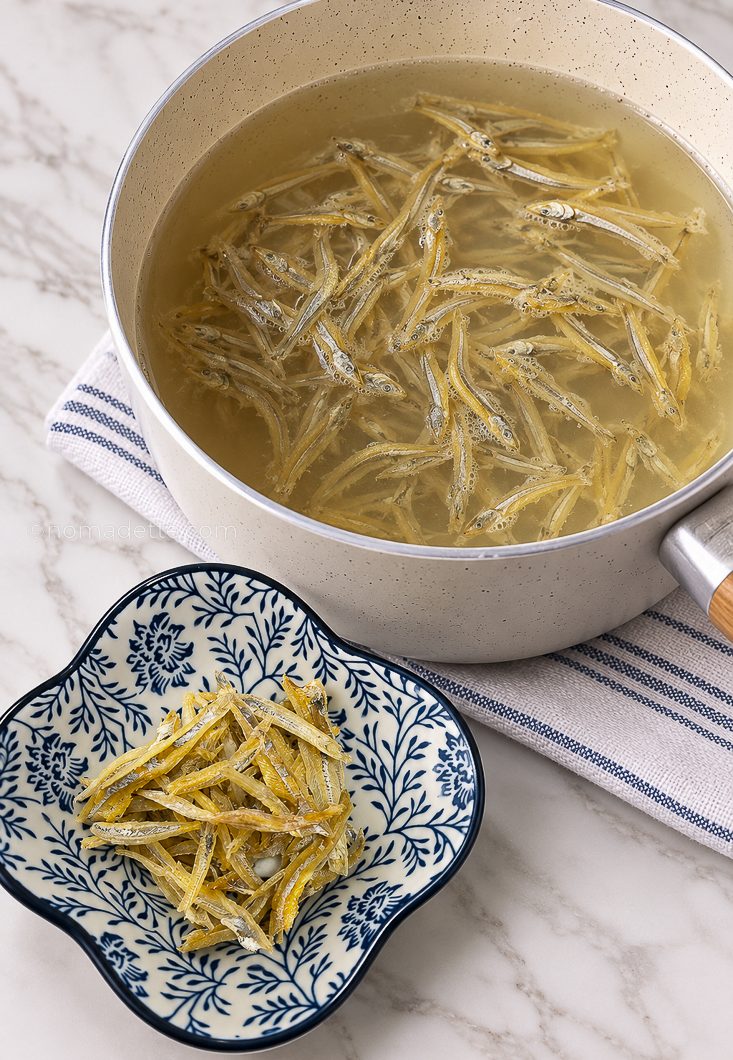
Ikan Bilis Stock (Dried Anchovy Stock)
4
servings5
minutes20
minutesHow I make my easy ikan bilis stock (dried anchovy stock). This umami-rich homemade stock is perfect for soups, stews, noodles, dashi-style recipes, and more. Includes easy storage and freezer tips!
Keep the screen of your device on
Ingredients
100 g (3.5 oz) dried anchovies or ikan bilis
2 litres (8½ cups) water
Directions
- Prepare the Ikan Bilis
- Give the dried anchovies a very quick rinse under cool running water to remove any dust or debris. Do not soak or wash them for too long, as you don’t want to rinse away too much of their natural saltiness.
- Simmer the Stock
- Place the rinsed ikan bilis and water in a large pot.
- Bring the water to a boil over medium-high heat.
- Once boiling, reduce the heat to a gentle simmer. Simmer for 20 minutes.
- Strain and Store
- Strain the stock through a fine-mesh sieve, discarding the ikan bilis. The stock is ready to use.
- To store in the fridge or freeze, let the stock cool down completely. Once cooled, pour into containers of choice before storing in the fridge or freezer.
Did you make this recipe?
Tag @nomadetteats on Instagram



)