

A Ramadan iftar classic you can make at home! Bubur lambuk or spiced porridge: hearty, fragrant, and perfect for sharing with family.

This is the porridge that only appears once a year… always during Ramadan. Bubur lambuk is an iftar special in Singapore and Malaysia. It’s traditionally cooked in huge vats and given away at mosques just before breaking fast. It’s generous, communal cooking at its best; and definitely a dish made to be shared.
I rarely get my hands on it though. By the time we reach the mosque, there’s usually no more bubur left. It’s hot commodity!
So, fear not, here’s the version you can make at home. It’s easy, deeply fragrant, and makes a generous batch. It keeps beautifully too, which means we love having it again for suhoor! Gentle, warming, and easy on the stomach first thing in the morning.
In this version, I’ve added a small amount of lentils for a boost of protein and fibre. Jasmine white rice is typically used, but if you want an added boost of fibre, you can easily replace with brown rice for this flexible porridge recipe.
I cooked this on the stovetop, but you can absolutely make it in the Instant Pot. More on that below!
Jump to Recipe
What Is Bubur Lambuk?
Bubur lambuk is a specific style of spiced (rempah) porridge traditionally cooked and distributed during Ramadan in Singapore, Malaysia, Brunei and some parts of Indonesia. Traditionally, it is prepared in large quantities during Ramadan and distributed freely to the community before iftar.
- “Bubur” means porridge in Malay.
- “Lambuk” doesn’t have a direct literal translation. I’ve never used nor heard of lambuk in any other context than in bubur lambuk! (Feel free to drop in and let me know otherwise!)
So when you say bubur lambuk, you’re essentially saying:
“Ramadan-style spiced rice porridge.”
It’s a savoury Malay rice porridge infused with warming spices, aromatics, herbs, and usually meat such as beef, lamb or chicken.
Unlike plain congee, it is layered with whole spices like cinnamon and star anise, ground spices like coriander and cumin, dried shrimp for subtle umami, and coconut milk for a gentle richness.
This porridge is not meant to be fiery or heavily spiced, making this perfect for anyone. The flavour is warm, comforting, and deeply aromatic, and just the right kind of nourishing you need after a long day of fasting.
This is such an upgraded version of porridge, that I wonder why we don’t have it throughout the year!
Why You’ll Love This Version
Key Ingredients
Rice (Choose Your Base)
I’ve made this with many types of rice, and honestly, they all work. The difference comes down to texture.
- Jasmine Rice – The most traditional option. It cooks down into a soft, silky porridge.
- Basmati Rice – Works well, but needs slightly longer cooking to fully break down its firmer grains.
- Japonica / Short-Grain Rice – My personal favourite for porridge. Short-grain or sushi rice is starchier, so it breaks down faster and gives you that thick, creamy congee-style texture.
- Brown Rice – My go-to during Ramadan. It adds a subtle nuttiness and more texture. It also contains more fibre than white rice, which helps keep you fuller for longer during fasting.
Lentils (Optional, But I Highly Recommend It)
If you want to boost the nutrition while keeping the flavour traditional, add a small handful of lentils as the porridge cooks.
They:
- Add plant-based protein
- Increase fibre
- Naturally thicken the porridge
- Make it more satisfying!
Red lentils are ideal because they soften quickly and blend seamlessly into the rice. Yellow lentils work too.
Used subtly, they enhance the texture without turning the dish into dal.
Minced Beef (Or Your Protein of Choice)
Beef gives this version a deeper, heartier flavour. When cooked properly with the spice paste, it disperses evenly throughout the porridge so every spoonful is well seasoned.
I prefer minced beef because it cooks quickly and integrates beautifully into the rice.
You can also use:
- Thinly sliced beef
- Lamb (rich and flavourful!)
- Chicken, which is a more traditional and lighter option
Spices & Aromatics
This is what transforms it from plain porridge into something unmistakably Ramadan.
- Aromatic Paste – Shallots, garlic, ginger are blended into a paste and cooked down until fragrant and slightly caramelised to remove any raw sharpness.
- Empat Sekawan (The “Four Friends”) – Cinnamon, star anise, cloves, and cardamom are the essential spices in the Malay kitchen pantry. They create the warm, mosque-style fragrance bubur lambuk is known for. If you prefer convenience, you can use sup bunjut (Malay soup spice sachets). As a bonus, you won’t accidentally bite into any pungent whole spices later on. Using loose spices however will get you that lovely aroma evenly dispersed throughout the bubur.
- Ground Spices – Ground coriander, cumin, fennel and turmeric (also staples in the Malay pantry) add warmth and roundness. The turmeric also adds a slight golden hue to the bubur, makes it more appetising! If you have a favourite Malay sup spice blend, that works beautifully too.
- Dried Shrimp – Just a small amount adds savoury depth and complexity. It won’t make the dish taste “seafood-y” — it adds ~umami.
- Lemongrass – Instead of blending it into the paste, I bruise it and simmer it whole to avoid any pesky fibres sneaking into the porridge. If you prefer to blend it in instead, slice thinly, and blend well with the aromatics.
- Pandan Leaves (Optional but Traditional) – Knotted pandan leaves can be added while simmering for a subtle, fragrant sweetness. Remove before serving.
Optional: You can pre-measure whole and ground spices into small bowls for easier sautéing.
Liquid & Finishing Touches
- Hot Water: Hot water is the base of the porridge. Hot water will not only speed up the cooking process, it’s going to help break down the rice into that porridge consistency we love. I usually keep my kettle running while cooking to speed things up. You can also use stock, but make sure to take into account of salt levels when seasoning.
- Coconut Milk: Added at the end for gentle richness. It shouldn’t dominate — just soften the spices and round out the porridge. Personally, I sometimes skip it at home if I want a lighter version. The bubur is still delicious without it.
Key Steps to Making Bubur Lambuk
Prep
Do this first to keep the cooking process smooth:
- Rice & Lentils: Rinse until the water runs mostly clear. Drain well.
- Aromatic Paste: Blend onion (or shallots), garlic, and ginger with a small splash of water into a smooth paste.
- Dried Shrimp: Give a quick rinse, then finely chop or pulse in a processor.
- Lemongrass: Trim the base and bruise firmly with the back of a knife or pestle to release the fibres and aroma.
- Pandan Leaves: Knot if using.
- Liquid: Prepare hot water in advance. I like to keep the kettle running so there’s always hot water ready to top up the porridge as it cooks.
Optional: You can pre-measure whole and ground spices into small bowls for easier sautéing.
1. Build the Aromatic Base
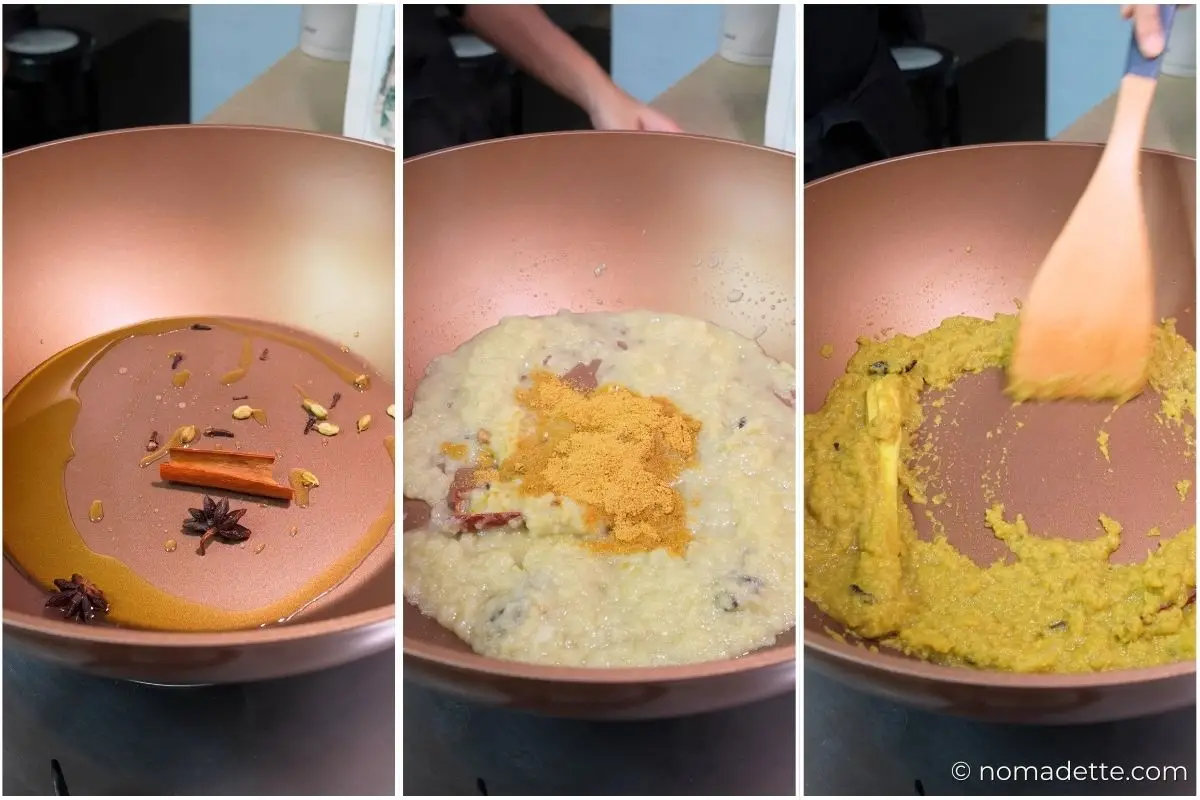
- In a large heavy-bottomed pot, heat the oil over medium heat.
- Add the cinnamon stick, star anise, cloves, and cardamom. Toast for about 30 seconds until fragrant.
- Add the blended paste. Stir in the ground coriander, cumin, fennel and turmeric. Add the bruised lemongrass and pandan leaves (if using).
- Sauté for 5–8 minutes, stirring frequently, until:
- The paste smells deeply fragrant
- The colour has slightly deepened
- The oil begins to separate at the edges
- The paste should smell cooked and aromatic, not raw. Cook gently — avoid high heat so the ground spices don’t burn.
2. Brown the Beef
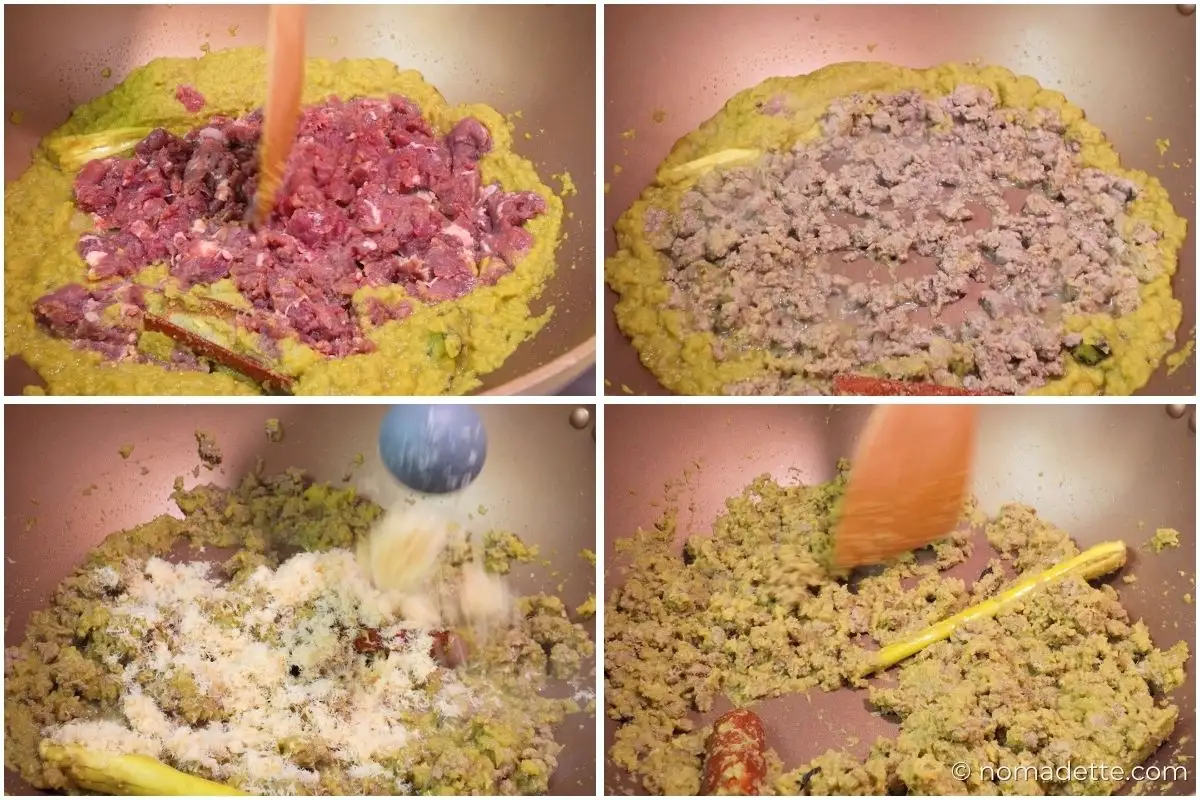
- Push the paste to one side. Add the minced beef. If your pot has not much space, it’s ok to mix with the paste.
- Break the beef apart finely with your spatula.
- Cook for 5–7 minutes until:
- The released liquid evaporates
- The beef begins to brown
- The mixture looks slightly crumbly rather than wet
- Stir fry to combine with the paste.
- Add the chopped dried shrimp and stir-fry for another 1–2 minutes until fragrant.
3. Add Rice
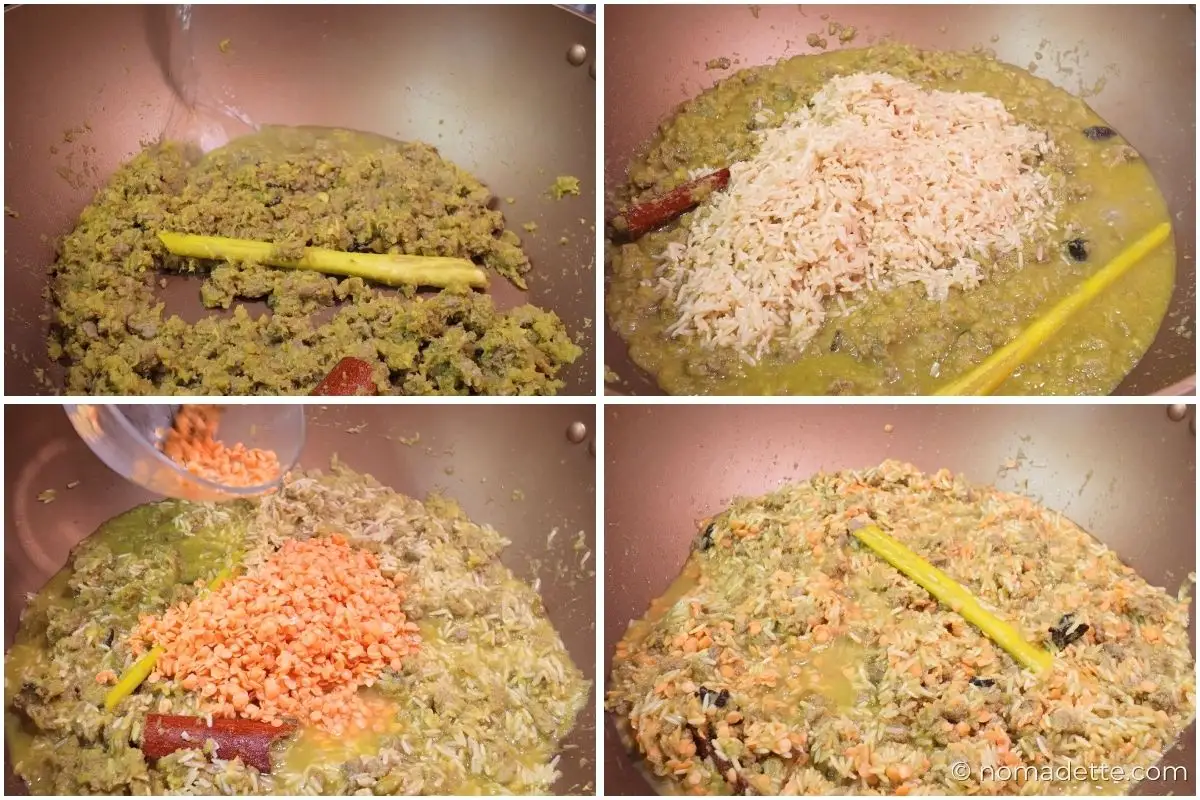
- Pour in about 1 cup hot water. This is just to loosen the mixture and prevents the rice from sticking to the sides of the pot when added.
- Add the rinsed rice and optional red lentils.
- Stir for 1–2 minutes so the grains are evenly coated in the aromatic base.
4. Simmer into Porridge
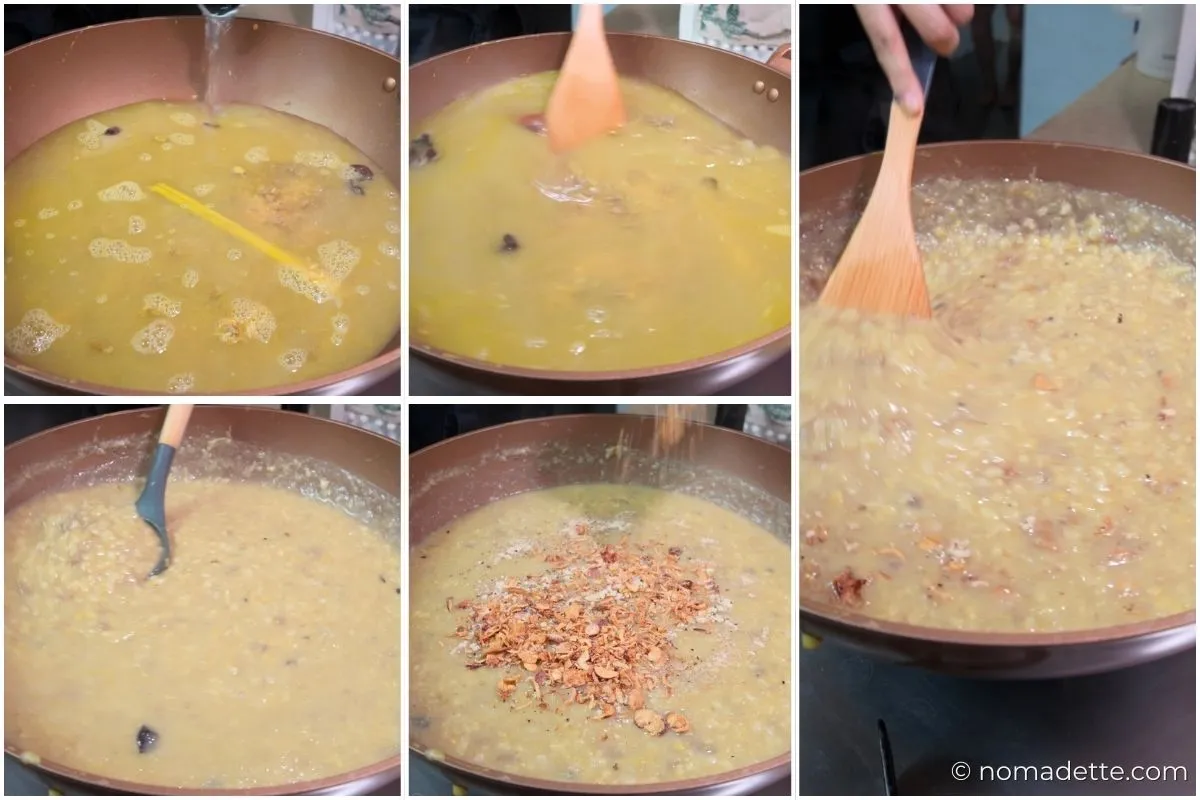
- Pour in the remaining hot water or stock. Stir well to lift anything from the bottom of the pot.
- Bring to a boil, then reduce to a gentle simmer.
- Cook uncovered for 40–50 minutes, stirring occasionally to prevent sticking.
- Continue to cook until it achieves your desired consistency! The rice will gradually soften and break down into a creamy porridge. If using lentils, they will dissolve gently into the mixture, adding body without changing the flavour.
- If the porridge becomes too thick, add ½ cup hot water at a time until it reaches a loose, spoonable consistency. If it’s too loose, continue to cook until it thickens.
5. Finish
- Stir in the coconut milk, and salt and pepper. Adjust seasoning to taste.
- Stir in 1/4 cup fried shallots. Option to also stir in 1/4 cup coriander and celery leaves, but leave it out if you’re planning to store for longer or freeze.
- Simmer for another 5 minutes, then turn off the heat.
- Remove the lemongrass, pandan leaves (if using), and any visible whole spices before serving.
- Serve, with additional fried shallots, coriander, and celery leaves for garnish. ENJOY!
Can You Make This in the Instant Pot?
YES!
I love how quick this produced bubur lambuk, although I personally find sauteeing in an instant pot slightly awkward. So make sure to saute each component well before pressure cooking.
Use the sauté function to build the spice base and brown the beef. Add rice, lentils, and liquid. Cook on high pressure for about 15-20 minutes, then allow natural release for 10–15 minutes before venting. If it’s too thick, add hot water and stir.
Full instructions in the recipe card below.
Can You Make This in the Rice Cooker?
Short answer: yes.
Long answer: I don’t personally prefer it.
I’m usually a big advocate for the rice cooker, but bubur lambuk is one of the few dishes where it’s just less hassle to use the stovetop. I find the stovetop gives better control and better texture. That said, it can be done with a few adjustments.
-> If Your Rice Cooker Has a Sauté Function
- Use the sauté setting to build the aromatic base first.
- Toast the whole spices, cook the blended paste with the ground spices, and brown the beef properly.
- Once fragrant and slightly reduced, add the rice, lentils (if using), and liquid.
- Cook using the porridge setting if available, or the regular rice setting.
-> If Your Rice Cooker Does Not Have Sauté
- Preheat the rice cooker insert before adding oil and aromatics (if your model allows this safely, and it will likely take time to heat up), OR
- Cook the entire spice base and beef separately on the stovetop first, then transfer everything into the rice cooker with the rice and liquid.
Whichever method you choose:
- Stir midway through cooking if possible to prevent the rice from settling, and evenly redistribute the spices.
- Be prepared to add additional hot water if it thickens too much.
Why I Personally Don’t Prefer It
- It takes significantly longer to achieve the right porridge texture.
- Most rice cooker bowls aren’t large enough for a generous batch.
- You still need to stir occasionally to prevent settling and ensure the spices distribute evenly.
- At that point, it becomes less “hands-off” than I’d like from a rice cooker.
For me, bubur lambuk is one of those dishes that benefits from a wide pot and gentle stirring. It’s much easier to control the thickness and texture as it cooks.
If convenience is your priority, the Instant Pot is a better alternative. If texture is your priority, stovetop wins.
How to Serve
Serve hot, topped with:
- Fried shallots
- Chopped coriander
- Chopped celery leaves
- Sliced chillies
It’s traditionally eaten on its own. You can also serve it with:
- A squeeze of lime
- Sambal on the side (or chilli oil, if I don’t have sambal ready!)
Tips and Tricks
Storing and Reheating
Storing
- Store in airtight containers in the refrigerator for up to 4 days.
- You can freeze portions for up to 2 months. Thaw overnight in the refrigerator before reheating.
To Reheat
- Porridge will thicken further when cooled. To revive, add a splash of water.
- Reheat gently on the stovetop or microwave.
- Stir well to restore creamy texture.
More Recipes Like This

Bubur Lambuk (Ramadan porridge)
8
servings15
minutes50
minutesA fragrant Malay-style spiced rice porridge simmered with minced beef, dried shrimp, whole and ground spices, bruised lemongrass, and optional lentils. Brown rice and lentils add fibre and protein, making it filling but gentle for suhoor or iftar.
Keep the screen of your device on
Ingredients
- Main
1.5 cups (300g) rice, rinsed (see note 1)
0.5 cup lentils, rinsed (optional) (see note 2)
250 g (9 oz) minced beef
12 cups (2.8 l) hot water, with extra on the side
200 ml coconut milk
1 stalk lemongrass, trimmed, bruised, halved
2 tbsp dried shrimp, soaked 10 min, drained and finely chopped
1 tbsp salt, adjust to taste
1/2 tsp ground white pepper, adjust to taste
4 tbsp fried shallots
1 tbsp neutral cooking oil
- Aromatic Paste (Blend Until Smooth)
2 large onion
6 cloves garlic
2 inch ginger
1/4 cup water, for easier blending
- Spices
1 cinnamon stick
2 star anise
4 cloves 4 cardamom pods
- Ground Spices
2 tsp ground coriander
1 tsp ground cumin
1 tsp ground fennel
1 tsp ground turmeric
- Garnish
fried shallots
chopped coriander
chopped celery leaves
Slice red chillis
Directions
- Prep
- Do this first to keep the cooking process smooth:
– Rice & Lentils: Measure out rice and lentils. Rinse until the water runs mostly clear. Drain well.
– Aromatic Paste: Blend onion (or shallots), garlic, and ginger with a small splash of water into a smooth paste.
– Dried Shrimp: Give a quick rinse, then finely chop or pulse in a processor.
– Lemongrass: Trim the base and bruise firmly with the back of a knife or pestle to release the fibres and aroma.
– Pandan Leaves: Knot if using.
– Liquid: Prepare your hot water in advance. Best is to I like to keep the kettle running so there’s always hot water ready to top up the porridge as it cooks.
– Optional but recommended: Pre-measure whole and ground spices into small bowls for easier sautéing. - Stovetop
- In a large heavy-bottomed pot, heat oil over medium heat.
- Add the cinnamon stick, star anise, cloves, and cardamom. Toast for about 30 seconds until fragrant.
- Add the blended paste. Stir in the ground coriander, cumin, fennel and turmeric. Add the bruised lemongrass and pandan leaves (if using). Sauté for 5–8 minutes, stirring frequently, until the paste smells deeply fragrant and the colour has slightly deepened.
- Push the paste to one side of the pot and add the minced beef. If there isn’t much space, go ahead and mix it straight into the paste. Use your spatula to break the beef up finely, pressing and separating it so it disperses evenly through the aromatics.
- Cook for 5–7 minutes until the released liquid evaporates and the beef has browned.
- Add the chopped dried shrimp and stir-fry for 1–2 minutes until fragrant.
- Pour in about 1 cup hot water to the pot and stir. This is just to loosen the mixture and prevents the rice from sticking to the sides of the pot.
- Add the rinsed rice and optional red lentils. Stir for 1–2 minutes so the grains are evenly coated in the aromatic base.
- Pour in the remaining hot water. Stir well to lift anything from the bottom of the pot.
- Bring to a boil, then reduce to a gentle simmer.
- Cook uncovered for 40–50 minutes, stirring occasionally to prevent the rice from sticking.
The rice will gradually soften and break down into a creamy porridge. Continue to cook until desired consistency is achieved.
If the porridge becomes too thick, add ½ cup hot water at a time until it reaches a loose, spoonable consistency. If it’s too loose, continue to cook until it thickens. - Stir in the coconut milk, and salt and pepper. Adjust seasoning to taste.
- Stir in 1/4 cup fried shallots. Option to stir in 1/4 cup coriander and celery leaves, but leave it out if you’re planning to store for longer or freeze.
- Simmer for another 5 minutes, then turn off the heat.
- Remove the lemongrass, pandan leaves (if using), and any visible whole spices before serving.
- Garnish with fried shallots, coriander, and celery leaves. Serve and Enjoy!
- Instant Pot Method
- Set the Instant Pot to Sauté (Normal or Medium).
- Add oil and let it heat up. Add whole spices and toast 30 seconds.
- Add blended paste, ground spices, bruised lemongrass, and pandan (if using). Cook 5–7 minutes, stirring frequently, until fragrant and slightly thickened.
- Add the minced beef and stir to combine with the rest of the ingredients. Use your spatula to break it up into small pieces as it cooks. Continue cooking until the liquid has evaporated and the beef starts to brown.
- Stir in dried shrimp and cook 1 minute.
- Add about 1 cup hot water and stir to loosen the mixture in the pot.
- Add rinsed rice and lentils (if using). Stir well.
- Pour in remaining liquid and stir, while scraping the bottom thoroughly to prevent burn warning.
- Seal the lid and set to High Pressure for:
– 15 minutes (white rice)
– 20 minutes (brown rice or basmati rice) - Allow Natural Release for 10–15 minutes, then vent remaining pressure.
- Open lid and stir well. It will look loose at first but thickens as it sits.
- Stir in coconut milk and salt and pepper to taste. If too thick, add hot water until desired consistency. If it’s too loose, set to Saute mode, and let it cook off uncovered until it thickens.
- Stir in 1/4 cup fried shallots. Option to stir in 1/4 cup coriander and celery leaves, but leave it out if you’re planning to store for longer or freeze.
- Remove the lemongrass, pandan leaves (if using), and any visible whole spices before serving. Garnish with fried shallots, coriander, and celery leaves. Serve and enjoy!
Notes
- If using basmati or brown rice, adjust cook time.
- If using lentils, 1-2 cups of liquid more to the porridge.
Did you make this recipe?
Tag @nomadetteats on Instagram






)