
Make restaurant-style Creamy Tom Yum or Tom Yum Nam Khon at home! Spicy, tangy, and creamy, this is your new favorite Thai comfort soup.
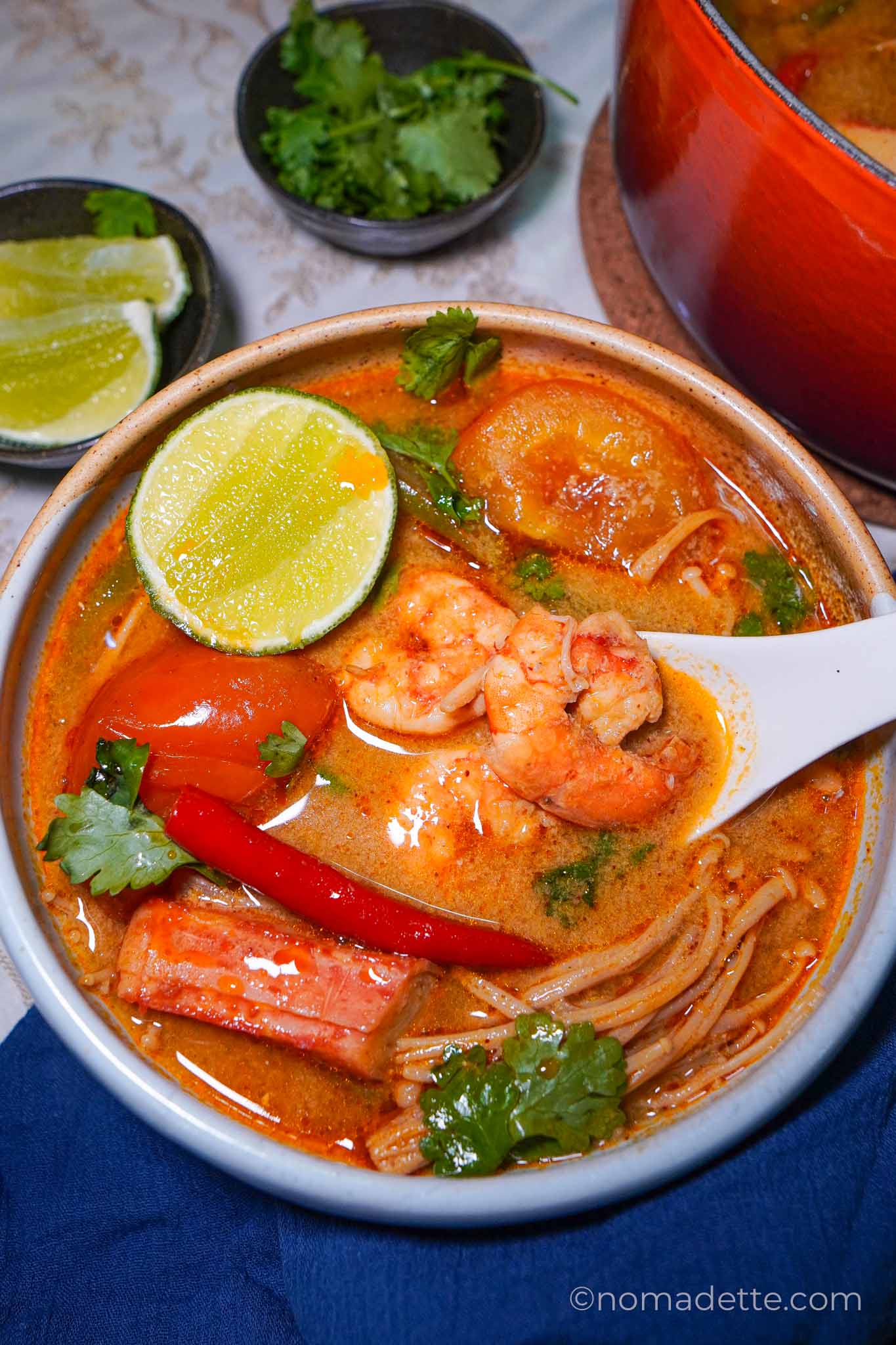
I love tom yum. But you know what’s even better? A creamy tom yum! Whenever I’m at a Thai restaurant and there’s the option of a creamy tom yum or a regular one, I will always go for the creamy. There’s just something about that blend of spicy, sour, savoury-umami with the creamy milkiness that hits all the right notes… especially on a cozy night in!
Tom Yum has always been one of my comfort soups: it’s spicy, sour, and just the right amount of refreshing. But on cozy nights, I love making the creamy version. It’s everything you love about traditional Tom Yum, with that extra richness that clings to every bite.
The best part? You don’t need anything fancy — just a few key aromatics, a spoonful of tom yum paste, and whatever seafood you have in the freezer. I used shrimp (and made my own broth from the heads), fishcakes and crabsticks for a quick, comforting meal that came together in under 30 minutes.
If you’ve only ever had Tom Yum at restaurants, this is your sign to make it at home, it’s way easier than you think.
Why You’ll Love This Recipe
What is Creamy Tom Yum?
Tom Yum, or ต้มยำ (Tom Yum), literally means “boiled” (tom) and “mixed” (yum), referring to the mix of hot and sour flavours that make this soup so iconic.
There are two main types of Tom Yum:
- Tom Yum Nam Sai (ต้มยำน้ำใส) or Clear Tom Yum: The clear, rustic version, also known as the original tom yum. Light, refreshing, and more herb-forward.
- Tom Yum Nam Prik Pao (ต้มยำใส่น้ำพริกเผา) or Red Tom Yum: This is the tom yum version that’s familiar to most. Thai roasted chili paste (Nam Prik Pao) is stirred in to get that red colour and a deeper flavour. Tom Yum paste is at times used in place of nam prik pao.
- Tom Yum Nam Khon (ต้มยำน้ำข้น) or White Tom Yum: Essentially the creamy version of red tom yum! Made with a splash of evaporated milk or coconut milk, giving it a rich, slightly velvety broth that balances the heat beautifully.
Today’s recipe is the creamy version! Comforting, full-bodied, and packed with that signature Thai trifecta of flavors: spicy, sour, and salty-umami.
Key Ingredients for Creamy Tom Yum
Shrimp or Prawn Stock
The base of this soup and what gives it incredible depth!
See my recipe on how to make incredible shrimp broth at home.
If you don’t have prawn stock, don’t worry, chicken or vegetable stock works perfectly too. Honestly I usually go with chicken stock since it’s something I always have in the fridge. And if all else fails, even plain water will do the job!
Aromatics
These are the three key aromatics that you need to make amazing Tom Yum:
- Lemongrass
- Galangal, and
- Makrut lime leaves
This aromatic trio defines Tom Yum’s flavour. Lemongrass adds brightness, galangal (not to be confused with ginger!) gives peppery warmth, and lime leaves tie it all together with that distinct citrusy fragrance.
Other aromatics
- Onions and garlic: Not essential, but they add a savoury depth to the soup.
- Thai bird’s eye chillies: lightly smashed to add subtle heat, and a dash of colour to the soup.
Prep Tip
The most difficult part about this recipe is probably gathering these aromatics. HOWEVER, these aromatics freezes extremely well! Prepare bags of tom yum herbs in your freezer, so you can pull them out anytime next time.
Tom yum paste or Nam Prik Pao
This is what gives tom yum that signature deep red colour and that smoky, sweet, spicy flavour. A huge time-saver that packs all the essential flavours: dried chillies, lemongrass, galangal, and sometimes shrimp paste.
Want to make these from scratch? See my recipes:
They both work interchangeably; the standard paste to use in Thailand is nam prik pao, although tom yum paste is fairly common too.
Now, I know what you’re thinking: if I already have tom yum paste, can I skip the aromatics?
In my humblest, most honest opinion… technically yes, but I wouldn’t.
I’ve tried making tom yum using just the paste whenever that lazy, shortcut moments arise, and sure, it works… but every time, I’m left a little unsatisfied. The soup tastes flatter, like it’s missing that bright, fresh kick you only get from the real aromatics: lemongrass, galangal, and makrut lime leaves.
When you add those in, that’s when your tom yum suddenly tastes “right.” So yes, use the paste, save yourself some time, but don’t skip the aromatics. They’re what take your tom yum from good to chef’s kiss amazing.
Evaporated milk or coconut milk
The creaminess in Creamy Tom Yum! Evaporated milk gives a lighter, balanced creaminess, and it’s what Thai restaurants and eateries use to get creamy tom yum.
Alternatively, coconut milk works as well, making the soup richer and silkier.
Either works; choose depending on what you have in your pantry.
I would not use regular milk or heavy cream – the flavour is just not tom yum to me.
Seasonings
- Fish sauce adds that salty umami depth.
- Lime juice brings the essential sourness! If you ask me, this is the most important seasoning for tom yum. Don’t skip! Lemon works too, though lime juice has a sweetness to it to complete that tom yum flavour.
- Sugar is optional — I sometimes skip it — but it can help round out the flavours and balance the heat if your tom yum turns out a little too spicy.
Proteins of Choice
Shrimp or prawns are a classic choice for tom yum, and I added crabsticks and cheese tofu fishcakes in my tom yum, to make it more interesting (and a good opportunity to clear my freezer!).
Use your favourite seafood choices, such as fish slices, fishballs, squid, or even chicken. The only thing you need to be mindful is the order of the ingredients. If it requires a longer cook time, make sure to add it in earlier.
Veggies: Mushrooms and tomatoes
Turn this into a complete meal by adding veggies! The beauty of making tom yum at home is that you can add whatever vegetables you have on hand. Mushrooms and tomatoes are classic vegetables to add.
Straw and oyster mushrooms are typically used but use whatever mushrooms you have on hand. Enoki mushrooms are my favorite because they soak up the soup beautifully.
I also added long beans for some sweetness and good textural crunch for the soup.
Other vegetables you can add:
- Broccoli
- Carrots
- Baby corn
- Cabbage or napa cabbage
Basically, if it cooks fast and works in a soup, it works in tom yum. It’s one of those dishes where “a little bit of everything” actually makes it better.
Key Steps to Making Creamy Tom Yum
1. Make the Broth
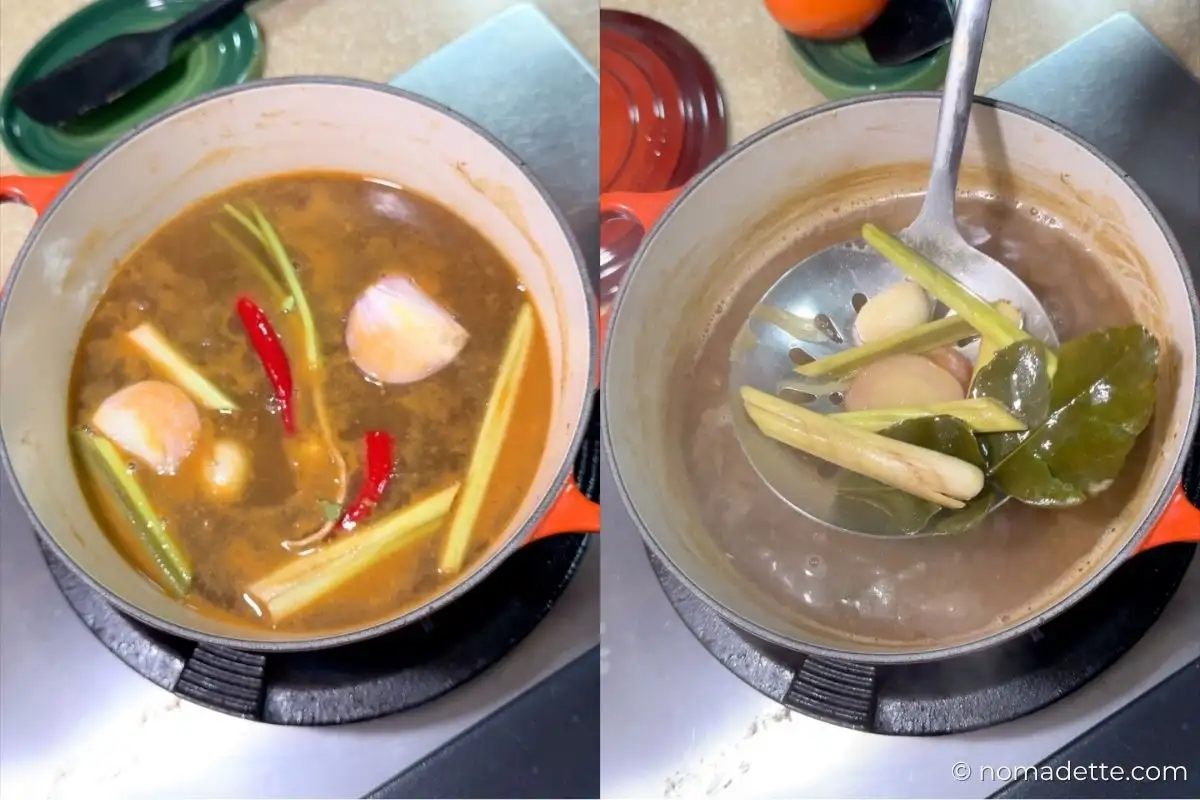
- In a pot, combine shrimp broth (or stock/water) with lemongrass, galangal, and tear in makrut lime leaves.
- Add onion, garlic, bird’s eye chilies, and cilantro roots, if using.
- Simmer gently for 10–15 minutes until aromatic.
- Strain out aromatics, keeping a few pieces for presentation if desired.
2. Build the Soup
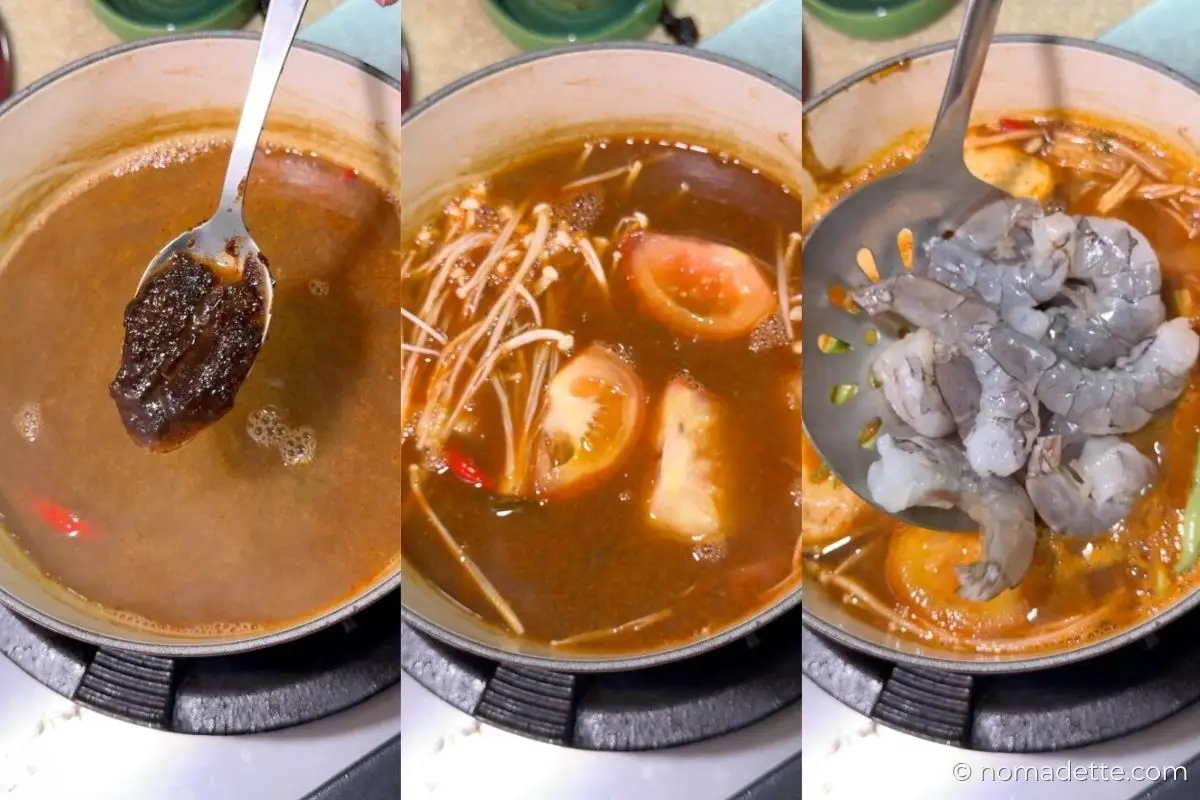
- Stir in tom yum paste until fully dissolved.
- Add tomatoes, enoki mushrooms, and cheese tofu fishcakes first. Simmer 2–3 minutes.
- Add shrimp, crabsticks, and long beans. Cook 1–2 minutes, until shrimp turns pink.
3. Season and Add Milk
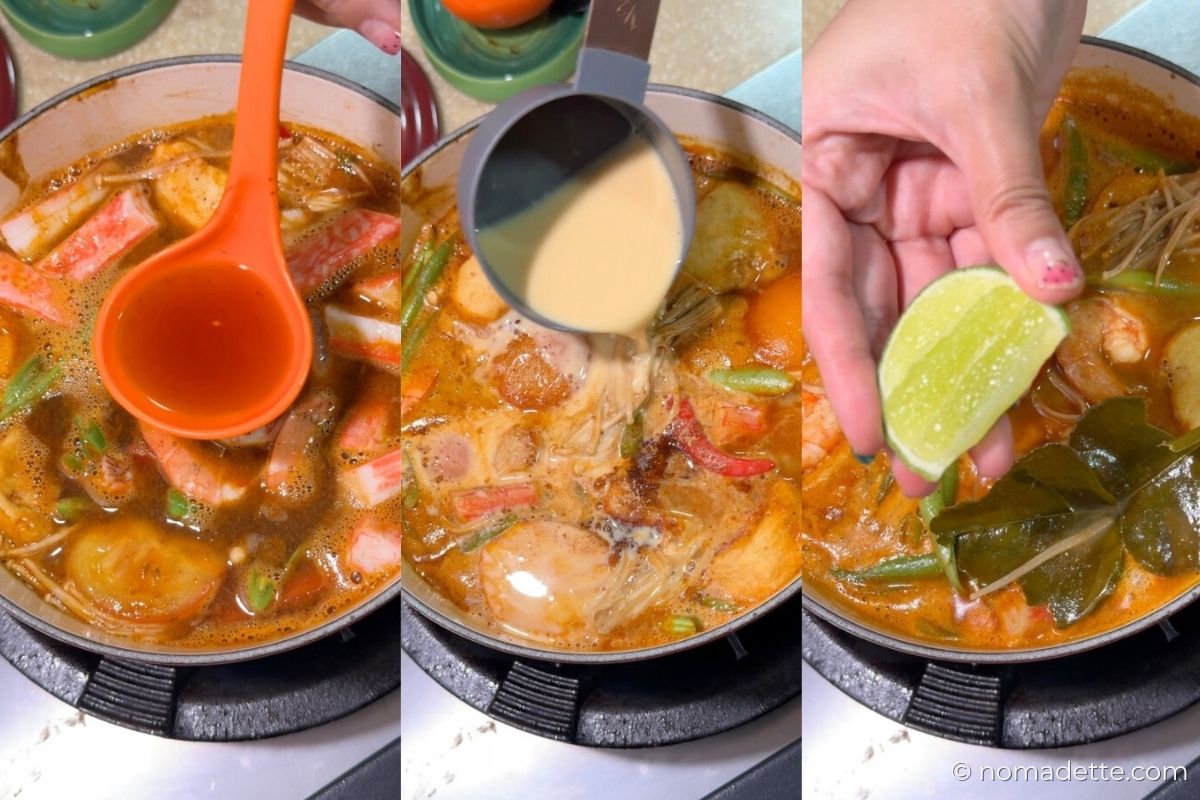
- Lower heat, then stir in fish sauce, sugar (if using).
- Stir in evaporated or coconut milk.
- Turn off heat, then add lime juice. Taste and adjust: more lime for sourness, more fish sauce for saltiness.
4. Serve
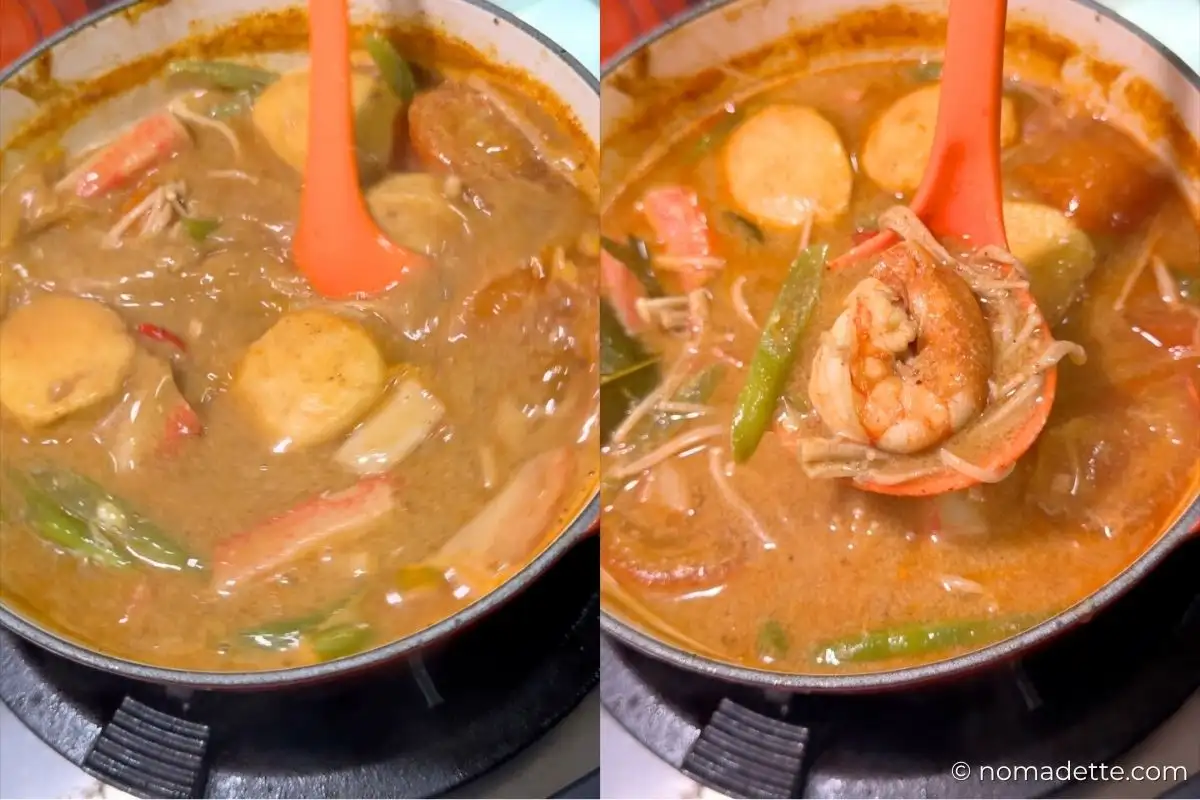
- Ladle soup into bowls, top with fresh cilantro, and drizzle with chili oil for a restaurant-style glossy finish.
- Serve on its own or over hot jasmine rice or noodles for a heartier meal!
How to Serve
- Ladle the soup into bowls and top with fresh cilantro for that pop of green and freshness.
- For that restaurant-style touch, drizzle a spoonful of chili oil on top to get that glossy red finish against the creamy white soup – but this is optional!
- Serve it as is, or pour it over hot jasmine rice or noodles for a satisfying, hearty meal.
- It’s the kind of soup that warms you right through — light enough to enjoy on a hot day, but comforting enough for cooler evenings.
- Have leftovers? Add noodles!
Tips and Tricks
Storing and Reheating
Store leftover soup in an airtight container in the refrigerator for up to 2-3 days.
When reheating, do so gently over low heat — avoid boiling to prevent the milk from splitting.
If you’re meal prepping, store the broth separately from the seafood and vegetables. Combine and heat them just before serving for the freshest flavour and texture.
DO NOT FREEZE. Creamy Tom Yum is not suitable for freezing.
More Recipes Like This
- Tom Yum Talay | Ultimate Seafood Tom Yum
- Tom Kha Gai | Thai Chicken Coconut Soup
- Thai Chicken Biryani | Khao Mok Gai (rice cooker recipe!)
- Thai Green Curry Chicken | Gaeng Khiao Waan Gai
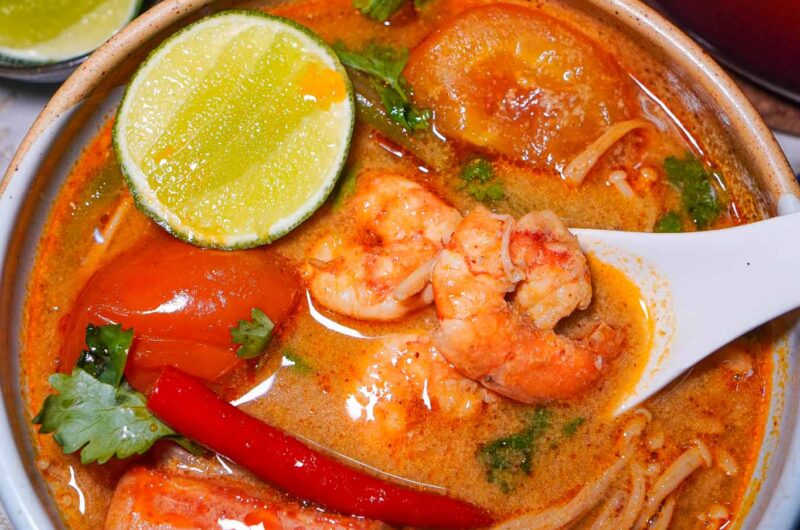
Creamy Tom Yum
2
servings10
minutes25
minutesMake restaurant-style Creamy Tom Yum or Tom Yum Nan Khon at home! Spicy, tangy, and creamy — your new favorite Thai comfort soup!
Keep the screen of your device on
Ingredients
- Soup Base
3 cups (720 ml) shrimp broth, stock, or water
2 lemongrass stalks, smashed and cut into 3-inch (8 cm) pieces
2 slices galangal
3 makrut lime leaves, torn
1 onion, quartered (optional)
2 garlic cloves, smashed (optional)
2 Thai bird’s eye chilies, smashed (optional, for heat)
cilantro root (reserve leaves for garnish)
- Proteins
150 g or about 10-12 prawns or shrimp, peeled and deveined
100 g or 4 pcs cheese tofu fishcakes or fishballs
100 g or 6 pcs crabsticks
- Vegetables
1 medium tomato, cut into wedges
100 g enoki mushrooms, ends trimmed and separated
50 g long beans: ~50 g, cut into 2–3 inch pieces
- Seasonings
2 tbsp tom yum paste
2 tbsp fish sauce, or to taste
1 tsp sugar (optional; helps balance spice, but you can skip)
¼ cup (60 ml) evaporated milk or coconut milk
juice from 2 limes, or to taste (plus extra for serving)
fresh cilantro leaves for garnish
- To Serve
cooked rice or noodles to serve
1 tsp chili oil, drizzled over the top (optional)
Directions
- Make the Broth
- In a pot, combine shrimp broth (or stock/water) with lemongrass, galangal, and tear in makrut lime leaves.
- Add onion, garlic, bird’s eye chilies, and cilantro roots, if using.
- Simmer gently for 10–15 minutes until aromatic.
- Strain out aromatics, keeping a few pieces for presentation if desired.
- Build the Soup
- Stir in tom yum paste until fully dissolved.
- Add tomatoes, enoki mushrooms, and cheese tofu fishcakes first. Simmer 2–3 minutes.
- Add shrimp, crabsticks, and long beans. Cook 1–2 minutes, until shrimp turns pink.
- Season and Add Milk
- Lower heat, then stir in fish sauce, sugar (if using), and evaporated or coconut milk.
- Turn off heat, then add lime juice. Taste and adjust: more lime for sourness, more fish sauce for saltiness.
- Serve
- Ladle soup into bowls, top with fresh cilantro, and drizzle with chili oil for a restaurant-style glossy finish.
- Serve on its own or over hot jasmine rice or noodles for a heartier meal.
Did you make this recipe?
Tag @nomadetteats on Instagram