

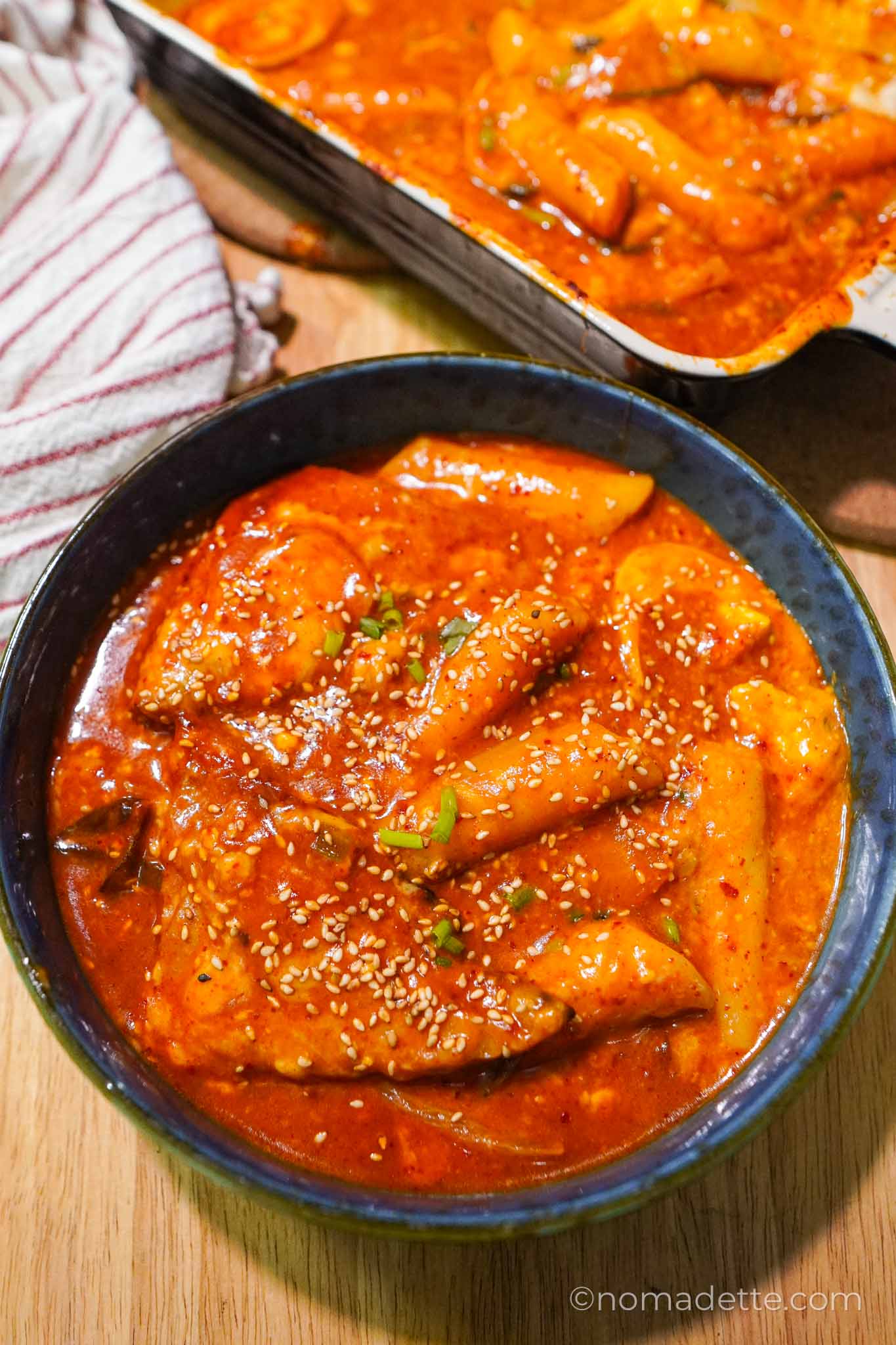
A fuss-free tteokbokki traybake you can bake and forget! Chewy rice cakes, easy gochujang sauce, your fave fillings, cheese—all in one pan, less dishes!
Introduction
Some recipes are born from inspiration… and some are born from pure desperation. I had an insane craving for tteokbokki one evening, so I got all my ingredients out, prepped and ready to go. I strolled to the stove, turned on the gas, flicked the lighter, pressed the trigger and… nothing. Turns out my gas had completely run out.
And because I still have one of those old-school gas cylinders (what are they actually called?) instead of piped gas, I need to call a delivery guy every time it runs out. It was too late then to call the gas man. Of course.
So now I’m staring at all of my prepped ingredients… staring at my cravings… and then staring at my oven.
Lightbulb moment.
“What if I just… bake my tteokbokki?”
It actually made sense — tteokbokki only gets better the longer it simmers, so throwing everything into a tray and letting the oven do its thing felt like the safest experiment ever.
And guess what? It was good. Like, shockingly good.
The best part? I didn’t have to babysit anything. I popped it in, went back to my K-drama, and let the oven do all the work. Plus, serving it straight from the tray looks way cuter for hosting. Everybody loves Tteokbokki anyway, so honestly… this might be my new favourite lazy girl dinner AND crowd-pleasing dish!
Jump to Recipe
What Is Tteokbokki?
Tteokbokki is a beloved Korean street food made with chewy cylindrical rice cakes simmered in a spicy, sweet, savoury gochujang-based sauce. It’s comforting, carby, saucy, and incredibly addictive — the kind of dish people can’t stop picking at.
What Is a Tteokbokki Traybake?
A traybake version takes all the flavours of classic tteokbokki and transforms it into an oven-baked, hands-off dish. Instead of simmering on the stovetop, everything goes into a baking dish: rice cakes, kimchi, fish cakes, veggies, and a bold gochujang sauce.
The oven steams and roasts everything at once, giving you soft, chewy tteok and a sauce that thickens beautifully over time.
Think of it as the lazy, low-effort cousin of traditional tteokbokki — still delicious, but way more convenient.
Why You’ll Love This Tteokbokki Traybake
Key Ingredients
Tteokbokki (Rice Cakes)
- Cylindrical Korean rice cakes — chewy, bouncy, and the whole heart of this dish.
- Fresh ones just need a rinse; frozen ones love a quick warm-water soak.
The Sauce
- Gochujang — gives the sauce its trademark spicy-sweet depth.
- Gochugaru — adds colour, heat, and that smoky kick.
- Soy sauce + sesame oil + honey — the savoury, nutty, glossy trio that balances everything.
- Stock — crucial for hydrating the rice cakes while they bake.
- Kimchi — brings tang, funk, and extra flavour in every spoonful.
Fillings
- Fish cake — soft, bouncy, classic with tteokbokki.
- Carrots + spring onions — quick-cooking vegetables that add freshness and sweetness.
- Hard Boiled Eggs – for extra protein
Key Steps to Making It
1. Prep your rice cakes
- Rinse fresh tteokbokki under water.
- If frozen, soak in warm water 5–10 minutes until they loosen and soften.
- This simple step will help the tteokbokki soften easier and soak up the sauce!
2. Make the sauce

- In your tray, whisk together gochujang, gochugaru, soy sauce, honey, sesame oil, garlic, and stock.
- It should be a slightly watery, mild-tasting sauce that; it will thicken and concentrate in flavour and saltiness as it cooks.
- Add kimchi, if using, and stir. Kimchi is naturally salty, so if not using kimchi, add about 1 tsp more soy sauce to balance out the flavours.
3. Assemble the traybake

- Add rice cakes, fish cakes, carrots, spring onions, any other veg of choice to your 7×10 inch baking dish. This will also work for a 9×13 inch baking dish; it will just be shallower.
- Make sure EVERYTHING is fully submerged. Anything sticking out will roast, harden, and not soak up sauce. If any tips or ends are sticking out, this is fine – not the whole piece.
4. Bake

- Cover the dish with foil tightly.
- Bake at preheated oven 400°F (200°C) for 30 to 45 minutes.
- Remove the foil, and carefully stir. At this stage, rice cakes should be soft, bouncy, and coated in thick glossy sauce.
- Wiggle in boiled eggs, and top with cheese. Cook for another 10 minutes to melt cheese.
5. Finish, serve and enjoy!

- Remove from oven.
- Top with extra spring onions, sesame seeds, or a drizzle of sesame oil.
How to Serve
- Serve straight from the tray — effortless and still cute.
- Top with extra spring onions, sesame seeds, or a drizzle of sesame oil.
- Pair with a simple salad or Korean banchan.
- Perfect for gatherings where guests can scoop their own portions.
Tips & Tricks
What Didn’t Go Too Well (Learn From My Mistakes!)
Because this was an experiment, not everything in this tteokbokki traybake went perfectly — so here’s what not to do:
- Don’t let ingredients sit on top dry. Anything exposed directly to oven heat will roast, harden, and won’t soak up the sauce. Tteokbokki is all about the sauce — so press everything in.
- Don’t add eggs at the beginning. I tried this and they roasted at the top and somehow overcooked, which turned it rather tough and rubbery, and unable to absorb the sauce. Add them at the end once everything is soft instead.
- Never toss in dry rice cakes. Rinse fresh tteok in water before using. It softens the surface and helps them absorb flavour.
- Frozen tteok need a warm-water soak. Just 5–10 minutes makes a huge difference.
Truthfully? Stovetop is still the fastest. Traditional tteokbokki takes about 15 minutes start-to-finish. The oven version is more hands-off but can stretch to 45 minutes. Great for lazy nights, not so great when you’re starving.
HOWEVER, this is still a stellar recipe because it’s an amazing hosting dish!
Storing & Reheating
To store
- Keep leftovers in an airtight container in the fridge for up to 3 days.
To reheat
- Microwave: Add a splash of water or stock, cover, and heat until soft.
- Oven: Add a bit of stock, cover with foil, and warm at 325°F (160°C) for 10–15 minutes.
- Stovetop: Add water or stock and gently simmer until the rice cakes soften again.
More Recipes Like This
- Rice Cooker Tteokbokki
- Rice Paper Tteokbokki
- Cheesy Rabokki | Ramen and Tteokbokki
- Cheese Sauce Kimchi Fried Rice (Viral Korean Recipe!)

Tteokbokki Traybake (No-Stovetop Needed!)
2
servings10
minutes45
minutesA fuss-free tteokbokki traybake you can bake and forget! Chewy rice cakes, easy gochujang sauce, your fave fillings, cheese—all in one pan, less dishes!
Keep the screen of your device on
Ingredients
- Rice Cakes + Filling
250 -300 g (about 2 cups) cylindrical tteokbokki rice cakes
1/4 cup (80 g) kimchi, roughly chopped
1 carrot, thinly sliced or julienned
5 -6 spring onions, cut into 2-inch (5 cm) pieces
1 sheet Korean fish cakes, sliced
2 hard-boiled eggs, halved
A handful of shredded mozzarella
- Sauce
2 tbsp gochujang
1 tbsp honey
1 tsp soy sauce
1 tbsp sesame oil
1 tsp apple cider vinegar
1 –2 tsp gochugaru (adjust according to spice tolerance)
2 –3 cloves garlic, minced
1.5 cups stock (chicken, dashi, anchovy or vegetable stock is best)
Directions
- Prep the Rice Cakes
- Rinse fresh tteokbokki under water. If frozen, soak in warm water for 5–10 minutes until loosened and slightly soft.
- Make the Sauce
- In a 7×10 inch (18×25 cm) or 9×13 inch (23×33 cm) baking dish, mix together gochujang, gochugaru, soy sauce, honey, sesame oil, garlic, and stock.
- Stir in the chopped kimchi. If not using kimchi, add an extra 1 tsp soy sauce.
- Assemble
- Add rice cakes, fish cakes, carrots, spring onions, and any extra veg.
- Ensure all ingredients are submerged in the sauce so everything softens instead of roasting. (A few tips sticking out is fine, just not entire pieces.)
- Bake
- Cover tightly with foil.
- Bake at 400°F (200°C) for 30–45 minutes.
- Remove foil, stir gently, and check that the rice cakes are soft.
- Nestle in boiled egg halves and top with mozzarella.
- Return to the oven for 5-10 minutes, or until the cheese melts.
- Finish & Serve
- Remove from oven and let slightly cool for about 5 minutes.
- Garnish with extra spring onions, toasted sesame seeds, or a drizzle of sesame oil. Serve immediately and enjoy!
Did you make this recipe?
Tag @nomadetteats on Instagram



)