
How to make Singapore-style Aglio Olio! The only guide you need to spicy, garlicky spaghetti — easy with local ingredients.
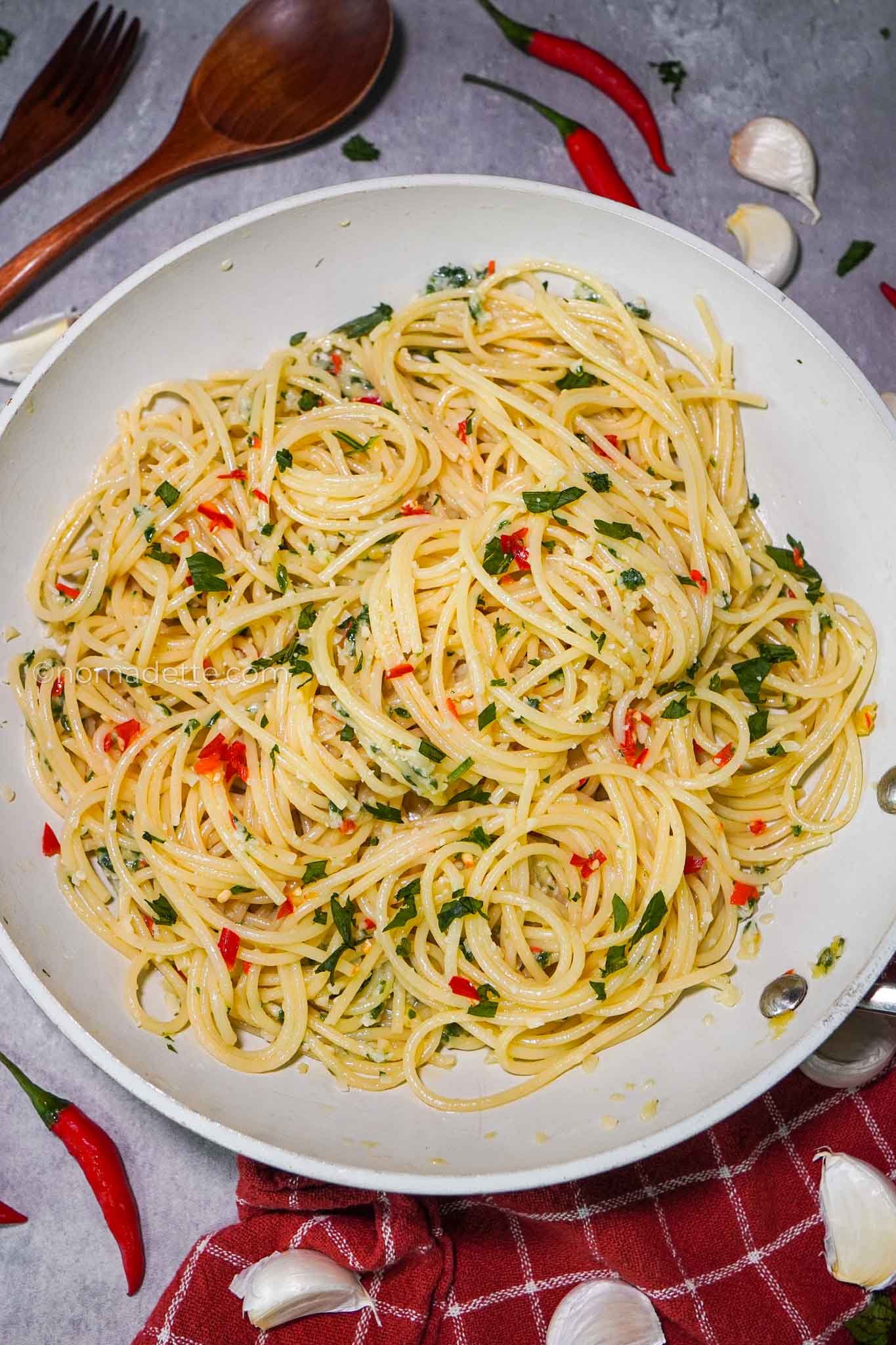
Singapore (and Malaysia) has somehow taken aglio e olio and quietly made it our own. Perhaps the Italians haven’t discovered our way of making it… but I’m here to unapologetically reveal our version of aglio olio.
And listen… I absolutely love the original Italian version too. I still think about this incredible aglio olio I had in Positano. It was simple, silky, garlicky, and honestly perfect. It also had a pepperoncino oil base, which meant it has a spicy bite to it too.
But this? This is the version I grew up craving.
This is the spicy, glossy, aggressively garlicky aglio olio many of us in Singapore and Malaysia know by heart. When you order this at most cafes in Singapore, likely THIS is the version you get… even at established pasta-only spots! Though they would probably elevate their versions by using fancier cheeses or proteins.
While traditional Italian aglio olio may not be spicy – garlic is the hero – our version demands spiciness. It’s often treated almost like rice as well, a carb base topped with your protein of choice. Think grilled chicken, pan-seared salmon or prawns, smoked duck, mushrooms, or even steak.
Best part? This Singapore-style spaghetti aglio olio comes together in about 20 minutes! It uses just a handful of pantry ingredients (with more affordable local swaps), making it one of my favourite quick meals for busy weeknights when I just don’t feel like having rice!
Jump to Recipe
What is Singapore-Style Aglio Olio?
Aglio e olio is a classic Italian dish whose name literally means “garlic and oil”! Garlic is arguably the most important ingredient, second only to a good-quality olive oil. Chilli flakes are optional, but commonly added for a little heat.
Singapore-style aglio olio takes inspiration from the original dish, but with our own ingredient spin to it. Instead of dried chilli flakes, we use spicy fresh cili padi (bird’s eye chillies). Instead of Italian parsley, we use our local (and therefore more affordable) version: Chinese parsley or local celery or daun sup – though most places would skip the herb altogether.
Proteins can be tossed in, though these days the more common variation is to serve with a separate protein on top! Fried chicken or katsu, grilled chicken, salmon, smoked duck, or steak are all common additions.
The result is a spicy garlic pasta that’s glossy, fragrant, and incredibly addictive… and definitely more affordable!
Why You’ll Love This Recipe
Key Ingredients
- Spaghetti: Classic spaghetti works best here, although linguine will also work beautifully. Cook the pasta until just al dente so it stays springy once tossed in the garlic oil.
- Pasta Water: Reserved pasta water is key for creating that glossy, lightly emulsified finish. Don’t skip this.
- Garlic: Garlic is the heart of this dish, so don’t skimp on it. Slowly infusing minced garlic in olive oil creates the signature flavour base for the pasta.
- Cili Padi (Bird’s Eye Chillies): This is what gives Singapore-style aglio olio its unmistakable spicy kick. Adjust the amount depending on your spice tolerance.
- Olive Oil: A good amount of olive oil helps coat the pasta and carry all the garlic and chilli flavours throughout the dish. Some places use neutral oil, but I personally must insist on olive oil, there’s a very obvious taste difference!
- Chinese Parsley/Local Celery/Daun Sup: Instead of Italian parsley, many local versions use daun sup or Chinese celery. It gives the pasta a more familiar Southeast Asian flavour profile. Of course, if you want to use Italian parsley – go ahead! Use flat leaf parsley, NOT curly. If you’d like to skip the herbs altogether… sure, but I love mine with specks of green.
- Parmesan Cheese: It adds savouriness and helps bring the pasta together. Optional, and typically served on the side, though I like to add it into the pan and toss with the pasta at the end.
Key Steps to Making Singapore-Style Aglio Olio
1. Boil the Pasta
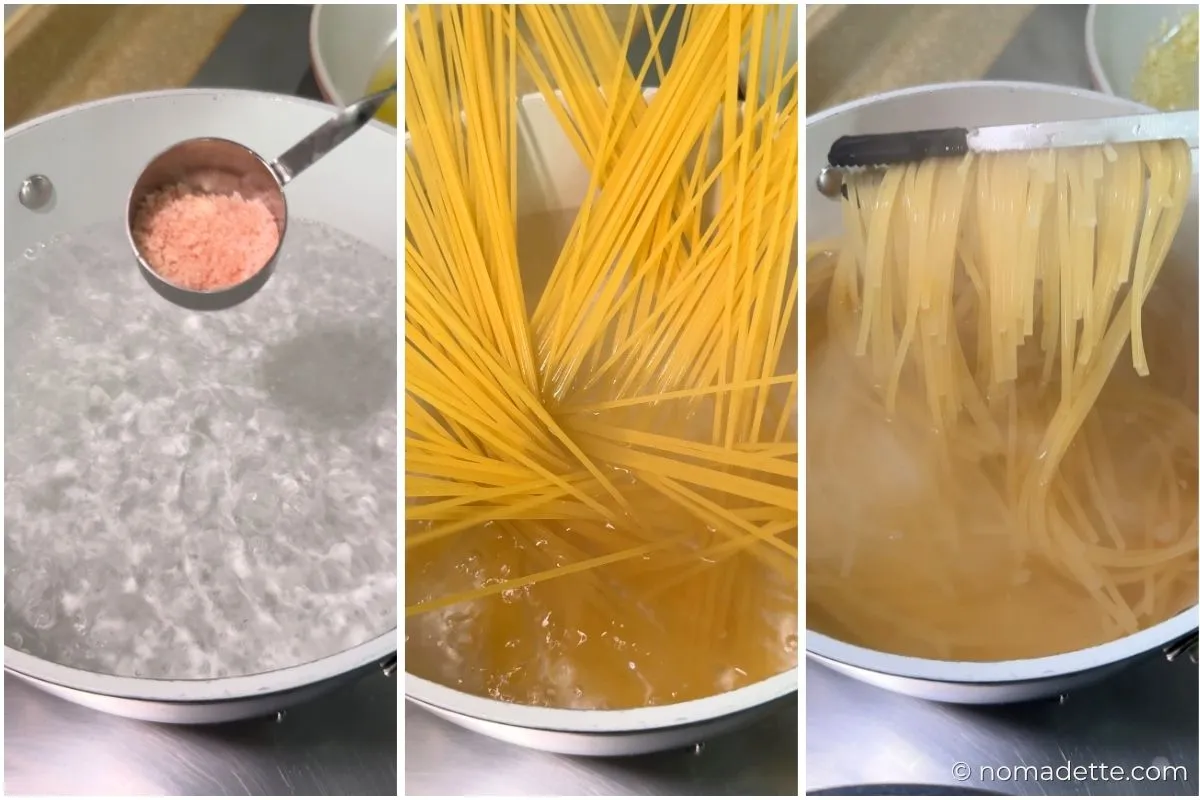
- Bring a large pot of water to a boil. Add salt generously — the water should taste well-seasoned.
- Add the spaghetti and cook for 6–7 minutes, or until al dente according to package instructions.
- Reserve about ¼ cup pasta water before draining the pasta.
2. Slowly Infuse the Garlic Oil
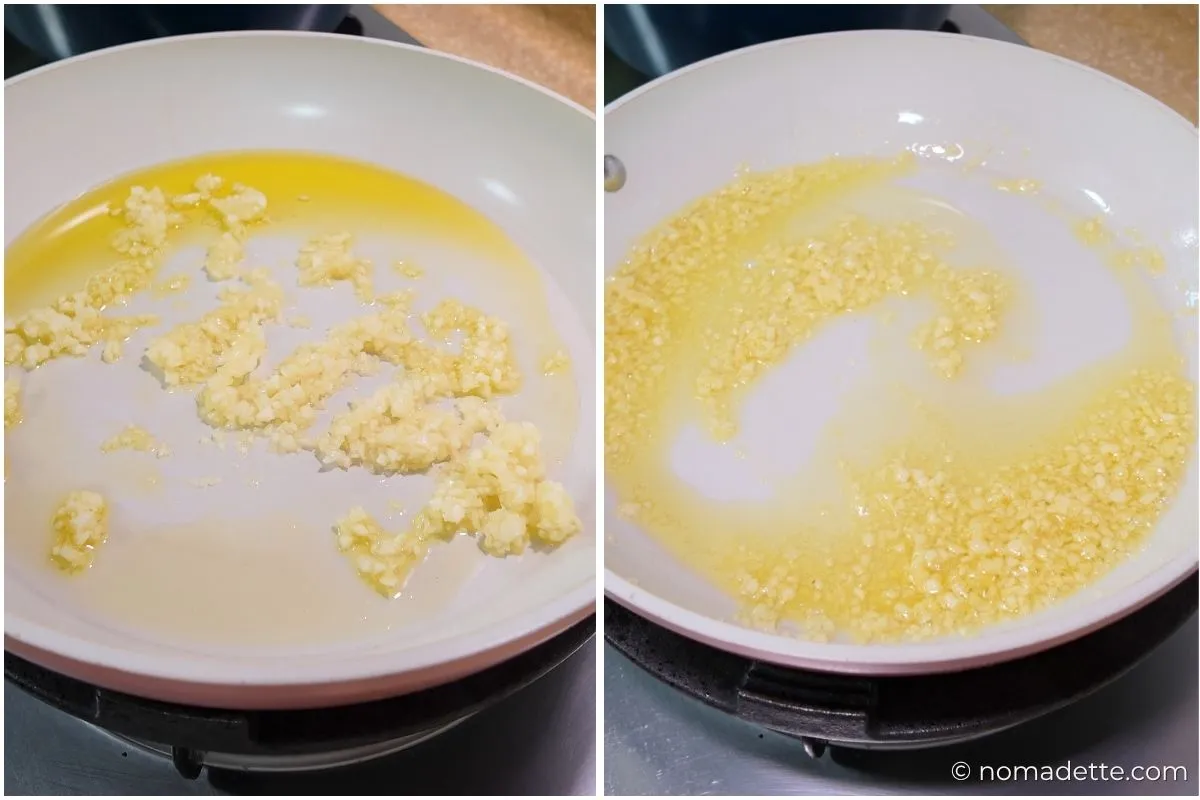
- Add olive oil and minced garlic to a cold pan.
- Place the pan over low heat and let the garlic slowly infuse the oil for about 5 minutes. The garlic should gently sizzle and become fragrant, but not brown.
- Stir often to prevent burning. If the garlic starts browning too quickly, lower the heat or remove the pan from the heat immediately — burnt garlic is a no-no! It will make the pasta bitter.
3. Add the Cili Padi
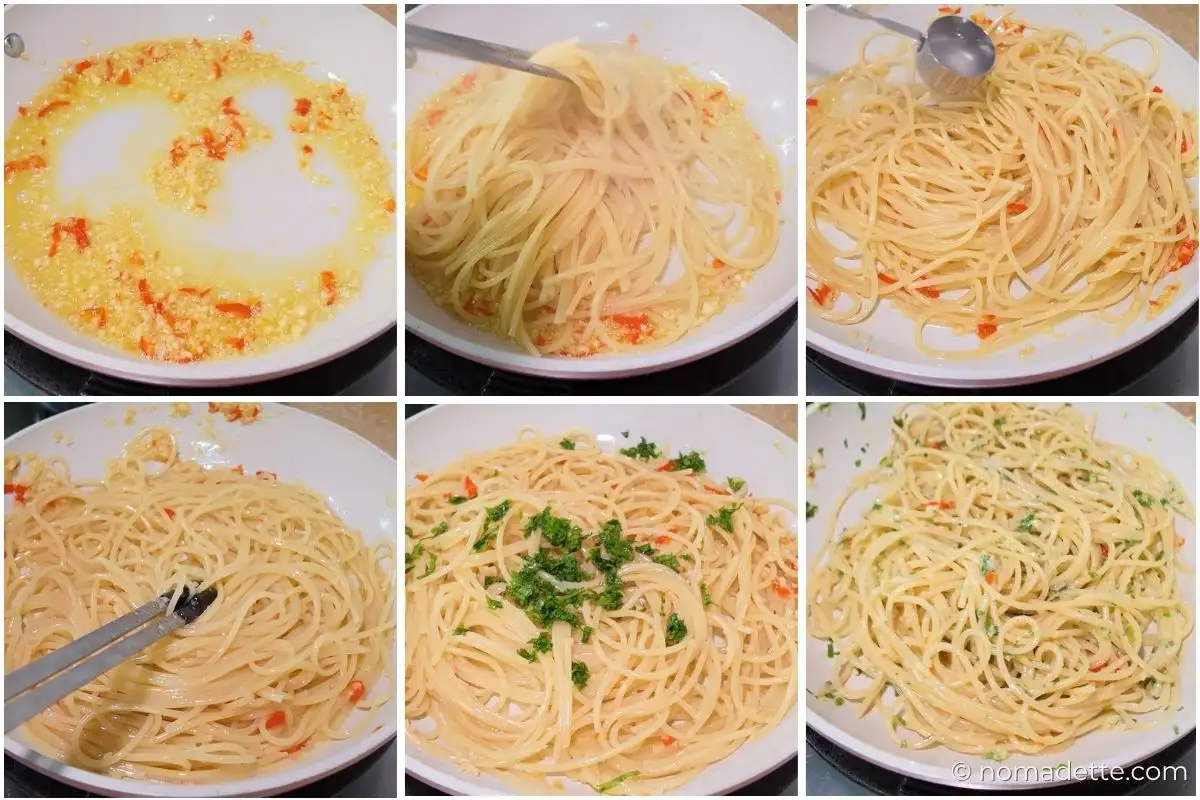
- Add sliced cili padi to the garlic oil.
- Sauté for about 30 seconds to 1 minute until fragrant. The chillies should sizzle immediately once added to the pan.
4. Toss the Pasta
- Add the cooked spaghetti along with about 2 tablespoons of reserved pasta water first. This will help the oil coat the pasta.
- Toss continuously until the pasta is evenly coated in the garlic chilli oil. The pasta should look glossy and lightly saucy.
- If the pasta looks dry or doesn’t toss easily, add more pasta water, a little at a time.
5. Finish the Pasta
- Turn off the heat immediately and add chopped parsley. Toss well to combine.
- If desired, add parmesan and toss once more until evenly coated. Alternatively, serve parmesan on the side.
- Taste and season with additional salt, only if needed. The pasta water and parmesan already add saltiness to the dish.
- Serve immediately with extra parmesan on the side!
How to Serve Singapore-Style Aglio Olio
In Singapore and Malaysia, aglio olio is often served as a base pasta with protein added on top rather than mixed into the pasta itself.
The proteins can either be cooked separately or in the same pan – cooked first, with remaining oil in pan to add flavour.
Some popular protein pairings include:
- Grilled chicken
- Pan-seared prawns
- Smoked duck
- Steak
- Mushrooms
- Salmon
Serve immediately while hot with extra parmesan on the side.
Tips for the Best Aglio Olio
Storing and Reheating
To Store
- Store leftover aglio olio in an airtight container in the fridge for up to 2 days.
To Reheat
- For best results, aglio olio is best enjoyed freshly made.
- Reheat gently in a pan over low heat with a splash of water to loosen the pasta.
- You can also microwave it, although the pasta may become slightly softer.
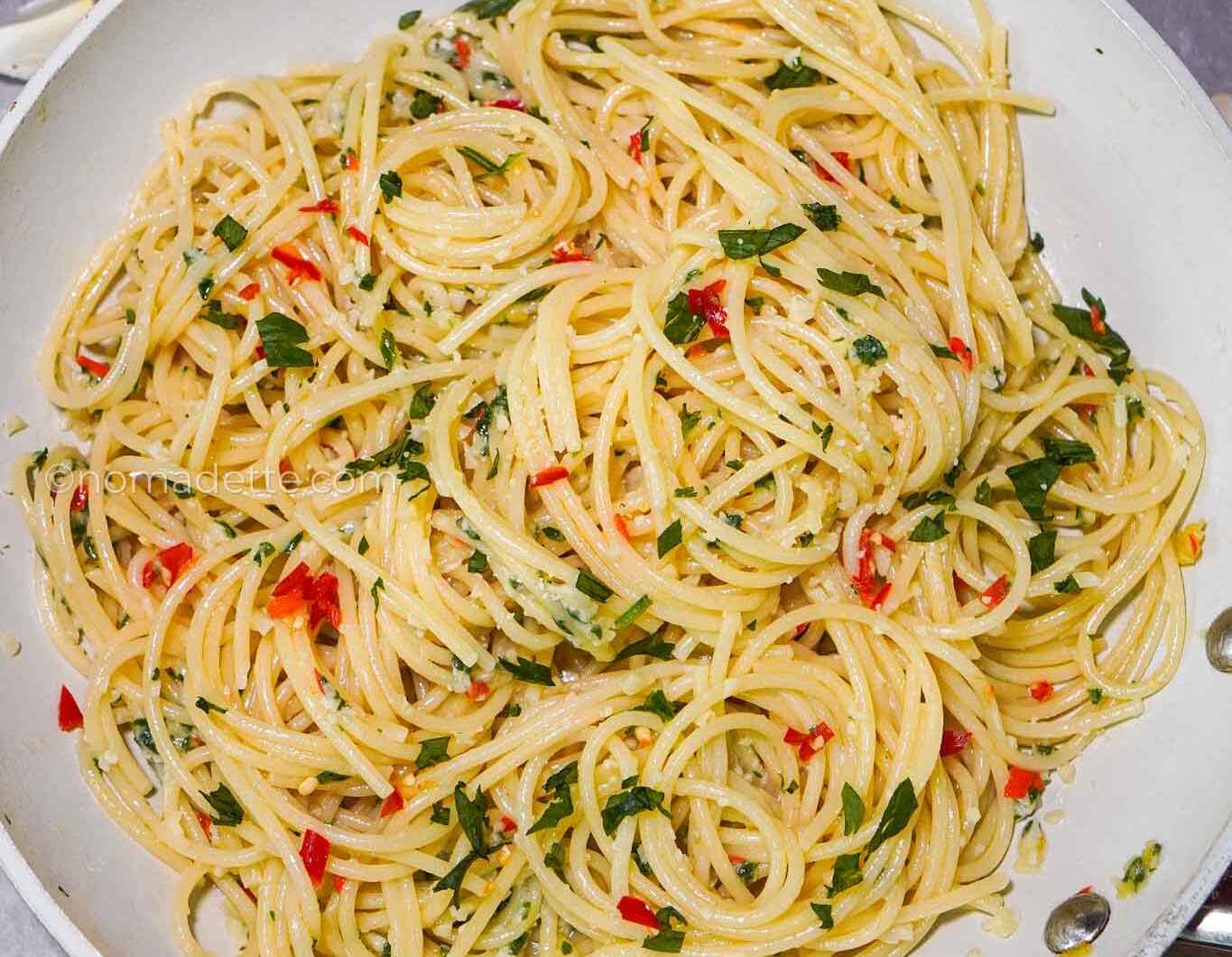
Singapore-Style Spaghetti Aglio Olio
2
servings10
minutes10
minutesHow to make Singapore-style Aglio Olio! The only guide you need to spicy, garlicky spaghetti — easy with local ingredients.
Keep the screen of your device on
Ingredients
- Pasta
200 g (or 2 servings) spaghetti or linguine
2 litres water, or enough to cook pasta
1 tbsp coarse salt or 2 tsp fine salt
- Aglio Olio
2-3 tbsp olive oil
4 cloves garlic, minced
2-3 cili padi (bird’s eye chillies), sliced (adjust to spice tolerance)
2-4 tbsp reserved pasta water
1 stalk parsley / local celery / daun sup, leaves only, chopped
1 tbsp grated Parmesan, plus extra to serve
Directions
- Boil the Pasta
- Bring a large pot of water to a boil. Add salt generously, the water should taste well-seasoned. In general, 1 tablespoon of coarse salt to 2 litres of water.
- Add the spaghetti and cook for 6–7 minutes, or until al dente according to package instructions.
- Reserve about ¼ cup (60ml) pasta water before draining the pasta.
- Slowly Infuse the Garlic Oil
- Add olive oil and minced garlic to a cold pan.
- Place the pan over low heat and let the garlic slowly infuse the oil for about 5 minutes. The garlic should gently sizzle and become fragrant, but not brown.
- Stir often to prevent burning. If the garlic starts browning too quickly, lower the heat or remove the pan from the heat immediately.
- Add the Cili Padi
- Add sliced cili padi to the garlic oil.
- Sauté for about 30 seconds to 1 minute until fragrant. The chillies should sizzle immediately once added to the pan.
- Toss the Pasta
- Add the cooked spaghetti along with about 2-3 tablespoons reserved pasta water.
- Toss continuously until the pasta is evenly coated in the garlic chilli oil. The pasta should look glossy. If the pasta looks dry or doesn’t toss as easily, add more pasta water, a little at a time.
- Finish the Pasta
- Once pasta is glossy and well coated, turn off the heat immediately and add chopped parsley. Toss well to combine.
Optional: add parmesan at this stage, and toss once more until evenly coated. Alternatively, serve parmesan on the side. - Taste and season with additional salt, only if needed. Serve immediately with extra parmesan on the side!
Did you make this recipe?
Tag @nomadetteats on Instagram