

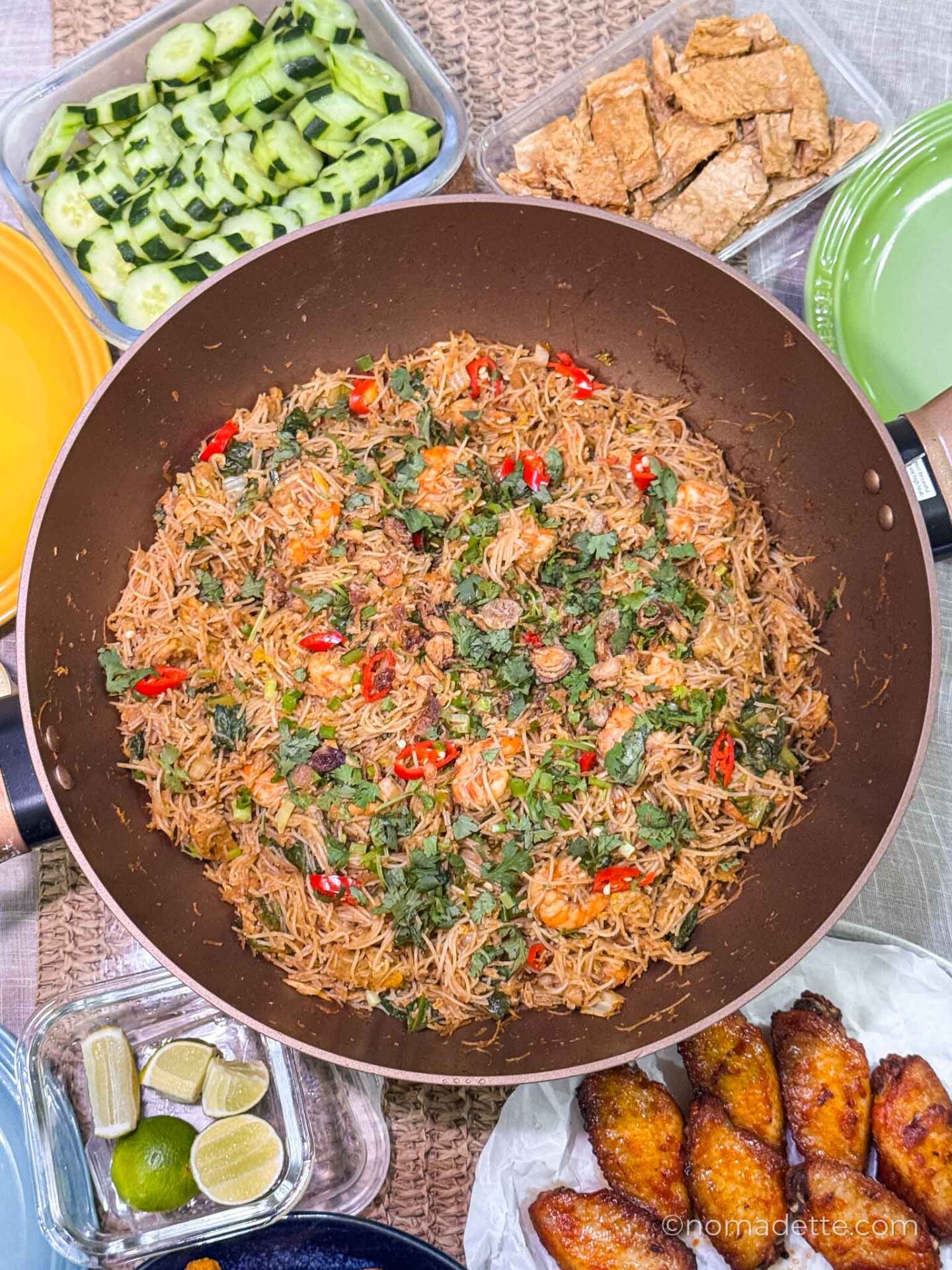
Let’s make bihun goreng, or Malay-style stir-fried vermicelli cooked in a sweet-savoury sambal base. Quick, easy, crowd favourite!
Introduction
Whenever I have people over and I just don’t want to think, I always turn to… bihun goreng!
There’s something about rice vermicelli that feels wildly abundant. You soak what looks like a modest bundle… and somehow it expands into enough noodles to feed a small village. I almost always end up with more than I bargained for, which, honestly, is not a bad problem to have when guests are involved.
This is my go-to “big pan, minimal stress” dish. It’s incredibly easy to make and quick to prepare. The most arduous part is preparing and properly cooking down the sambal base — but even that can be skipped if you use ready-made sambal. Once that base is done, the rest of the cooking is quick, quick, quick.
The flavour profile is similar to my sambal-based mee goreng, but bihun goreng deserves its own spotlight. The texture is lighter, the strands finer, and the way it absorbs flavour? Completely different!
Let’s get into it.
Jump to Recipe
What Is Bihun Goreng?
Bihun goreng (also spelled bee hoon goreng or mee hoon goreng) is a Malay-style stir-fried rice vermicelli dish popular in Malaysia and Singapore.
“Bihun” refers to thin rice vermicelli, while “goreng” simply means fried or stir-fried.
Unlike soy-heavy Chinese-style fried bee hoon, the Malay version is typically:
- Fragrant and lightly spicy from a dried chilli sambal base
- Slightly sweet from kicap manis
- Savoury from oyster sauce
- Gently smoky from stir-frying in a wok
Proteins like prawns, fish cakes, chicken, or beef are commonly added, along with cabbage and leafy greens. It’s flexible, forgiving, and meant to feed many.
Why You’ll Love This Recipe
Key Ingredients
Noodles
- Rice Vermicelli (Bee Hoon): The star of the dish. Thin rice noodles that soften quickly and absorb flavour beautifully. They expand a lot after soaking, which is why even a modest amount can feed a crowd. For best texture, soak just until pliable as they’ll finish cooking in the wok.
Base & Seasonings
This is what gives Malay-style bihun goreng its signature savoury-sweet, slightly spicy profile.
- Dried Red Chillies: Soaked and blended to form the backbone of the sambal base. They provide colour, depth and adjustable heat depending on how many you use.
- Onion, Garlic & Ginger: Blended together with the chillies to create a smooth paste. When sautéed properly, this mixture becomes fragrant, slightly caramelised, and deeply flavourful.
- Kicap Manis: A sweet, thick soy sauce that adds richness and that classic slightly sweet Malay-style finish.
- Oyster Sauce: Brings savoury umami and rounds out the sweetness from the kicap manis.
- Dark Soy Sauce: Used in small amounts mainly for colour and subtle depth. Together, these create the balanced savoury-sweet base that coats every strand of noodle.
Proteins
- Prawns (Shrimp): Add natural sweetness and cook quickly, making them perfect for a fast stir fry.
- Fish Cakes: Thinly sliced fish cakes bring that familiar hawker-style bite and subtle seafood flavour. You can also use fishballs, sliced half. Other alternatives include crabsticks, dimsum pieces like stuffed tofu and siew mai.
- Eggs: Scrambled directly into the wok! Cook through before adding the noodles – these will make sure the noodles do not get soggy.
- Alternatives: You can easily swap in sliced chicken, beef, or even tofu if preferred. If using chicken or beef, make sure to adjust the cook times accordingly as these cook longer than seafood.
Vegetables
Vegetables add texture, balance and just enough freshness to keep things from feeling heavy.
- Leafy Greens (Bok Choy or Mustard Greens): Added at the end so they stay vibrant and lightly wilted. They lighten the dish and add contrast to the rich sambal base.
- Cabbage: Typically, this noodle dish would stick to just one type of veggie, but I will add extra veggies wherever I can! I love cabbages because they’re slightly sweet and sturdy enough to hold up during stir-frying. It also adds crunch and bulk. I like to add cabbages early on so it’s softer, but you can add it in at the end too if you prefer a crunchier cabbage.
- Other veggie options to add include beansprouts and carrots.
Key Steps to Making Bihun Goreng
1. Prep the Noodles Properly
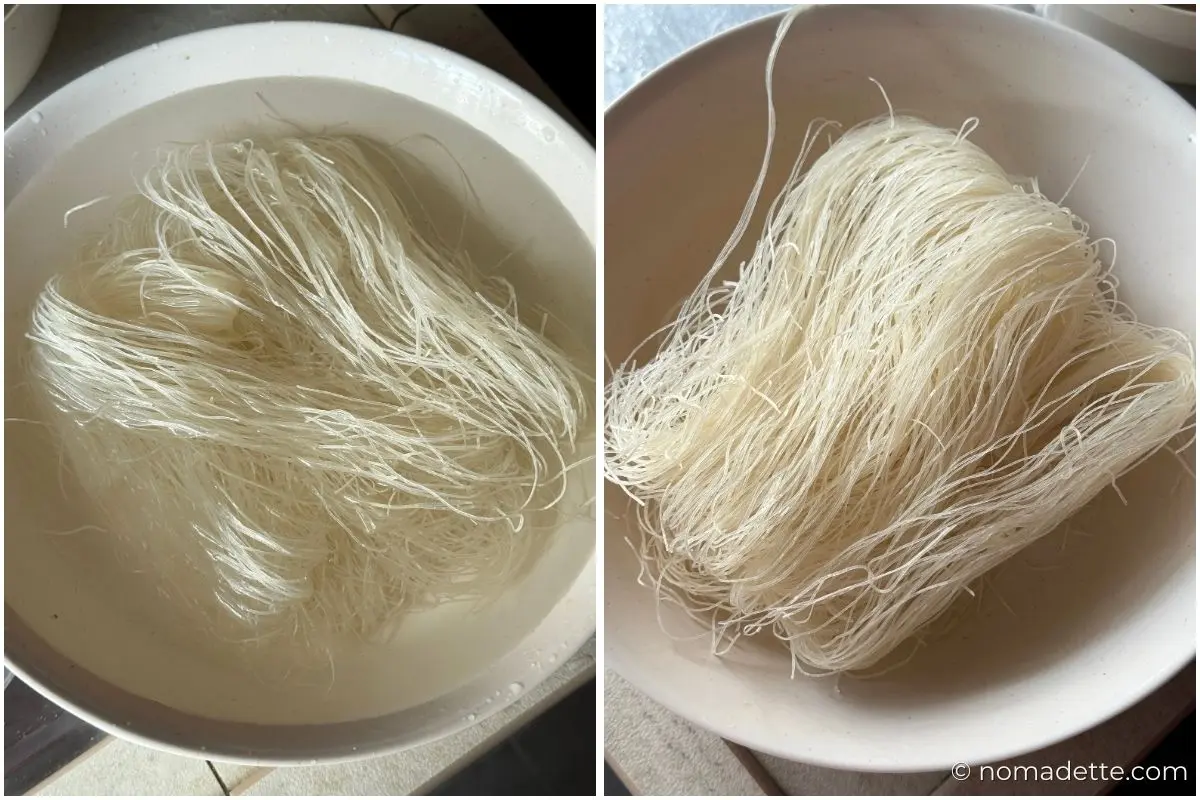
- Soak rice vermicelli in just-boiled water for about 5–8 minutes until pliable but still slightly firm.
- Drain thoroughly and give the noodles a quick rinse under water.
- Avoid over-soaking.
2. Prepare the Sambal Base
- Soak dried chillies until completely softened. Blend with onion, garlic and ginger into a smooth paste.
- Cook this paste in oil until:
- It darkens in colour
- It thickens
- Oil begins to lightly separate
- This step builds flavour. Rushing it results in a raw-tasting stir fry.
- Having everything prepped before you start cooking is key. Stir-frying moves fast!
3. Season the Base
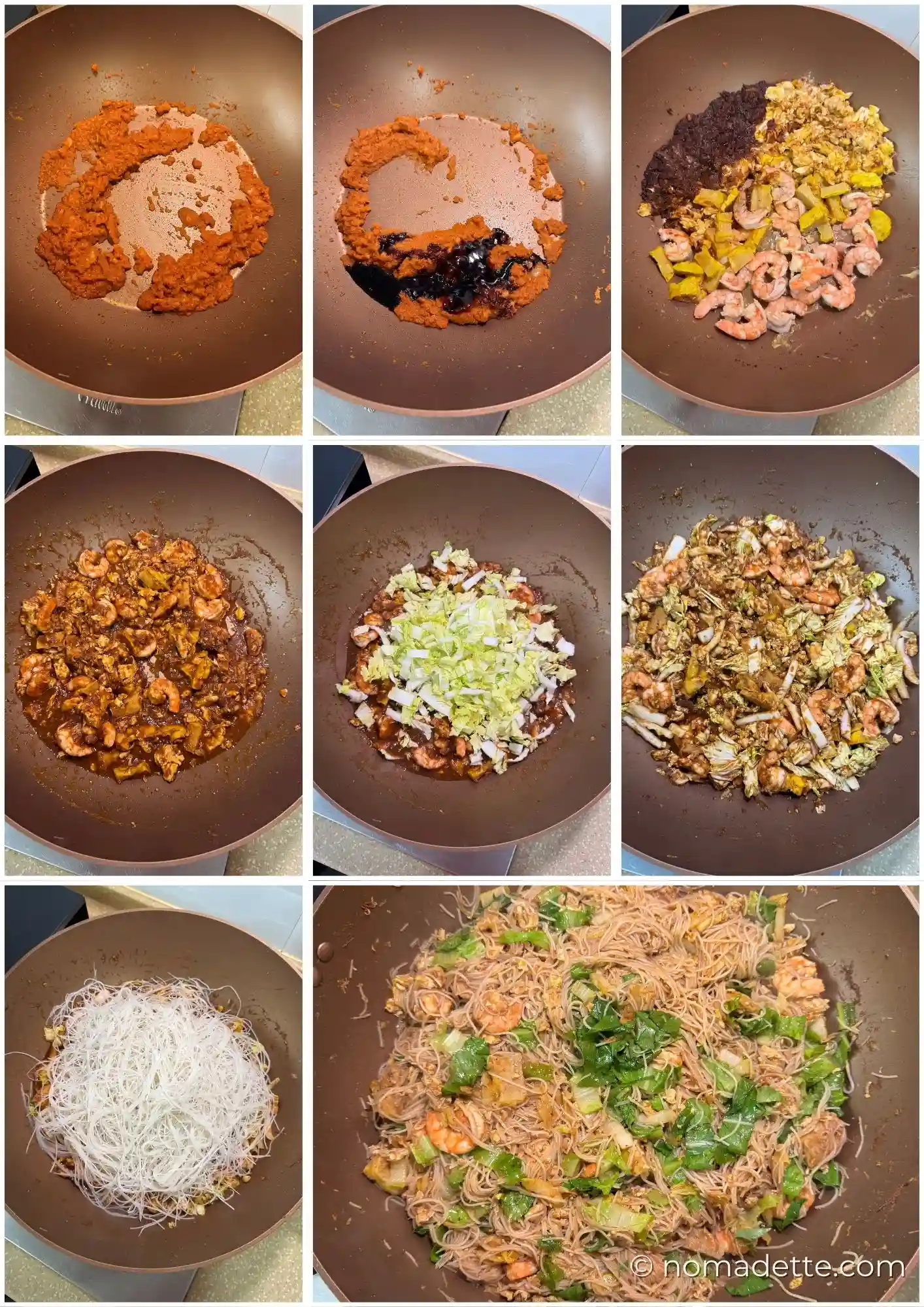
- Add oyster sauce, kicap manis, dark soy sauce and a pinch of salt.
- Seasoning the base first ensures the flavour distributes properly.
4. Cook the Proteins
- Add prawns and sliced fish cakes directly into the cooked sambal base. Stir-fry until the prawns are just cooked through.
- Push to one side and scramble eggs before combining everything together.
5. Add Vegetables & Noodles
- Add shredded cabbage first so it softens slightly.
- Then add drained vermicelli and gently toss using lifting motions rather than pressing down.
- If needed, add a splash of water (about 3-4 tablespoons) at a time to loosen the noodles for easier tossing. Do not add too much liquid than needed, otherwise you’ll get soggy noodles that break easily!
- Finish with leafy greens and cook just until wilted.
- Turn off the heat.
6. Garnish & Serve
- Top with fried shallots, spring onions or cilantro, and sliced red chillies for colour and texture.
- Serve immediately and enjoy!
How to Serve Bihun Goreng
Bihun goreng works beautifully:
- With lime wedges for brightness and sliced cucumbers for freshness
- With ayam goreng!
- As a standalone main dish: this bihun goreng can hold its own as it has carbs, proteins and veggies all in one dish.
- As part of a larger ‘buffet-style’ spread: tt’s equally welcome at casual dinners, potlucks or festive gatherings, and can be served alongside bites like nuggets, sausages, wantons, dimsum… etc!
Tips & Tricks for Perfect Bihun Goreng
How to Prepare Bee Hoon (Without Breaking It)
Rice vermicelli is delicate. It softens quickly and can break easily if mishandled especially once it hits the wok.
If you prefer long, springy strands (the more “hawker-style” look), here are a few things to keep in mind:
- Don’t Over-Soak: Soak the bee hoon in just-boiled water for about 5–8 minutes until pliable but still slightly firm. If it’s fully soft before it hits the wok, it will overcook and break during tossing.
- Use Lifting Motions: When stir-frying, use tongs to lift and turn the noodles rather than pressing down with a spatula. You can also work with two spatulas to lift toss the noodles.
- Add Liquid Gradually: If the noodles feel dry, add water 1 tablespoon (15 ml) at a time. Too much liquid at once softens them unevenly and leads to clumping.
- Avoid Overcrowding: A crowded wok traps steam, which softens the noodles too quickly and makes them fragile.
If you follow these tips, you’ll get distinct strands that are coated but not mushy.
But… My Mom Makes It Soft and Broken (On Purpose)
Now here’s the funny part. My mom makes her bee hoon soft. And broken. On purpose! And she loves it that way!
Growing up, soft, broken bee hoon was my normal.
The beauty of her version is that she doesn’t need to care about bee hoon rules, which meant she can be more efficient with her cooking. She soaks it in boiling hot water without needing to keep time, she tosses and stirs it more, she doesn’t need to measure out liquids, she can let it lets it cook down until the strands are short and tender. And she loves it that way.
Growing up, that was my normal.
Her version is softer and fully absorbs all the seasonings. Every strand is deeply flavoured. It’s less about springy texture and more about comfort.
And honestly? It tastes amazing.
It’s also incredibly easy to eat. I can scoop up every strand with a spoon. No long noodles dangling off chopsticks. No twirling required. Just warm, savoury, fully-seasoned comfort in every bite.
So if your bee hoon breaks a little? It’s not wrong.
There’s the “textbook” version and then there’s the home version. And sometimes the home version is the one that sticks with you.
Storing & Reheating
Storing
- Cool completely before storing.
- Keep in an airtight container in the fridge for up to 3 days.
Reheating (Best Method)
Reheat in a pan or wok over medium heat:
- Add 1–2 tablespoons water
- Toss gently until heated through
This helps loosen the noodles and prevents dryness.
Steaming
- Place bee hoon in heatproof plate.
- Steam for about 4-5 minutes, until heated through.
Microwave Option
- Sprinkle about a tablespoon of water over the noodles
- Cover loosely
- Heat for about 1 to 2 minutes. You may stir between rounds, but for convenience (aka lazy!), I would just give it a quick stir once it’s out of the microwave.
Avoid overheating — rice vermicelli can become dry and brittle if overcooked.
Bee Hoon Goreng (Bihun Goreng)
4
servings20
minutes18
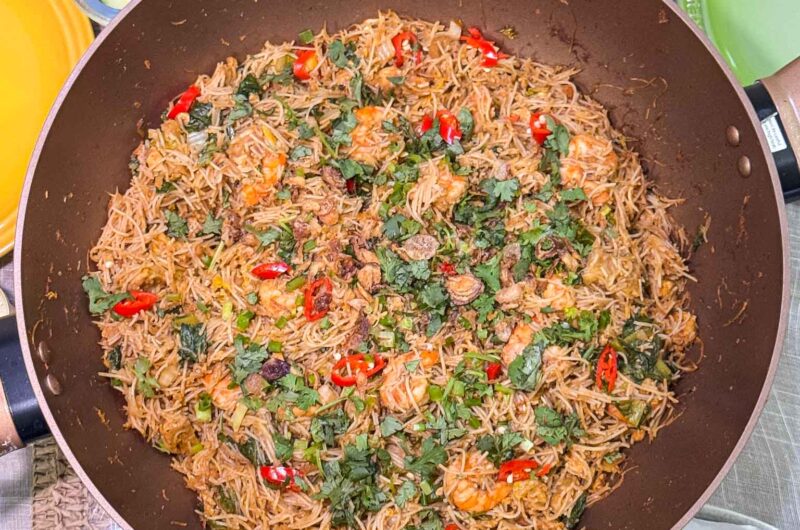
minutesLet’s make bihun goreng, or Malay-style stir-fried vermicelli cooked in a sweet-savoury sambal base. Comforting, home-style bee hoon that’s big on flavour but easy enough for a weeknight or for parties. Quick, easy, crowd favourite!
Keep the screen of your device on
Ingredients
- Noodles
300 g (10.5 oz) rice vermicelli or bee hoon
3 tbsp neutral oil
3 tbsp water, as needed
- For the Chili Paste
8 –10 dried red chillies, deseeded and soaked until soft
1 medium onion (about 5 oz / 150 g), roughly chopped
4 cloves garlic
1 (2.5 cm) ginger
3 tbsp water (for easier blending)
- Seasoning
2 tbsp oyster sauce
2 tbsp kicap manis / dark sweet soy sauce
1 tbsp dark soy sauce
0.5 tsp salt, to taste
- Protein & Vegetables
250 g (9 oz) raw shrimp, peeled and deveined
150 g (5 oz) fish cakes or fishballs, sliced
3 large eggs
2 cups (about 3.5 oz / 100 g) bok choy or mustard greens, chopped
3 cups (about 7 oz / 200 g) cabbage, shredded (optional)
- For Garnish
3 tbsp spring onions or cilantro, chopped
2 tbsp fried shallots
1 –2 red chillies, thinly sliced (optional)
Directions
- Prep Ingredients
- Soak the Noodles: Place rice vermicelli in a large bowl and cover with hot water. Soak for 5–8 minutes until pliable but still slightly firm. Drain thoroughly, briefly rinsing under the tap. Do not over-soak as the noodles will finish cooking in the wok. Set aside.
- Prepare the Chili Paste: Pour hot water over dried chillies and soak for about 10 minutes until softened. Drain well and cut into shorter pieces for easier blending. Peel and roughly chop the onion and ginger. Peel the garlic. Add the dried chillies, onion, garlic, ginger, and 3–4 tablespoons water into a blender for easier blending. Blend until smooth.
- Cook the Chili Paste
- Heat oil in a large wok over medium heat.
- Add the blended paste and sauté for 6–8 minutes, stirring frequently, until:
– The colour deepens to a darker red
– The paste thickens noticeably
– Oil begins to lightly separate at the edges - Stir in oyster sauce, kicap manis, and dark soy sauce. Taste and adjust with salt if needed.
- Cook the Protein
- Add shrimp and sliced fish cakes to the seasoned paste. Stir-fry for 2–3 minutes until the shrimp are just cooked through.
- Push everything to one side. Crack in the eggs and scramble to cook. Cook eggs through, to prevent sogginess when mixed with the noodles.
- Mix everything together so the eggs and proteins are coated in the sambal base.
- Add Vegetables & Noodles
- Optional: Add shredded cabbage and stir-fry for 1–2 minutes until slightly softened.
- Add the drained vermicelli. Using tongs or a second spatula, gently lift and toss to coat the noodles evenly with the sauce.
If the noodles feel dry or difficult to mix, add 1–2 tablespoons (15–30 ml) water at a time to loosen. Avoid pouring in too much at once, the noodles should be moist and springy, not wet. - Add bok choy or mustard greens and toss until just wilted and heated through.
- Turn off the heat.
- Garnish & Serve
- Top with spring onions, fried shallots and sliced red chillies if using. Serve immediately while hot. Enjoy!
Did you make this recipe?
Tag @nomadetteats on Instagram



)