
I tested cold searing steak at home using a non-stick pan, no oil, and no splatter. Here’s how I did it and what actually happened!
Intro: How I Even Ended Up Here
I didn’t set out to test cold searing steak.
I was actually researching how to air fry steak… because sometimes you just want a good steak without turning your kitchen into a smoke-filled war zone. Especially not on a weeknight.
Somewhere along that rabbit hole, I kept seeing people mention cold searing… usually followed by phrases like “this actually works” and “I only do this”. Also it’s approved by people on Reddit, aka the harshest critic on the internet.
Supposedly, cold searing promised all of this:
- A perfectly cooked, medium-rare steak from edge to edge
- A beautifully crisp, deeply browned crust
- The ability to cook steak in a non-stick pan (… no cast iron? This felt… wrong.)
- No oil needed
- And perhaps most importantly for me: NO OIL SPLATTERS.
It sounded almost too good to be true. So of course… I had to try it.
If you want a quick TLDR; this is the ONLY way I cook steak now. Cold seared, medium-rare steak, with a sprinkle of sea salt and wasabi on the side… this is my idea of a perfect steak dinner.
And if you have zero interest on how the experiment went down, you can skip straight to the HOW TO by click on the ‘Jump to Recipe’ button below.
Jump to RecipeWhat Is Cold Searing Steak, Exactly?
Before I get into how it went, let’s quickly talk about what cold searing actually is, because it goes against almost everything I was taught about cooking steak.
Instead of heating your pan until it’s screaming hot, you:
- Start by patting steak dry with paper towels
- Season steak on both sides with freshly ground black pepper – NO SALT!
- Use a cold, non-stick pan
- Place your steak straight in
- Turn the heat on to high
- Let it sear on one side for 2 minutes
- Flip the steak, and sear for another 2 minutes
- Repeat flipping and searing for 2 minutes, until the surface is charred beautifully
- Trust the process
The idea is that the fat renders gradually, the surface dries out naturally, and the crust builds slowly… giving you control over doneness without burning the outside.
This sounds all sorts of questionable on paper… Which meant obviously I need to test this theory. Onwarrdddd!
How I Tested Cold Searing Steak
To keep this as fair as possible, I deliberately didn’t use any fancy steak cuts. No ribeye, no excessive marbling, no “this only works if your steak is expensive” excuses.
I went with what most people actually buy:
- A 1 to 1.5-inch thick sirloin steak (about 2.5–3.8 cm).
If cold searing was going to work, it had to work on a normal steak.
Seasoning (or Lack Thereof)
This part surprised me the most.
- No oil.
- No butter.
- No garlic.
- No herbs.
- Not even salt.
The only seasoning used was freshly ground black pepper on both sides.
Why no salt? Because salt draws out moisture, and excess surface moisture is a big no-no for cold searing. The whole point is to let the steak dry and brown gradually in the pan, instead of steam.
Step-by-Step: What I Actually Did
Here’s exactly how the experiment went down:
1. Prep Steak
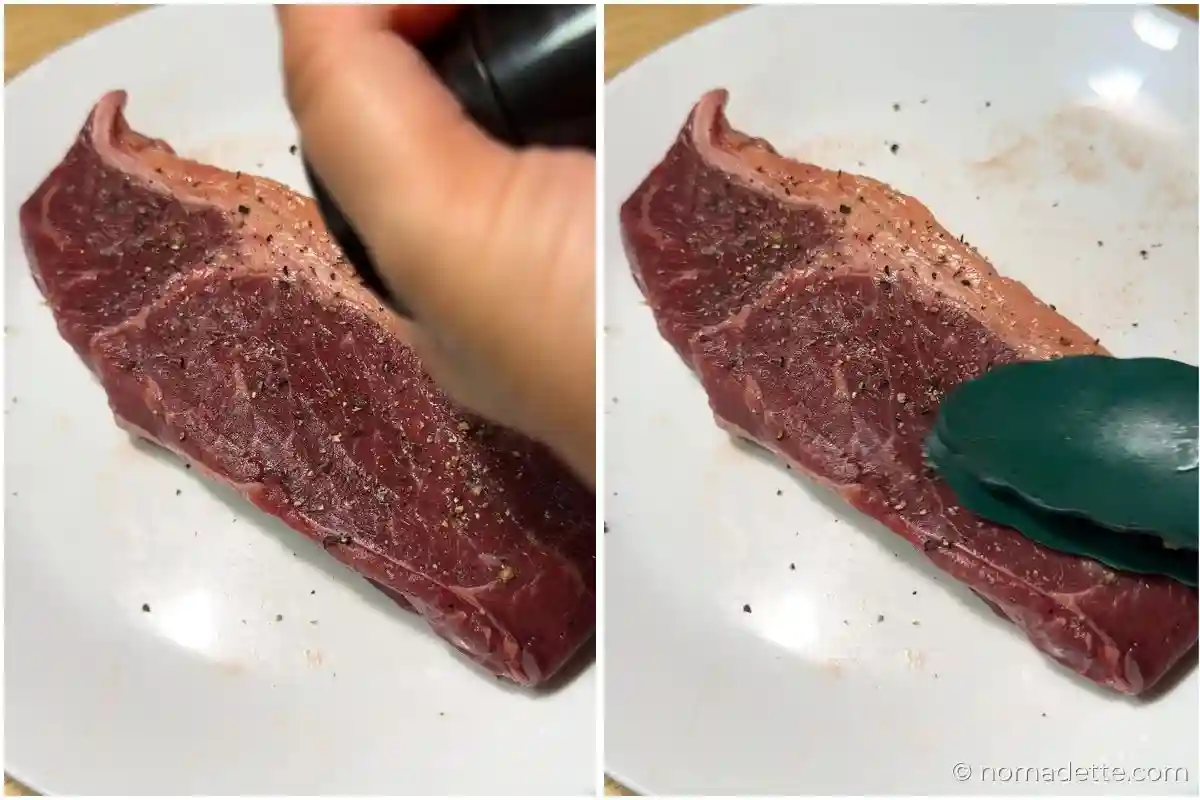
- If steak has been in the fridge, take it out and let it warm up slightly for about 30 minutes for even cooking.
- Pat the steak completely dry with paper towels.
- Liberally sprinkled black pepper on both sides.
- Pat the ground black pepper in with tongs.
2. Sear Steak
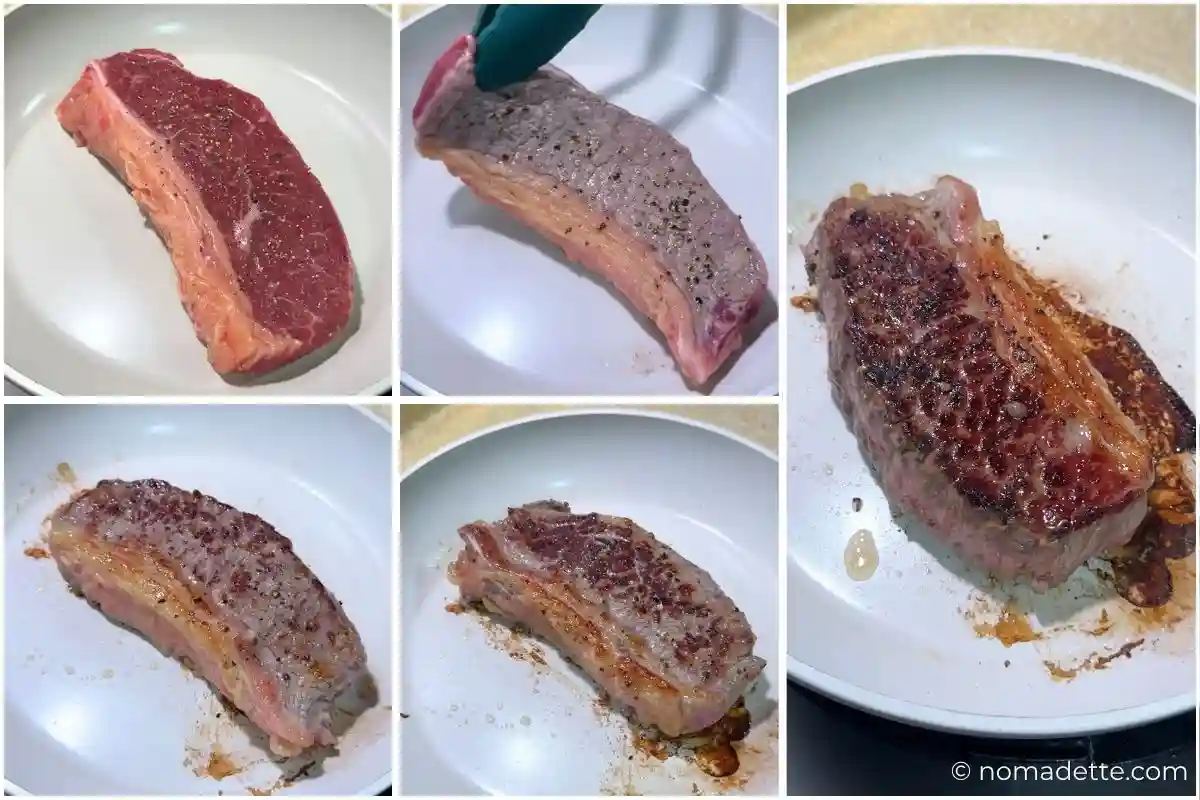
- Place the steak in a completely cold, non-stick pan
- Set the pan over high heat and started a timer for 2 minutes
- At the 2-minute mark, flip the steak and let it cook for another 2 minutes
Up until this point, everything felt very… controlled.
And then came the chaos.
The “Wing It” Phase
By the third flip, I had no idea how often I was supposed to flip the steak.
I know I should have taken notes beforehand, but since I was filming the whole thing on my phone, I can’t quite check my many references without panicking close to the 2-minute mark. Aah, woes of a content creator.
So at this stage we were fully in “trust your instincts” mode.
I did what made the most sense to me: I kept flipping the steak until the surface developed that deep, beautifully charred crust that cold searing promises.
AND thanks to my genius filming (accidentally helpful for once), I later realized I flipped the steak exactly five times in total.
This meant each side of the steak gets 6 minutes cook time.
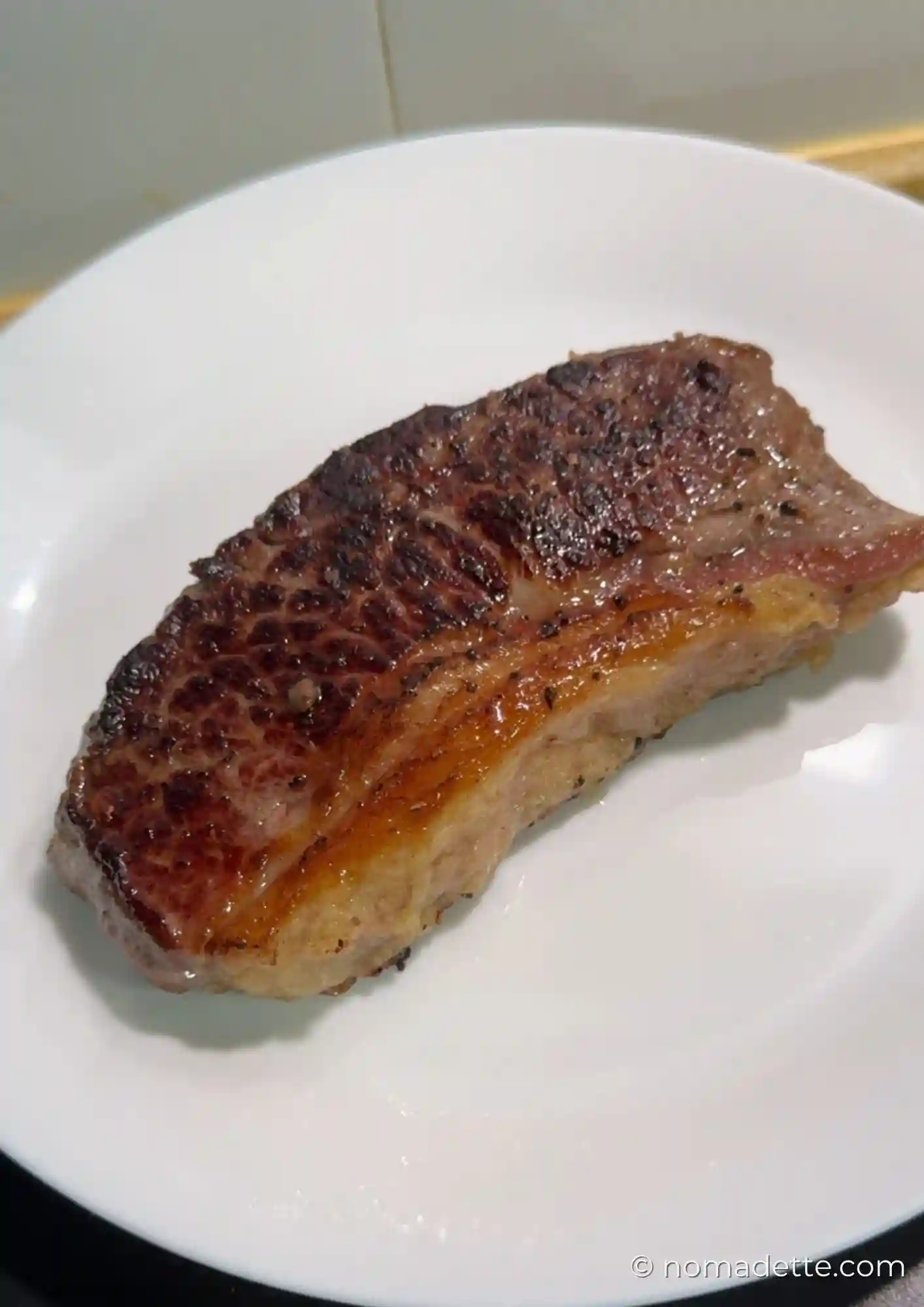
Once the crust looked right, I took the steak off the pan and let it rest for 10 minutes.
Like any other steaks, please LET REST.
Letting it rest will allow the juices inside the meat to redistribute and settle, giving you a juicier steak when you slice into it.
The Moment of Truth
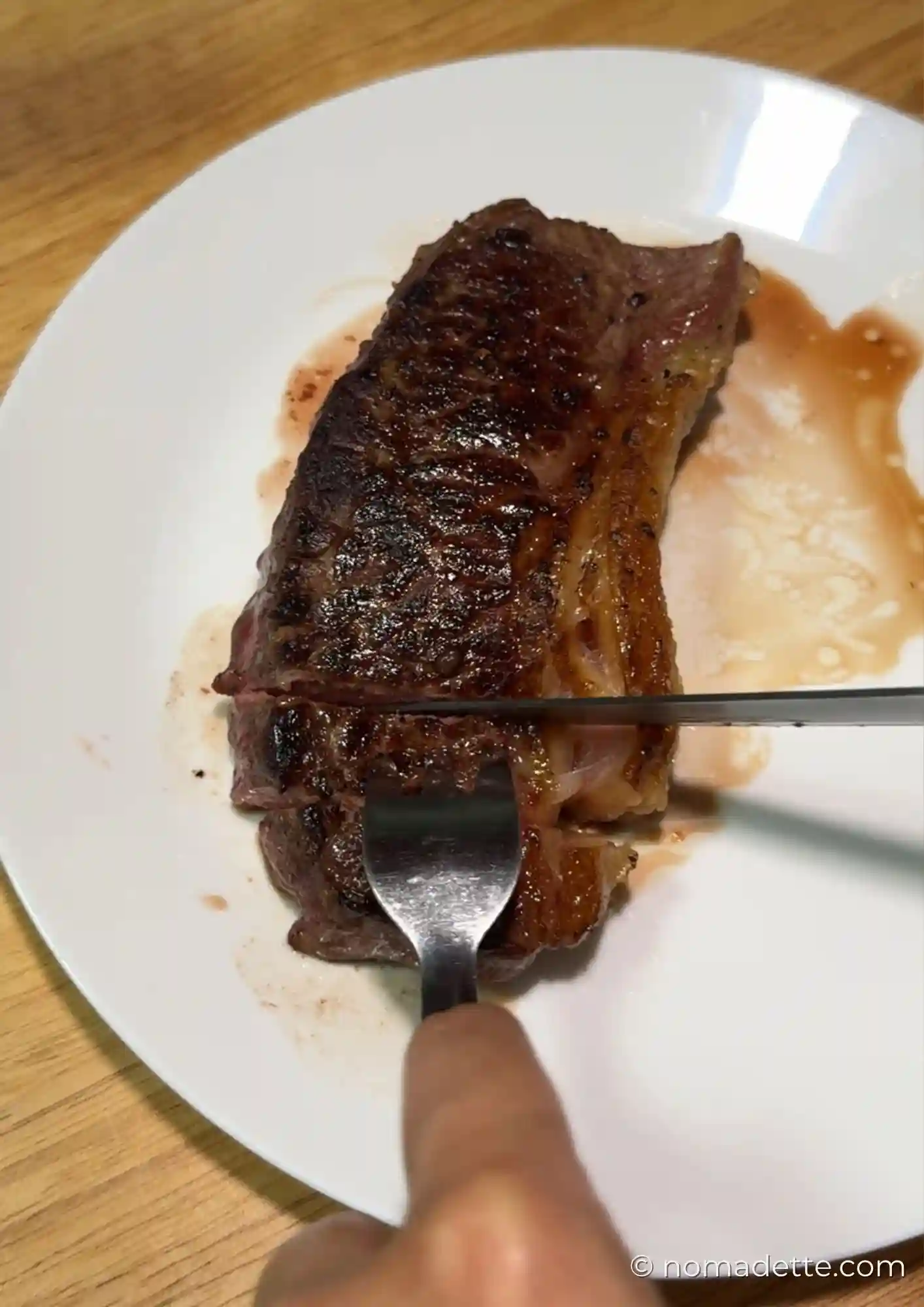
Then I sliced into it.
And… wow.
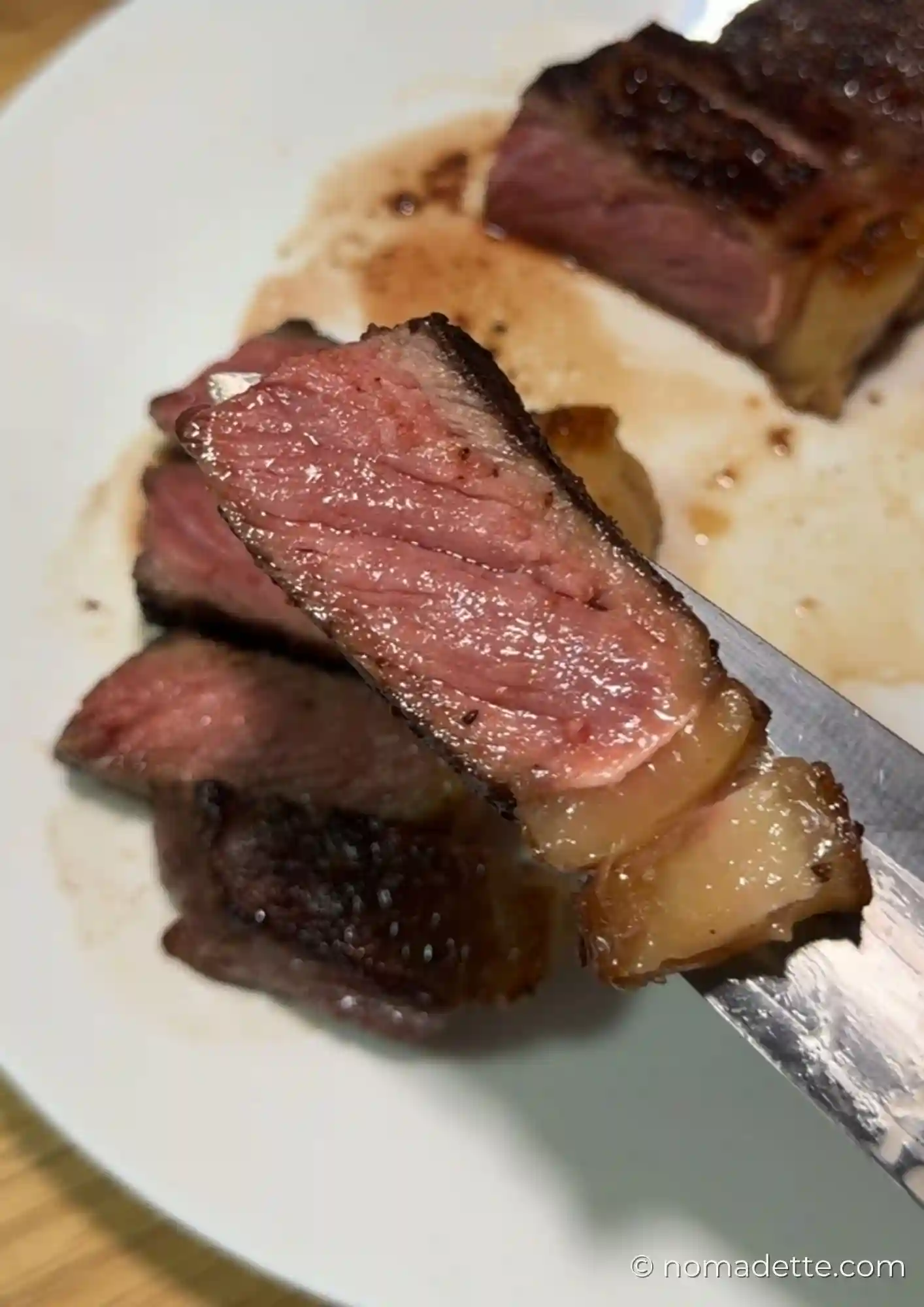
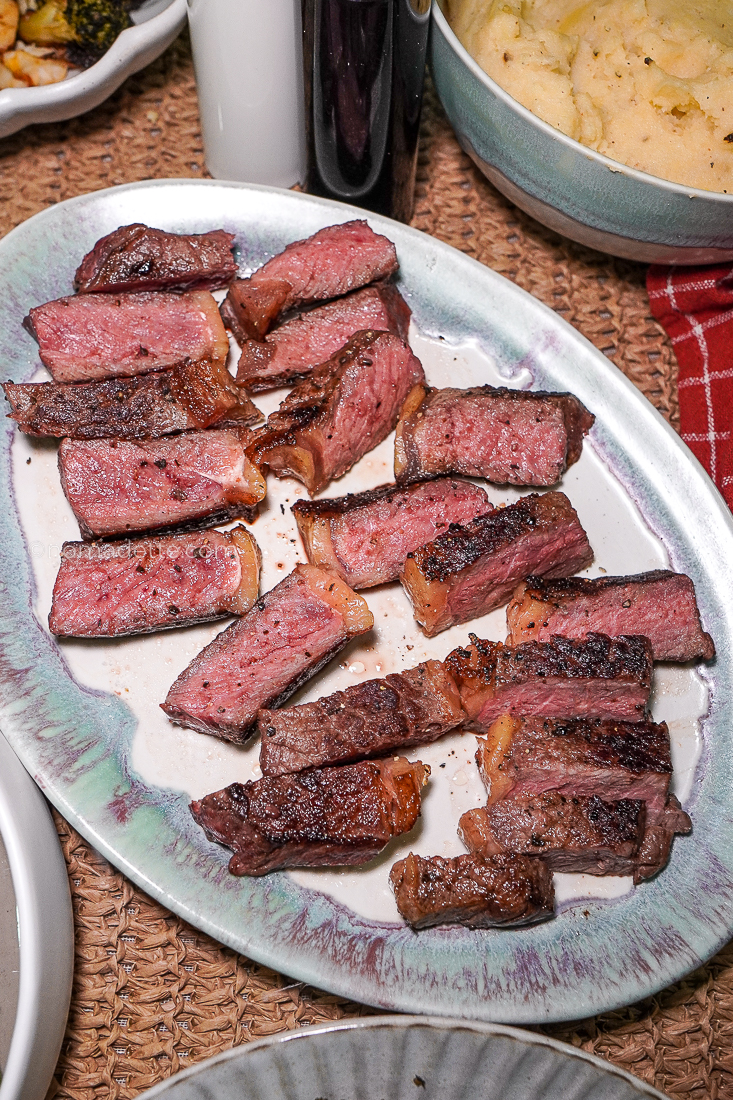
It was perfectly medium rare from edge to edge, not the usual ring of cooked grey beef surrounding a pink center that I’m used to seeing by now. WHICH, to be perfectly fair and honest, yielded a great-tasting steak too.
This was different.
The steak was uniformly pink throughout, so much so that it was almost unrecognizable at first. No gradient. No overcooked edges. Just evenly cooked, juicy beef all the way through, gorgeous charred crust on the surface.
My level of amazement at this? Very high.
And yes — the most important claim of all:
There Were NO Oil Splatters. None!
No smoking.
No greasy stovetop.
No post-cooking cleanup rage!
This alone made me almost want to cry.
I did later cook a slightly fattier steak, and to be fair, that one did release a bit of oil and caused some splattering… but it was minimal. Totally tolerable. Nowhere near the usual steak-cooking chaos on my cast iron pan.
Also worth noting: there was no smokiness in my kitchen at all.
How to Serve (Seasonings, Sides and Sauces)
Final Seasoning (Yes, Salt Comes Last)
Once the steak had rested, I finished it with a light sprinkle of sea salt, to taste.
Holding off on salt until the end meant:
- No excess moisture during cooking
- A properly developed crust
- And that clean, beefy flavour that didn’t get muddled
If you’re used to salting your steak before it even hits the pan, this might feel wrong… but in this case, it really worked!
What to Serve Cold Seared Steak With
Whatever you’d serve your regular steaks with! Here are some of my go-tos
- Lazy Roasted Vegetables: The Easiest Side Dish You’ll Ever Make
- Singapore-Style Spaghetti Aglio Olio
- Cashew Pesto Pasta
- Steamed Veggies
- Salad
To me this is perfect with a sprinkle of sea salt and perhaps some wasabi. But if you need some sauce to go with it:
The Pros and Cons of Cold Searing Steak
What I Loved
✔ Perfect medium-rare, edge to edge
This was the biggest win. No overcooked outer layer, no guesswork, no stress. I’ve NEVER had perfectly medium rare steaks, every single time, consistently, EVER.
✔ Beautiful crust without aggressive heat
The char was deep and crisp, not burnt or bitter.
✔ Non-stick pan approved
This alone makes cold searing feel almost rebellious. Listen, I love my cast iron, but the upkeep and washing after sometimes feels like more work than the actual cooking itself.
✔ No oil, no smoke, no splatter
This was huge for me. I saved so much time and energy on cleanup! No oily stovetop, no lingering smell, no post-cooking rage.
What I Didn’t Love
✘ It takes longer than a hot pan sear
If I were cooking this in a screaming-hot cast iron skillet, I’d be done much faster. Cold searing is slower and more gradual. However, 12 minutes total on the stovetop really isn’t all that bad! This is a trade-off that’s worth it to me because I’m not dealing with oil splatters or heavy cleanup afterward.
✘ Not ideal if you like your steak more done
I genuinely can’t imagine pushing this much further than medium rare.
The crust at this doneness was perfect. Any more time and I think the surface would be too charred for my liking.
If you prefer medium-well or well-done steak, this method might not be for you… Though if you cooked to this doneness with this method, DO TELL! Curious to know.
✘ Just one steak at a time
SO I tried to cook steak on the same non-stick without cleaning it first, and the results were not as good. If you want to cook more than one steak, they’ll need to take turns, and in between you’ll need to rinse and wipe off the current pan. Sounds rather tedious. I would definitely recommend setting down two pans to go at the same time to cut the cook time.
So… Would I Cold Sear Steak Again?
Short answer: yes — absolutely.
This is the ONLY way I cook my steaks at home now.
For a weeknight steak, a small kitchen, or any time I don’t feel like dealing with smoke and splatter? Cold searing has officially earned a spot in my rotation.
Cold Searing Steak: FAQs
Does cold searing steak actually work?
Yes! And I was genuinely surprised by how well it worked.
The steak cooked evenly to a perfect medium rare from edge to edge, with a properly charred crust and zero oil splatter. It sounds wrong, but the results don’t lie.
Why start steak in a cold pan?
Starting in a cold pan allows the steak to:
- Heat up gradually
- Render fat slowly
- Dry out the surface naturally before browning
This controlled heat is what helps you avoid overcooked edges while still developing a good crust.
Do you really not need oil?
Correct. No oil needed!
Because the steak heats up slowly, it doesn’t stick the way it would in a hot pan. For fattier cuts, you may see a bit of rendered fat later on, but you still don’t need to add oil yourself.
Can I use a stainless steel or cast iron pan?
For the best results, I recommend using a non-stick pan. The cold sear method was specifically developed for non-stick cookware, allowing the steak to release easily as it develops a crust.
You can use a stainless steel or cast iron pan, but they’re not ideal for this technique. Stainless steel is more likely to stick when starting from a cold pan, while cast iron takes longer to heat up and is better suited to traditional high-heat searing.
If you’re using stainless steel or cast iron, you’ll generally get better results with a conventional hot sear instead.
Can I add other seasonings?
Sure, but not all seasonings work well with the cold sear technique.
Dried spices, such as smoked paprika, can be added before cooking in a light coating. Fresh herbs, garlic, and butter, however, are best added during the last minute of cooking (or after the final flip), as they can burn if added too early.
That said, this does require a bit more thought and timing. My suggestion? Keep the steak simply seasoned, then turn those extra herbs, spices, and aromatics… into a sauce instead! It’s much easier, and you get all the flavour without worrying about burning the seasonings.
What cut of steak works best for cold searing?
Cold searing works best with:
- Steaks that are at least 1 to 1.5 inches thick (about 2.5–3.8 cm)
- Lean to moderately fatty cuts
I used a standard sirloin steak specifically so the results wouldn’t depend on extra fat or premium cuts.
Is cold searing good for well-done steak?
Probably not.
The crust at medium rare was already perfect, and pushing it further would likely mean over-charring the outside. If you prefer medium-well or well-done steak, a traditional hot pan or oven-assisted method may suit you better.
Does cold searing steak splatter or smoke?
For leaner cuts: no splatter, no smoke.
For fattier steaks: there may be a little splatter once fat starts rendering, but it’s minimal and very manageable. Nowhere near the usual steak-cooking mess.
Is cold searing better than a hot pan sear?
Not necessarily better, just different.
Cold searing:
- Takes longer
- Is much cleaner
- Produces perfect medium rare, beyond that is questionable.
Hot pan searing:
- Is faster
- Produces more smoke and splatter
- Requires more cleanup
- Any doneness can be achieved, but requires more control – and likely guesswork.
I’ll happily use both, depending on the situation, but I’ll be perfectly honest: I default to the cold sear technique 90% of the time at home!
Final Thoughts: Is Cold Searing Steak Worth Trying?
I’ll be honest: I did not expect to love this.
If you had asked me before this experiment, I probably would’ve turned my nose up the moment you mention ‘non-stick pan’.
If you’re someone who:
- Loves cooking steak at home and wants a perfect medium-rare
- Hates scrubbing oil-splattered stovetops… especially on a weeknight
- Wants consistent results without having to babysit a screaming-hot pan
Then YES! I think cold searing is absolutely worth trying.
The no oil splatter alone was enough to convince me. I can cook a steak in a non-stick pan with no added oil, without coating my stovetop in grease. And for a weeknight steak, that is a huge win.
What I got was a steak that was:
- Perfectly medium-rare from edge to edge
- Beautifully browned and charred on the outside
- NO ADDED OIL!
- Shockingly clean to cook
- And honestly… far less stressful than my usual cast-iron routine
Yes, it takes a little longer than a traditional sear. And no, it’s probably not the method for well-done steak lovers.
But if you like your steak medium-rare and want great results without the smoke, oil splatters, or heavy cleanup, I’d absolutely give cold searing a try.
It’s now the only way I cook steak at home.
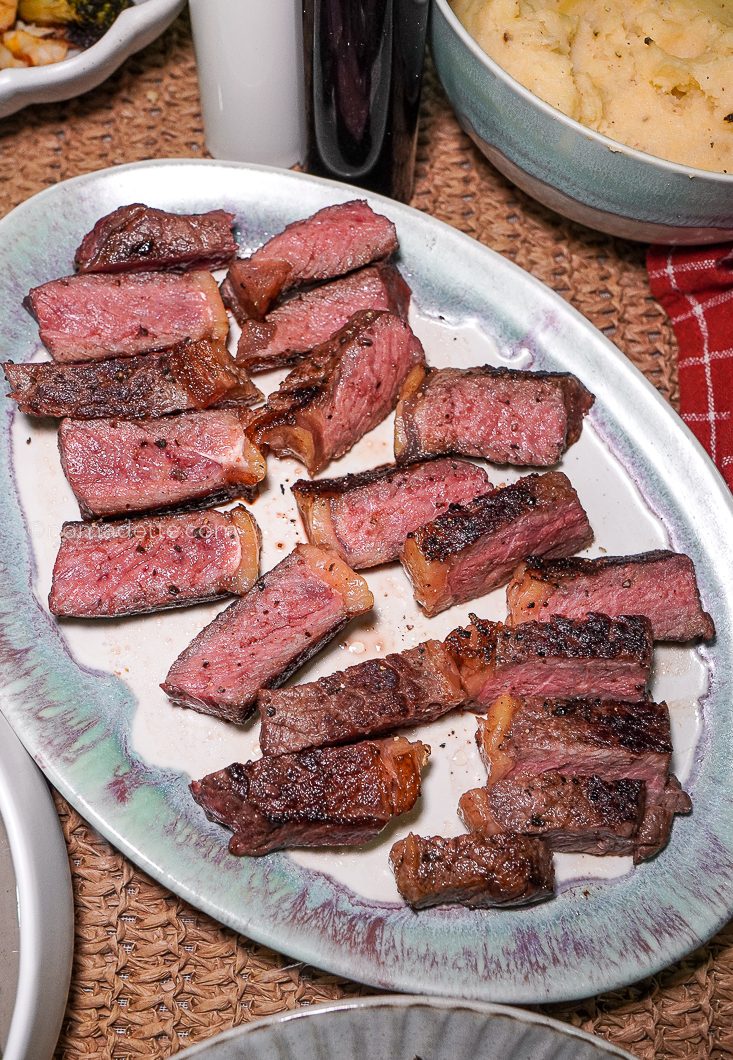
I Tried Cold Searing Steak — Here’s How to Get a Perfect Medium Rare
4
servings30
minutes40
minutesKeep the screen of your device on
Ingredients
1 steak, 1 to 1.5 inches thick (about 2.5–3.8 cm, ~8–10 oz / 225–285 g)
freshly ground black pepper, to taste
salt, to finish
- Equipment
non-stick skillet
tongs
paper towels
timer
Directions
- Prep
- Pat the steak dry on both sides with paper towels.
- Season both sides generously with freshly ground black pepper only. Do not salt at this stage.
- Sear
- Place the steak in a cold, non-stick pan.
- Set the pan over high heat and let cook for 2 minutes. Start a timer for accuracy.
- Flip the steak and cook the other side for another 2 minutes.
- Continue flipping the steak every 2 minutes. Flip 5 times total. The steak surface should be a deep, evenly charred crust; if it’s not, flip one more time.
- Rest and Serve
- Remove the steak from the pan and let it rest for 10 minutes.
- Finish with a light sprinkle of salt. Slice, serve and enjoy
Notes
- Do not salt before cooking. Salt draws out moisture, which works against cold searing.
- This method works best with steaks that are at least 1 inch (2.5 cm) thick.
- Lean to moderately fatty cuts are ideal. Very fatty steaks may release some oil later, but splatter is still minimal.
- Best suited for medium rare doneness. Pushing further may result in an overly charred crust.
Did you make this recipe?
Tag @nomadetteats on Instagram