

This is the only foolproof recipe you need to make the best Beef Rendang!
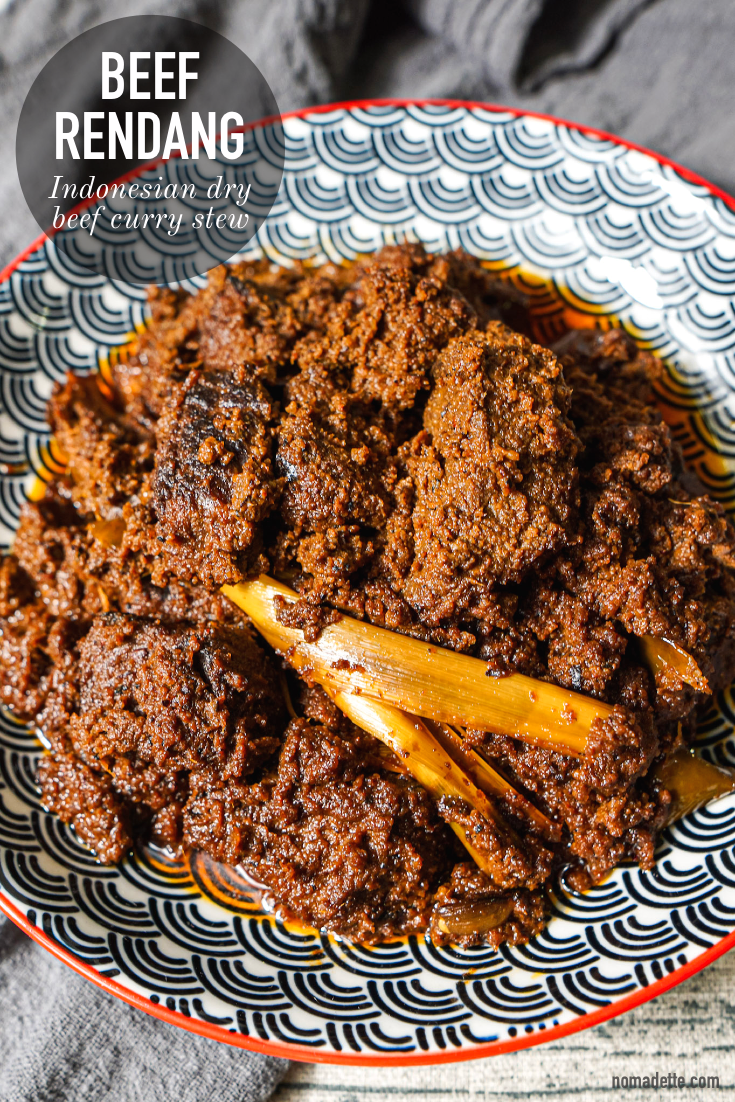
This is my ultimate Beef Rendang recipe — tender chunks of beef slow-cooked until they’re coated in a rich, deeply spiced, coconut-infused dry curry. It’s a true flavour bomb, and there’s a reason why rendang was once voted the best food in the world.
Don’t be intimidated by the long list of ingredients or the slow cooking time. I’ll walk you through every step so you can make a foolproof pot of rendang at home. The cook time is long, but the process is straightforward and the steps are simple. The payoff? Absolutely worth it.
Rendang originates from Indonesia, but it’s also a much-loved staple in Malaysia and Singapore. It’s a celebratory dish, often served during festive occasions like Hari Raya Eid, weddings, and other special gatherings. Traditionally, it’s best enjoyed with plain steamed rice, or Nasi Minyak, or with some lontong and ketupat – steamed compressed rice cakes that soak up all that incredible sauce.
What is Rendang?
Rendang is a traditional Indonesian dish that has spread across Southeast Asia, especially to Malaysia and Singapore. At its core, it’s a slow-cooked dry curry made with beef, a blend of spices, and creamy coconut milk.
Unlike saucy curries, rendang is simmered for hours until the liquid reduces and the flavors intensify, leaving behind a rich, almost caramelized coating around the beef. This technique not only makes the meat tender and flavorful but also helps preserve it — a key reason why rendang was originally created by the Minangkabau people of West Sumatra.
Today, rendang is more than just food. It’s a celebratory dish, often prepared for weddings, Eid (Hari Raya), and other big gatherings. Its reputation has gone global too — CNN even named it the “World’s Best Food.”
Making rendang at home may seem intimidating at first, but with clear steps and patience, you’ll be rewarded with one of the most satisfying beef dishes you’ll ever cook.
Why You’ll Love This Beef Rendang Recipe
Key Ingredients for Rendang
What Type of Beef?
The best beef for rendang is… the cheapest cuts! Yay! Tough, cheaper cuts that shine after hours of slow cooking. These cuts have plenty of connective tissue and fat, which break down during the long braise to give you that fall-apart tenderness and rich flavour:
- Beef chuck: My top choice. It’s affordable and has the right balance of meat and fat.
- Short ribs: Adds extra richness and flavour.
- Stewing beef / whatever your butcher recommends: Don’t stress too much — just ask your butcher for a good stewing cut.
I usually cut the beef into cubes about 1 ½ inches (3–4 cm), but you can go larger if you prefer. My mom likes slicing them smaller, while others throw in whole big chunks. Thanks to the long cooking time, even large pieces become fork-tender.
The Best Beef Rendang Rempah Base Paste
The spice base paste so crucial; this is where the bulk of the flavours are coming from. It’s a comprehensive list of ingredients, but you don’t have to prep much – simply pop everything in a blender or food processor turn into a paste:
- Aromatics: Red onions or shallots, garlic, and ginger, form the base sweetness and depth.
- Galangal: A cousin of ginger, but with a more citrusy, peppery kick. Essential for that authentic rendang flavor.
- Lemongrass: Use the white part only, smashed or chopped before blending. It adds a bright, fragrant note.
- Turmeric: Fresh turmeric root is ideal, but powdered turmeric works fine too.
- Dried Chillies: If there is ‘work’, that would be in preparing the dried chillies. Pour boiling water over the dried chillies, and let them rehydrate for about 5 minutes or so. You will see the dried chillies becoming more plump. Drain away the hot water, give it another rinse, and cut them up into smaller pieces for easier blending. You can deseed them as well, but cutting them open lengthwise, but personally I just let the excess seeds drop out when I cut them up. Not all will be removed, but I’m fine with that. For even lesser work, use dried chilli paste. You can also replace it with Sambal Oelek.
This is not essentially a spicy dish. The amount of dried chillies is not that much to create too much heat. If you really cannot take the heat, remove the dried chillies.
Essential: Coconut Milk
Thick, creamy coconut milk or coconut cream is what transforms the spice paste into a luscious braising liquid. As it reduces and caramelizes, it coats the beef in a rich, nutty sauce!
Ideally we want to use coconut cream for richer, fattier rendang that caramelises quicker. However, coconut milk will work just as well here.
And yes yes, sure, fundamentally there’s a difference between coconut milk and coconut cream… but it doesn’t matter here. So for the sake of ease, in this recipe, whenever I mention coconut milk or coconut cream, they mean the same product.
Essential Ingredient for Beef Rendang: Kerisik
Kerisik, or toasted coconut butter, is another important ingredient for authentic rendang. Made from grated coconut that’s toasted until brown, then ground into a paste, it adds:
- A nutty, caramelized richness
- Thick, textured sauce that clings to the beef
Here in Asia, we have the luxury of kerisik being easily available in our supermarkets. Try to look for it in Asian grocers, otherwise I found Kerisik on Amazon.
Update
You can easily make kerisik from scratch! See the full recipe right here.
Without it, you still get a delicious beef curry, but it won’t have the signature gritty texture or depth.
If there’s no kerisik, it’s just not rendang. It gives rendang its signature nutty texture and taste.
If you really cannot find kerisik, you will still get an amazing beef curry stew with incredible depths of flavour. In fact, I make rendang often without kerisik and it’s still so delicious, albeit without the signature texture.
Supporting Ingredients That Matter
- Tamarind paste or dried tamarind: Adds subtle tanginess to balance the richness. I use tamarind paste, alternatively use tamarind juice extracted from tamarind pulp.
- Makrut lime leaves: Bright citrusy aroma that lifts the heavy flavours.
- Cinnamon stick & star anise: Optional, but add warmth and fragrance typical in Malaysian rendang.
- Salt & sugar: Essential to balance savoury, sweet, and aromatic flavours.
Key Steps to Making Rendang
1. Make the Spice Paste

- Blend onion, garlic, ginger, galangal, turmeric, coriander, fennel, cumin, and dried chilli paste or rehydrated dried chilies, until smooth. Use a blender, food processor or a pestle and mortar.
- Add a splash of water (or oil) if needed, but keep the paste thick, not watery.
- If using dried chilies, soak first in boiling water until soft, deseed, then cut. The overall heat level depends on how many you use.
2. Fry the Whole Spices and Paste

- Heat oil in a heavy pot over medium heat.
- Add cinnamon, star anise, cloves, and cardamom. Fry 1 minute until fragrant.
- Stir in blended spice paste. Saute about 5 minutes, stirring often, until fragrant and the paste has dried down slightly and deepened in colour.
- Stir constantly so spice paste doesn’t stick and burn. If needed, add more oil.
3. Add Beef and Lemongrass

- Add bruised lemongrass stalks and beef chunks. Stir to coat beef in spices.
- Cook until beef releases juices and liquid mostly evaporates (about 10 minutes). The beef should also have shrunk in size.
Tip: Don’t panic if it looks watery at first — that’s the beef juices. Cook until it reduces.
4. Add Coconut and Seasonings

- Stir in coconut cream or milk, salt, palm sugar, makrut lime leaves (tear or bruise first to release flavours), tamarind paste and kerisik. Stir to combine. You should have a saucy pot at this stage. Turn the heat up to let it come to a boil.
- Increase heat to medium-high. Bring mixture to a gentle boil.
NOTE: Coconut cream may look split or curdled — this is normal. It will come together as it cooks.
5. Simmer Low and Slow

- Once boiling, immediately reduce heat to the lowest setting possible on your stovetop.
- Cover with a lid. We will be letting this simmer gently for 2 hours, minimum.
- Every 20–30 minutes, stir well and scrape the bottom to prevent burning.
- If the gravy is drying out before beef is tender, add a splash of water.
6. Final Reduction

- In last 30 minutes, keep a closer eye on the Rendang as it will be more prone to burning. Stir more frequently, every 5 minutes or so.
- Oil would have separated already — this is a sign it’s almost ready.
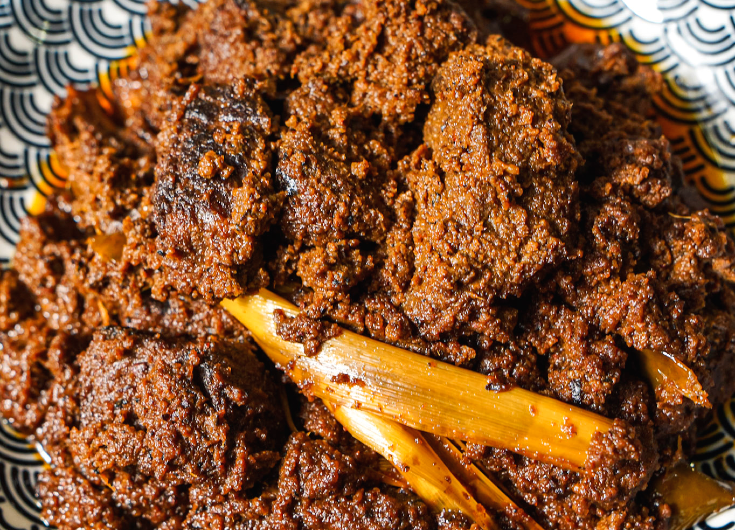
- Sauce should reduce until thick, dark brown, and clings to beef. The beef should be fork-tender by now.
NOTE: Rendang is a “dry curry,” so it should not be soupy. However, if you prefer more sauce to your rendang, stir in more water and let it boil without drying it out further.
7. Serve
- Taste and adjust seasoning if needed (more salt or sugar).
- Once you have: fork-tender beef coated in rich, caramelized paste, rendang is ready!
Tips to Make the BEST Rendang
Rendang Tip #1: Letting the Meat Sweat
The beginning stages of cooking involves allowing the beef to release liquid and letting the liquid evaporate. This process will prolong the shelf life of the beef. This is a crucial step if you’re planning to keep the rendang for longer. At this stage, the beef might be cooked – this is perfectly fine.
The beef is added after sauteeing the rempah base paste and it has dried down. You’ll notice the paste turning into a liquid-y again. That is the liquid drawn out from the beef. Continue to stir, and once the paste thickens back to its pre-beef state, this sweating step is complete.
If you’re making a small batch to eat the same day, you can skip this step, but it’s crucial for larger pots or long-term storage.
Rendang Tip #2: Slow Cooking
Set the heat to the very minimum to cook the rendang. This would be lowest possible setting that your stove top has. This might mean a small flame that will almost flicker. Doing this will prevent burning of the spices.
Set your stove to the lowest possible heat. For many stovetops, this may look like a barely-there flicker. Slow cooking prevents the rempah from burning while letting flavours develop gradually.
Cooking time matters: 2 hours is ideal to allow the coconut milk to caramelise and the beef to become tender. 1 hour is the minimum, but the magic of rendang really comes out after 2 hours. Some households even stew it longer for super-soft, fall-off-the-bone beef.
Rendang Tip #3: Stir Every 30 Minutes
Although rendang needs long periods of time to properly stew, the process is effortless! You can essentially leave it alone, no need to babysit.
You do need to return to the pot at every half hour or so, just to give the pot a stir. This is to give the Rendang an even mix throughout. If left unstirred, you might potential burn the Rendang that’s at the bottom.
If the rendang seems too dry before the beef is tender, add a splash (about 1 cup) of water. This will give more liquid for the beef to stew in and soften even more. Let it reduce back to a thick, dry curry texture.
In the last 30 minutes, stir more frequently. Most liquid will have evaporated, and the spices are more prone to sticking and burning. We do not want to add more liquid at this stage since we want to achieve a dry curry.
Can I Cheat My Way to Rendang?
If you want to make good rendang, you HAVE to let it stew for a long period of time. Not only will this allow the beef to soften, this will also caramelise the coconut milk so it becomes that reduced gorgeous dark brown curry.
However, if you are craving this on a weekday, you can make an easy 30-minute version with chicken, my recipe is right here. I make this whenever that rendang craving hits and I’ve had no complaints.
It’s more of a thick creamy curry, than a dry curry, but I always love gravy to ladle all over my rice anyway. In fact, sometimes my guests prefer my chicken rendang to the beef rendang… their words, not mine!
Rendang Storage & Make-Ahead Tips
Rendang is actually one of the best curries to make ahead — in fact, it often tastes even better the next day, once the flavors have had time to meld. Here’s how to store it properly:
1. Cooling & Short-Term Storage
- Let the rendang cool to room temperature before storing.
- Transfer to an airtight container. If cooked the proper way, it can hold in room temperature for up 5-7 days. However, I would always refrigerate to be safe (humid climate!).
- The beef will continue to absorb the spices as it sits, making it even more flavorful the next day.
2. Freezing for Longer Storage
- Rendang freezes beautifully. Portion it into freezer-safe containers or heavy-duty ziplock bags.
- Store for up to 3 months.
- To reheat, thaw in the fridge overnight, then gently warm on the stovetop over low heat, stirring occasionally. You may need to add a splash of water or coconut milk to loosen the sauce.
3. Reheating & Serving
- Reheat slowly over low heat to avoid burning the caramelized coconut paste.
- Stir frequently, especially if the rendang has thickened in the fridge or freezer.
- Rendang is even better served the next day or after reheating, once the flavors have fully developed.
4. Extra Tips
- If your rendang dries out too much in the fridge, stir in a little coconut milk or water when reheating to bring it back to a luscious, thick consistency.
- You can also reheat in a microwave on medium power, stirring every couple of minutes to prevent scorching.
Watch How to Make Rendang Here
More Recipes Like This
If you love this Malay-Indonesian recipe, you might love these too:
The BEST Beef Rendang Recipe
4
servings15
minutes2
hoursKeep the screen of your device on
Ingredients
600 g -1kg Beef for stewing, chuck or short ribs
2 Lemongrass, bruised
1 Cinnamon
3 Star Anise
5 Cloves 5 Cardamom
5 -6 Makrut Lime Leaves
1 tsp Tamarind Paste + 2 tbsp Water*
500 ml Coconut Cream or Santan
1 tbsp Coconut Palm Sugar or Gula Melaka, or to taste
2 tsps Salt, or to taste
120 g Toasted Coconut Butter or Kerisik
Water (as needed)
1/4 cup Cooking Oil
- Blended Paste
1 -2 tbsps Dried Chilli Paste or 10 Dried Chillies, soaked in boiling water, cut and deseeded
1 Onion, peeled and roughly chopped
4 Garlic, peeled
1 inch Ginger, peeled and roughly chopped
1 inch Galangal, roughly chopped
1 inch Fresh Turmeric or 1 tsp Turmeric Powder
1 tsp Coriander Seeds
1 tsp Fennel
1 tsp Cumin
1/4 cup Water or Cooking Oil, for easier blending
Directions
- Make the Spice Paste
- Blend onion, garlic, ginger, galangal, turmeric, coriander, fennel, cumin, and dried chilli paste or rehydrated dried chilies, until smooth.
Note: If using dried chilies, rehydrate by soaking in boiling water first for about 5 minutes until softened. Deseed, and then cut into smaller pieces for easier blending. - Add a splash of water (or oil), as needed, to move the blender along, but keep the paste thick, not watery.
- Fry the Whole Spices and Paste
- Heat oil in a heavy pot over medium heat. Add cinnamon, star anise, cloves, and cardamom. Fry 1 minute until fragrant.
- Stir in the blended spice paste. Saute about 5 minutes, stirring often, until fragrant and the paste has dried down slightly and deepened in colour. Stir constantly so spice paste doesn’t stick and burn. If needed, add more oil.
- Add Beef and Lemongrass
- Add bruised lemongrass stalks and beef chunks. Stir to coat beef in spices.
- Cook until beef releases juices and liquid mostly evaporates (about 10 minutes). The beef should also have shrunk in size.
- Add Coconut and Seasonings
- Stir in coconut cream or milk, salt, palm sugar, makrut lime leaves (tear or bruise first to release flavours), tamarind paste solution (pre-mixed with 2 tbsp of water) and kerisik. Stir well to combine. You should have a saucy pot at this stage.
- Increase heat to medium-high. Bring mixture to a gentle boil.
- Simmer Low and Slow
- Once boiling, immediately reduce heat to the lowest setting possible on your stovetop. Cover with a lid. Let the rendang simmer gently for 2 hours, minimum.
- Every 20–30 minutes, return to the pot to stir well. With each stir session, scrape the bottom of the pot with a spatula to prevent burning and redistribute the flavours.
If the gravy dries out before the beef is tender, stir in water, about 1/2 to 1 cup at a time. This will introduce more liquid so the beef can continue to tenderise. - Final Reduction
- In last 30 minutes, keep a closer eye on the Rendang as it will be more prone to burning. Stir more frequently, every 5 minutes or so. Oil would have separated already — this is a sign it’s almost ready. No need to leave the lid on anymore to speed up reduction.
- Continue cooking until the sauce is thick, dark brown, and clings to the beef. The beef should be fork-tender.
At this stage, Rendang is essentially ready to serve. How much longer you continue to let it simmer depends on your rendang preference.
NOTE: Rendang is a “dry curry,” so it should not be a wet gravy. However, if you prefer more sauce to your rendang, stir in more water and let it come back up to a boil without drying it out further. Turn off the heat. - Final tasting and serve!
- Taste and adjust seasoning if needed (more salt or sugar).
- Once you have: fork-tender beef coated in rich, caramelized paste, rendang is ready!
Notes
- * Tamarind paste can be added directly to the rendang without diluting with water. The additional water only makes it easier to be stirred in. If using tamarind pulp, use juice from 1 tbsp of tamarind pulp with seeds + 3-4 tbsps warm water. Strain and use just the juice.
- ** Alternatively use brown sugar. Regular white sugar will work too.
- *** This is an important ingredient that gives rendang that unique nutty texture and flavour.
- **** Alternatively use about 4 tbsps of dried chilli paste – adjust according to spice tolerance.
Did you make this recipe?
Tag @nomadetteats on Instagram





Thank you so much for sharing this very delicious foolproof recipe.👍🏻
This is a really great recipe – just made it and it is delish ! thanks so much for posting 🙂
Hi. Your recipe card indicates coconut cream but your video mentions coconut milk. I went to buy coconut cream but fortunately I had coconut milk which I was suppose to use for sayur lodeh. May I know which one should I be using? Also, I followed your video which added in the rempah first unlike the recipe card that said to add the whole spices first. I basically followed your video but just wanted to check with you.
Hi Jaclyn, coconut milk and coconut cream will both work for rendang. Either way – rempah first, or whole spices first – will work just fine!
I’m excited to try the recipe and let you know how to turns out. I had a question- most other rendang recipes I’ve read, ask to blend the white part of the lemongrass in the paste. Could I do that with yours too and stir fry the green part with the whole spices?
Also I’m vegetarian so I’m going to substitute the beef with jackfruit. At what point should I do this and would the cooking time be the same?
Looking forward to hearing from you and thank you!
Earlier this year, my wife and I stumbled onto a completely undistinguished, hole-in-the-wall Malaysian restaurant in Sydney (Malay Malay, in the Haymarket area). There, we had a beef rendang that was one of the most delicious things I have ever tasted, and I’ve been trying to recreate it ever since. Of the various recipes I’ve tried, this one was clearly the best.
I used a little less than 3 lb of chuck; I might substitute brisket or short ribs next time. I followed the recipe pretty much exactly except for adding extra lime leaves. I cooked on low, and then a low simmer, for 5 hours; it was still not fall-apart tender but nonetheless really good and flavorful. The spice mixture in the recipe is excellent, I think; I used half a dozen deseeded Thai chilis which ended up giving no heat to it – I’d keep some of the seeds next time.
One thing I’m curious about is the amount of liquid in this dish. It’s supposed to rather dry, and the version in Sydney was; but this ended up with quite a lot of liquid. It’s still excellent, but I wonder if cooking it at a higher heat for the last part would solve that and further concentrate flavors.
I’d also suggest experimenting with doing this in a slow cooker instead of in a casserole on the stovetop. But either way, it’s excellent.
Hi im trying out this recipe for the first time at the moment. Flavours seem great so far. Made my own kerisik and im using a slowcooker which I think is perfect for a rendang. However 6 hours in it seems still very wet. Any suggestions what to do when the sauce stays like this? I doubled the recipe and used 900 ml of coconut crème.
Easy troubleshoot! Flavours being good is a great sign – it just needs that last reduction step. Slow cookers are great for tenderizing the beef, but they don’t allow enough evaporation for rendang to dry down properly. Since there’s added coconut cream, it’s more liquid to further reduce too. Rendang needs an uncovered final reduction stage for the sauce to thicken, oil to separate, and the paste to cling to the meat. Remove the lid, and let the slow cooker continue to cook.
Alternatively, transfer it to a wide pot and finish it uncovered on the stovetop, stirring frequently, until it reduces and darkens.