
Creamy, comforting, and packed with flavour! How to make authentic Kacang Pool at home easily with creamy fava beans, mince, warming spices and all the classic toppings.
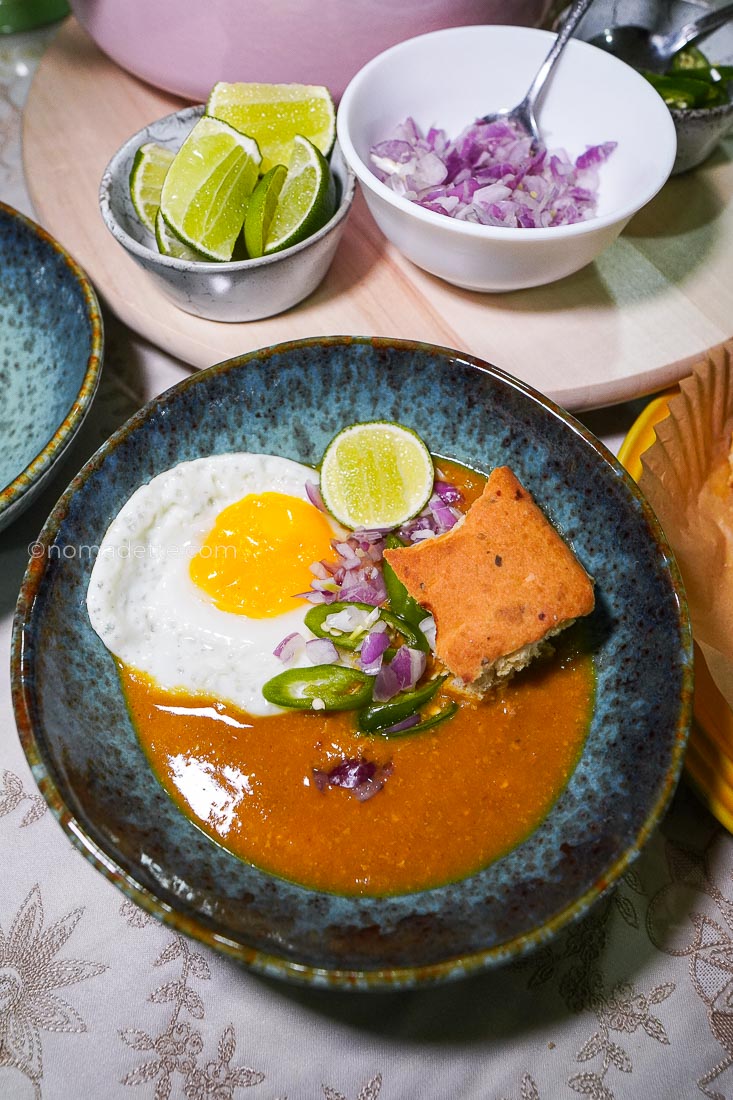
If you love hearty breakfasts that are savoury, comforting, and packed with flavour, kacang pool deserves a spot on your list! Or in my case… breakfast, lunch, and dinner, to be honest.
Imagine a creamy, beany stew simmered with aromatic spices, topped with a sunny-side-up fried egg, fresh herbs, chopped onions, and green chillies. All of this scooped up with crusty bread to soak up every bit of that delicious kacang pool.
Lately, I’ve been making big batches of this because not only does it keep and reheat beautifully, it’s also an easy way to get a satisfying, high-protein meal on the table.
Despite its humble ingredients, kacang pool is incredibly satisfying. The creamy beans soak up all the fragrant spices, while the fresh toppings add crunch, heat, and brightness to balance the richness of the dish.
Kacang pool is a Malaysian breakfast classic, especially popular in Johor. While traditional versions are often made with dried fava beans, this homemade version uses canned fava beans for convenience, making it easy enough for a weekday breakfast or a comforting weekend brunch.
Being based in Singapore, I don’t see kacang pool as often as classics like mee siam or mee rebus, but when I spot it on a menu, you can bet I’m ordering it. It may not be the most common hawker breakfast, but it’s one we love all the same.
No fava beans? Here’s my favourite shortcut!
I rarely use canned fava beans when making kacang pool. One of my favourite hacks is to use canned baked beans instead — they’re much easier to find, often cheaper, and make a delicious pantry-friendly version of this dish.
Looking for that shortcut version? Find my Baked Beans Kacang Pool recipe here.
What is Kacang Pool?
Kacang pool is a Malaysian breakfast dish made with creamy fava beans cooked with aromatic spices, minced meat, and served with a variety of fresh toppings.
The name itself gives a clue to its origins.
- “Kacang” means beans in Malay
- “pool” comes from ful, referring to the fava beans used in ful medames, a popular Middle Eastern dish made with slow-cooked fava beans.
While kacang pool has roots in ful medames, it has evolved into its own Malaysian dish, particularly in Johor. The Malaysian version is much more heavily spiced and is typically served as a complete meal with minced meat, fried eggs, bread, onions, chillies, and lime.
Traditional ful medames is a much simpler dish. It usually consists of cooked fava beans seasoned with ingredients like olive oil, garlic, lemon, and spices, and is often enjoyed as a breakfast dish across the Middle East. Meat is not typically included.
Kacang pool, on the other hand, uses ‘Malay’ spices like curry powder, cumin, coriander, and fennel, as well as minced beef, making it richer, heartier, and more similar to a comforting stew.
This recipe uses canned fava beans for convenience, the go-to for most home cooks. Dried fava beans are less commonly used unless you’re making a larger batch. If you’d like to use dried fava beans, I’ve included simple instructions within this post.
Why You’ll Love This Kacang Pool Recipe
Key Ingredients
Fava Beans (Foul Medames)
- Fava beans are the star ingredient in kacang pool. They create the creamy, thick texture that makes this dish so comforting.
- Traditionally, kacang pool is made with dried fava beans that are soaked and cooked until tender. For convenience, this recipe uses canned fava beans (also known as foul medames), which significantly cuts down preparation time while still delivering great flavour. Unless you’re making a big batch, rarely would you use dry fava beans.
NOTE: One of the things I love about kacang pool is how adaptable it is. While fava beans are the traditional choice, I’ve made this with chickpeas, kidney beans, black beans, butter beans, and of course, baked beans too… or any other canned beans that are on sale that week. They’re all delicious in their own way, so don’t let the lack of fava beans stop you from making a pot!
Minced Beef
- Minced beef adds savouriness and extra protein to the dish. It balances the creamy beans and gives kacang pool a richer, heartier texture.
- You can also swap this with minced lamb or chicken or omit it entirely for a vegetarian version.
Aromatics
- A blend of onion, garlic, and ginger forms the flavour base of the dish.
- Cooking the aromatics until fragrant is an important step because it builds the foundation of flavour before the spices are added.
Spices
Kacang pool gets its signature warm, aromatic flavour from:
- Cumin
- Coriander
- Fennel
- Curry powder – the Singapore/Malaysian twist! Adds familiar depth and warmth of local curries.
- Chilli powder – adds a gentle heat
Ghee or Butter
- A little ghee or butter adds richness and a subtle nutty flavour. Combined with oil, it helps carry the spices and creates a more flavourful base. Feel free to use olive oil, or even neutral oil.
How to Cook Dried Fava Beans
Traditional kacang pool is made using dried fava beans, which are soaked and cooked until tender before being mashed or blended into the dish.
While canned fava beans make this recipe much quicker (and are what I usually use at home!), cooking dried fava beans from scratch gives the dish a deeper, earthier flavour and is a great option if you have the time.
Stovetop Method
Soak the beans
- Rinse 250g dried fava beans, then soak them in plenty of water for 8–12 hours or overnight.
Cook until tender
- Drain and rinse the soaked beans. Add them to a large pot with fresh water, ensuring the beans are covered by several inches of water.
- Bring to a boil, then reduce to a simmer and cook for 1½–2 hours, or until the beans are very soft and easily mashed.
Blend or mash
- Drain the cooked beans and use them in the recipe as you would canned fava beans.
- Blend until smooth for a creamy kacang pool, or leave some texture for a more rustic version.
Instant Pot Method
Using an Instant Pot significantly reduces the cooking time and is a convenient way to prepare dried fava beans.
Soak the beans
- Rinse 250g dried fava beans and soak them overnight. Drain and rinse before cooking.
Pressure cook
- Add the soaked fava beans to the Instant Pot with 1 litre (4 cups) water.
- Cook on High Pressure for 25–30 minutes, then allow a natural pressure release for 15 minutes before releasing any remaining pressure.
Check for tenderness
- The beans should be very soft and easily mashed. If they are still firm, pressure cook for another 5–10 minutes.
Use in kacang pool
- Drain the cooked beans and proceed with the recipe.
Key Steps to Making Kacang Pool
1. Blend or Process the Beans
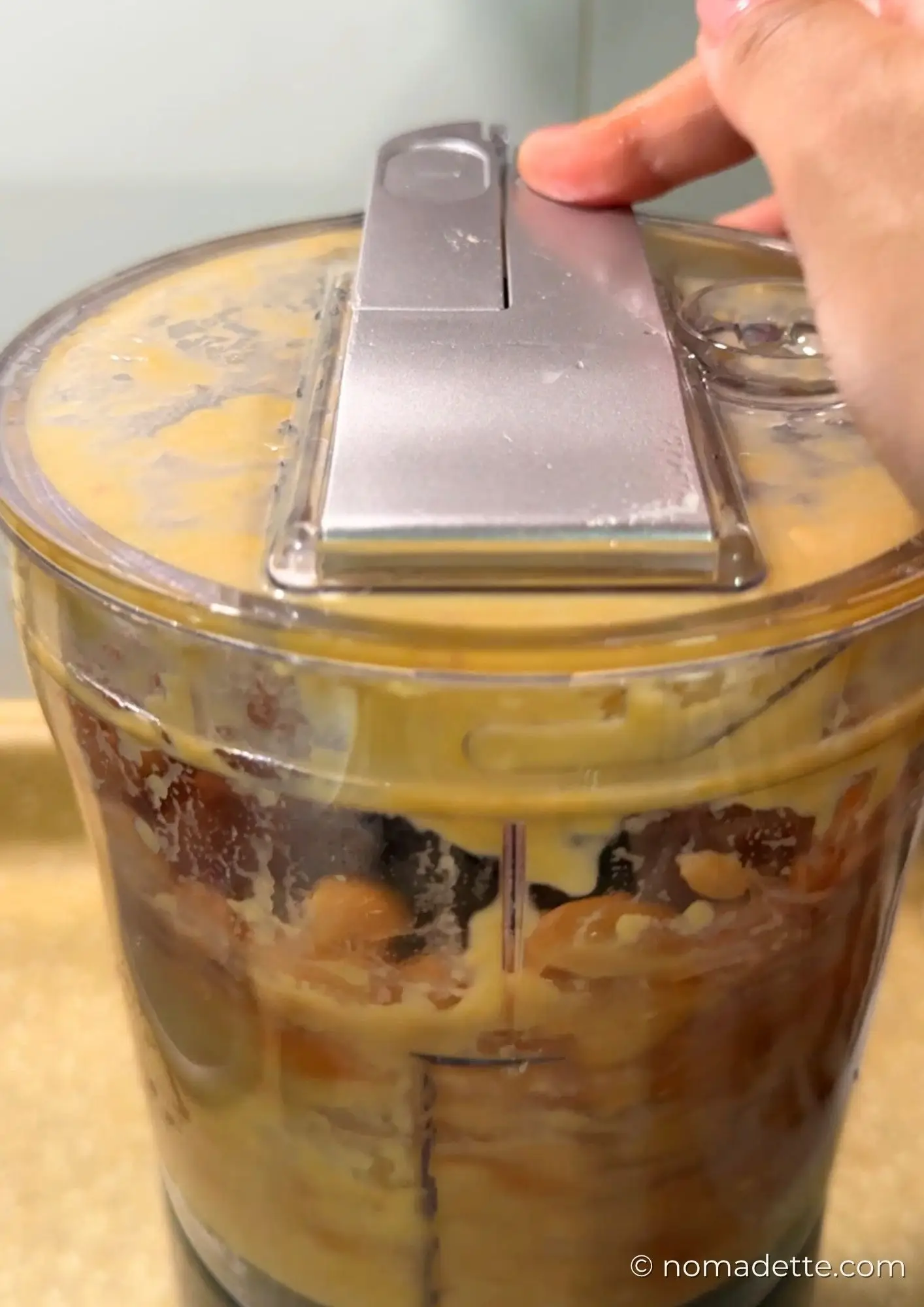
- Drain and rinse the canned fava beans before adding to blender or food processor. Rinsing removes the canning liquid and helps keep the flavour clean.
- Blend or process them with a splash of water. You can blend until completely smooth for a creamy texture or leave some chunks for more texture.
- If it’s not blending smoothly, gradually add water.
2. Build the Flavour Base
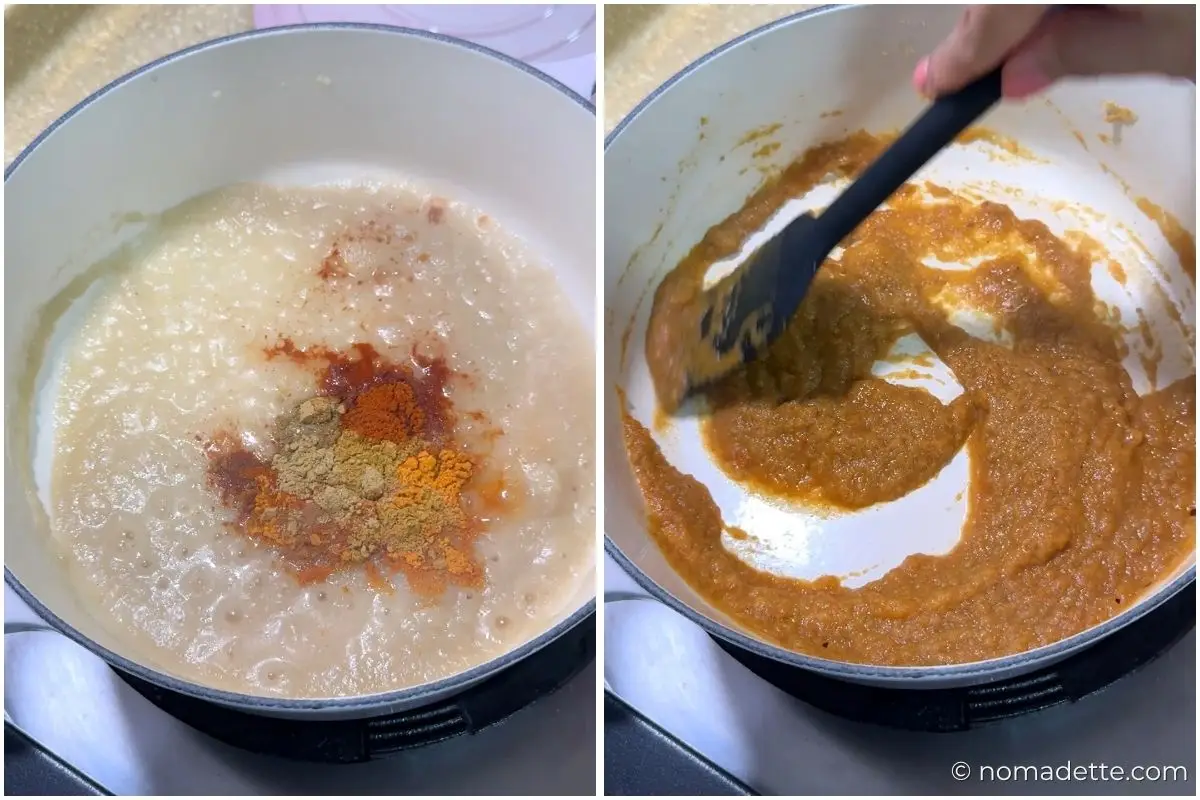
- Blend the onion, garlic, and ginger into a paste.
- Sauté the paste with oil and ghee until fragrant. The neutral oil is optional – ghee can have a strong flavour, this helps to keep it milder.
- This step is important because slowly cooking the aromatics removes their raw taste and creates a deeper, sweeter flavour base.
- Add the ground spices and stir with the aromatics paste. Cook briefly until fragrant.
- Cooking the spices in oil blooms the spices and helps release their aroma and creates a much more flavourful kacang pool.
3. Add the Mince
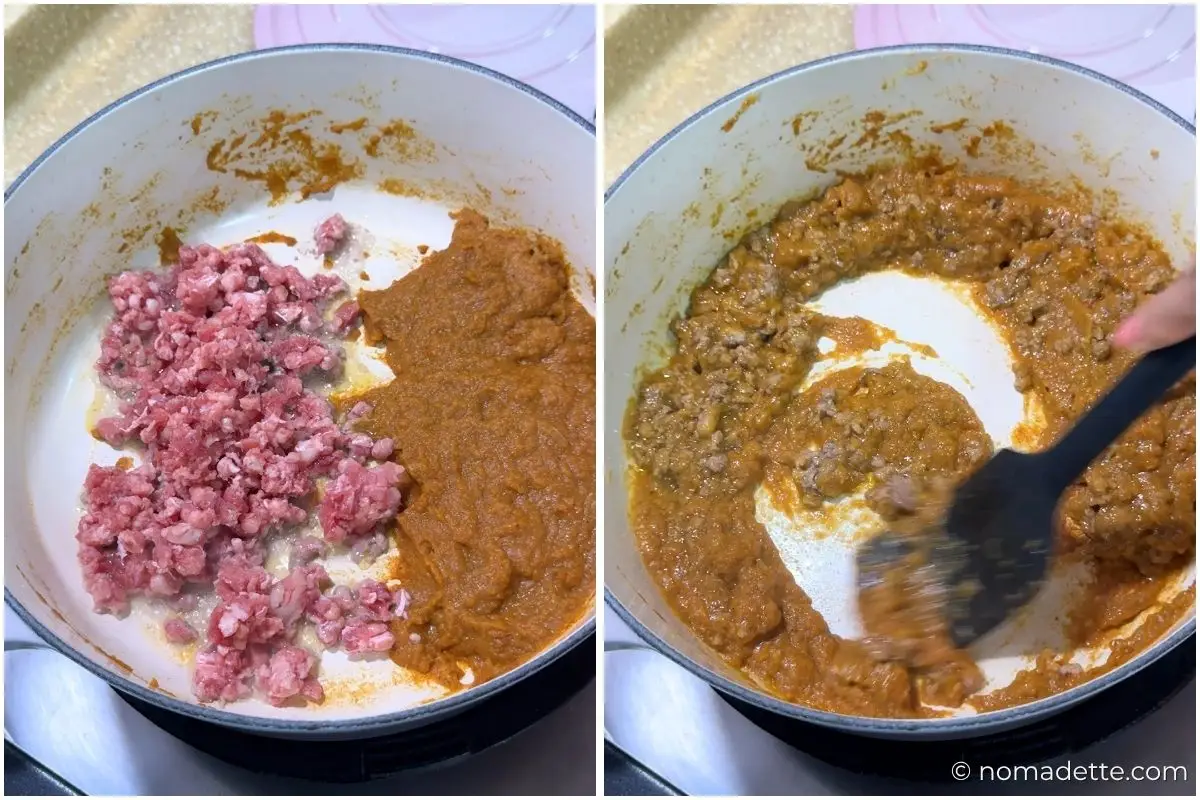
- Add the minced beef and stir to combine with the spices.
- Cook for 3–5 minutes until the beef is browned and cooked through. If the beef released liquid, cook it off before proceeding with the recipe.
4. Add the Beans
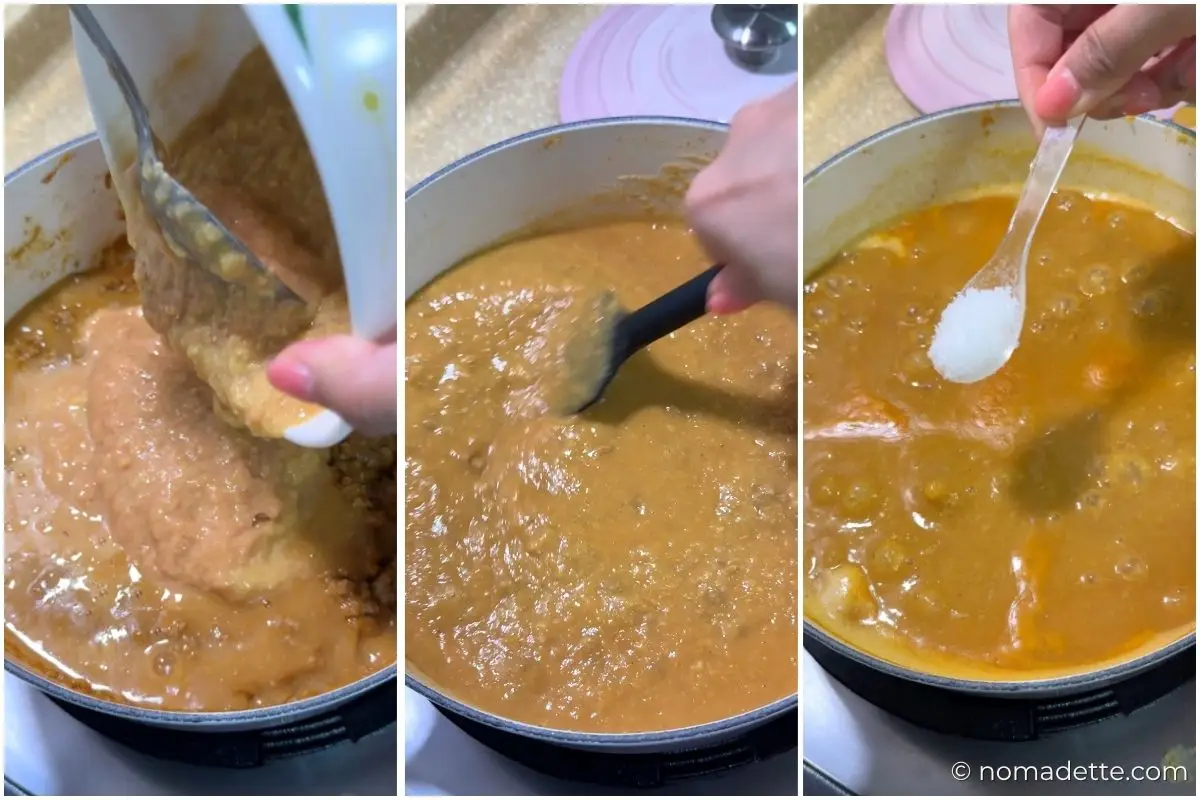
- Add the blended fava beans and stir well to combine with the spiced beef mixture.
- Add 1 to 1.5 cups of water, depending on your preferred consistency.
NOTE: Kacang pool should be thick and creamy, similar to a hearty bean stew. But if you prefer a more soupy consistency (like my mom does!), feel free to add more water.
- Bring the kacang pool to a gentle simmer.
- Cover and cook for 20–30 minutes, stirring occasionally, to allow the flavours to develop and the mixture to thicken.
- Keep the heat low, as it may splatter easily, especially as it thickens further.
- Taste and adjust seasoning. Start with 1 teaspoon salt, then add more if needed.
5. Serve
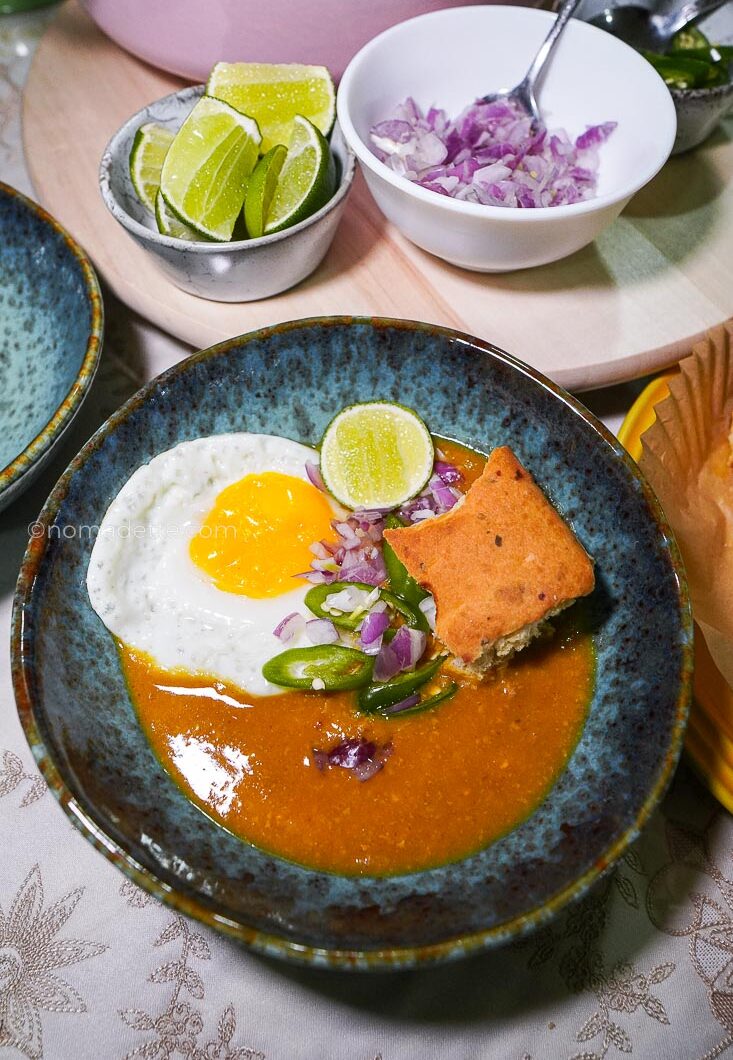
- Kacang pool is not complete without its toppings! The creamy, spiced beans are delicious on their own, but the toppings are what truly bring the dish together.
- Serve hot with toasted bread for dipping, a fried egg on top, chopped raw onions, green chillies, fresh cilantro, and plenty of lime juice. Don’t skip the lime — it’s what ties all the flavours together!
How to Serve Kacang Pool
Kacang pool is traditionally served as a hearty breakfast, with the toppings adding different layers of flavour and texture to the dish.
The best part about kacang pool is that everyone can customise their own bowl. My favourite way to serve it is:
- Toasted bread – the essential companion for scooping up the creamy beans and soaking up all the delicious sauce! A crusty baguette works especially well, find my recipe for it, if you want to make your own! Alternatively, I’ve also used frozen pratas and capatis.
- Fried egg – adds richness and extra protein, with the runny yolk mixing beautifully into the spiced beans. Oh yum! If you want to keep the oil levels down, top with an onsen or half boiled egg instead.
- Raw chopped onions – adds a fresh crunch and a sharp bite that cuts through the richness.
- Green chillies – for a fresh, mildly spicy kick. Medium green chillies will give a mild heat, but I like to use green cili padi for that truly spicy kick!
- Fresh cilantro/coriander – adds herby brightness and freshness.
- Lime juice – the finishing touch that ties everything together. If anything do not skip the lime juice! The acidity balances the earthy beans and warming spices.
High Protein Upgrade: Kacang Pool
Good news: Kacang pool is already naturally a protein-rich meal thanks to the combination of fava beans and beef.
To make this an even more satisfying high-protein breakfast:
Tips and Tricks
Storing and Reheating
How to store kacang pool
- Allow the kacang pool to cool completely before transferring it to an airtight container.
- Store in the refrigerator for up to 4 days.
Can you freeze kacang pool?
- Yes! Kacang pool freezes well.
- Freeze in individual portions for up to 3 months. Thaw overnight in the refrigerator before reheating.
How to reheat kacang pool
- Reheat gently on the stovetop over medium heat, adding a splash of water if the mixture has thickened too much.
- You can also microwave it in short intervals, stirring between each interval until heated through.
More Recipes Like this
Kacang Pool
4
servings15
minutes30
minutesCreamy, comforting, and packed with flavour! How to make authentic Kacang Pool at home easily with creamy fava beans, mince, warming spices and all the classic toppings.
Keep the screen of your device on
Ingredients
- For the Kacang Pool
2 cans (about 800g total) fava beans / foul medames, drained and rinsed
200 g minced beef
1 tbsp ghee or butter
1 tsp neutral oil (optional)
- Aromatics
1 large onion, peeled and roughly chopped
4 cloves garlic, peeled
2 inch (5cm) ginger, peeled and roughly chopped
- Spice Blend
1 tsp ground cumin
1 tsp ground coriander
1 tsp ground fennel
1 tbsp curry powder
1 tsp turmeric powder
1 tsp chilli powder (optional, adjust to taste)
1 tsp ground black pepper
1 tsp salt, plus more to taste
- To Serve
Fried eggs
Finely chopped raw onions
Green chillies
Lime wedges
Fresh cilantro/coriander
Directions
- Prepare the Beans
- Drain and rinse the fava beans well to remove the canning liquid.
- Add the beans to a blender with ½ cup (120ml) water. Blend until smooth, or leave slightly chunky if you prefer more texture.
- Set aside.
- Make the Aromatic Paste
- Add the onion, garlic, and ginger to a blender with a splash of water. Blend until it forms a smooth paste.
- Sauté the Aromatics
- Heat oil and ghee in a pot over medium heat.
- Add the blended onion, garlic, and ginger paste. Cook for 5–7 minutes, stirring occasionally, until the paste is fragrant and the onion has softened.
- Add the ground cumin, ground coriander, ground fennel, curry powder, chilli powder, turmeric powder (if using), and black pepper. Stir and cook for 30–60 seconds until the spices are fragrant.
- Cook the Beef
- Add the minced beef and stir to combine with the spices.
- Cook for 3–5 minutes until the beef is browned and cooked through.
- Add the Beans
- Add the blended fava beans and stir well to combine with the spiced beef mixture.
- Add ½–1 cup (120–240ml) water, depending on your preferred consistency. Kacang pool should be thick and creamy, similar to a hearty bean stew.
- Bring the kacang pool to a gentle simmer. Cover and cook for 20–30 minutes, stirring occasionally, to allow the flavours to develop and the mixture to thicken.
- Taste and adjust seasoning. Start with 1 teaspoon salt, then add more if needed.
- Serve
- Serve hot with toasted bread, fried eggs, chopped raw onions, green chillies, fresh cilantro, and plenty of lime juice.
Did you make this recipe?
Tag @nomadetteats on Instagram