
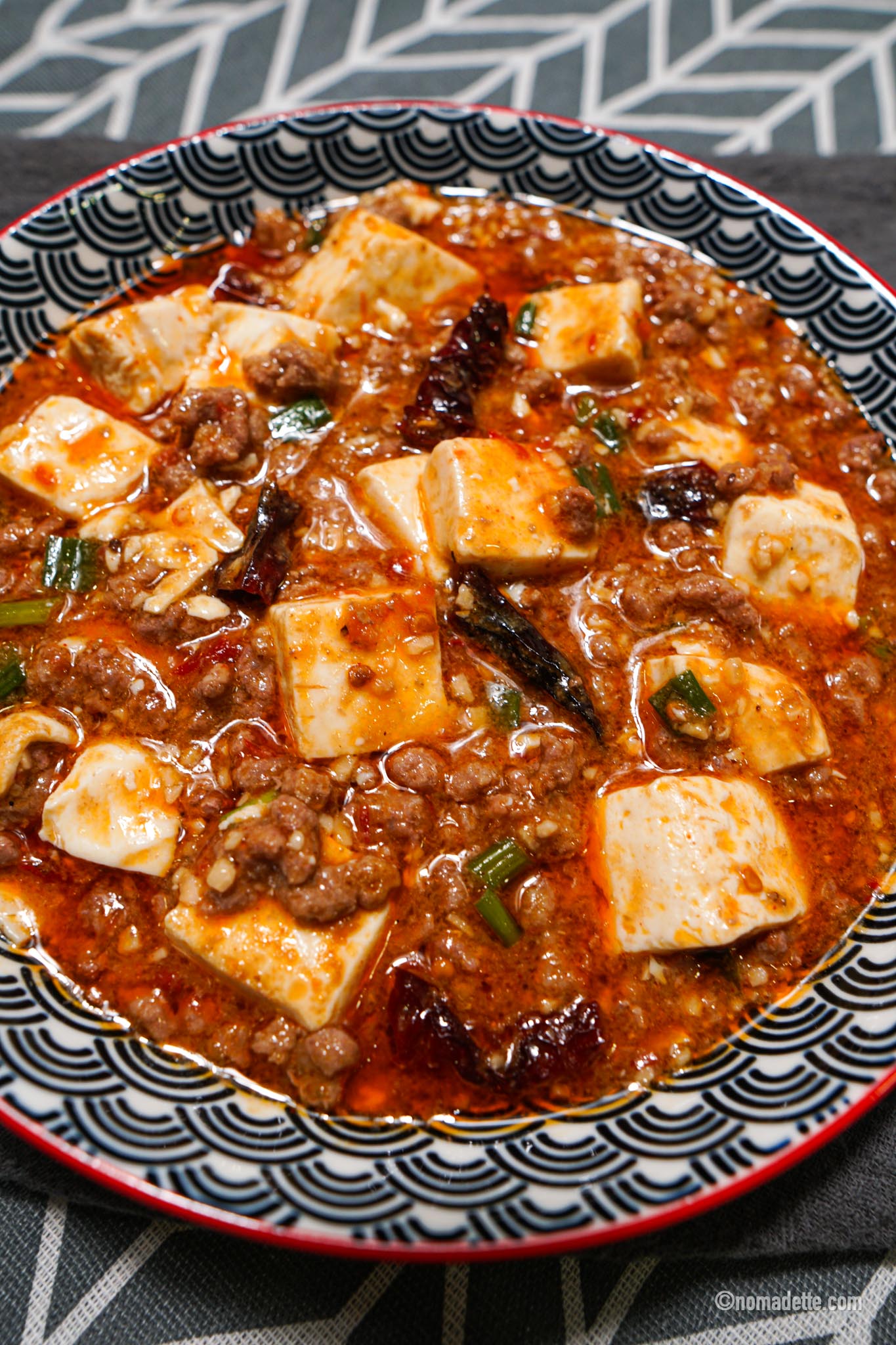
One of my favourite weeknight meals! This 30-Minute Mapo Tofu features a rich savoury meaty sauce and tender tofu that soaks up every bite. Quick, comforting, and surprisingly easy to make at home.
Intro
One of my weeknight favourites: Mapo Tofu!
Mapo Tofu is not a typical Chinese-Singaporean dish, but I make it very often at home. I love it for its bold, spicy, and savoury flavours… especially the incredibly satisfying sauce that is made for spooning over a bowl of fluffy steamed rice. Serve it with rice, and you’ll understand why this has become one of my go-to meals! The best part? It’s deceptively easy to make.
This Sichuan-Chinese dish is made with soft tofu, minced beef, and a flavour-packed spicy-savoury sauce. The silky tofu soaks up all that delicious gravy, so every bite is rich, comforting, incredibly satisfying if you love a good saucy dish as much as I do! *salivates*
This Mapo Tofu is such a satisfying weeknight wonder that it earned a spot in my 30-minute meal cookbook, Effortless Asian Cooking! Packed with bold flavours and ready in just 30 minutes, it’s exactly the kind of easy, delicious recipe I love cooking at home.
It’s also a naturally high-protein meal thanks to the combination of tofu and minced beef. It’s a filling, satisfying weeknight dinner that doesn’t require hours in the kitchen. This Mapo Tofu comes together in just 30 minutes!
I’ve also included ingredient alternatives and substitutions, so you can make this no matter your pantry situation at home.
Why You’ll Love This Mapo Tofu Recipe
What Is Mapo Tofu?
Mapo Tofu (麻婆豆腐) is a classic Sichuan Chinese dish made with soft tofu, minced mat, and a spicy, savoury sauce.
The dish originated in Chengdu, and supposedly supposedly it was created and sold by a… “pockmarked granny” or Mapo. Today the dish is loved worldwide for its signature combination of spicy, savoury flavours, thank you Mapo!
It is known for its signature málà flavour, a combination of spicy heat from chillies and a numbing sensation from Sichuan peppercorns.
Traditionally, Mapo Tofu is made with soft tofu, minced meat, doubanjiang (Chinese fermented chilli bean paste), Sichuan peppercorns, and aromatics like garlic and ginger. The tofu is gently simmered in the sauce, allowing it to soak up all those bold flavours.
Today, there are many versions of Mapo Tofu, from restaurant-style versions to simple home-cooked ones. This is my version: an easy, weeknight-friendly Mapo Tofu that keeps the flavours I love while being simple enough to make at home.
Key Ingredients for Mapo Tofu
Soft Tofu
Soft or silken tofu is the best choice for Mapo Tofu. Its delicate texture soaks up the rich sauce and almost melts into the gravy, making every bite incredibly satisfying.
You can use firm tofu if that’s what you have, but I personally prefer soft tofu for the classic silky texture.
Minced Beef
Traditional Mapo Tofu is usually made with minced meat. I use minced beef in this recipe because it adds richness, flavour (no marinating needed!), and makes this dish a naturally high-protein meal.
You can swap this with other minced meats, depending on your preference.
Doubanjiang (Chinese Chilli Bean Paste)
Doubanjiang (豆瓣酱) is the key ingredient that gives Mapo Tofu its signature spicy, savoury flavour. It is a fermented chilli bean paste that adds a deep umami flavour to the sauce.
A little goes a long way, so don’t skip this ingredient if you want that classic Mapo Tofu taste.
Chilli Oil
Chilli oil adds extra depth, colour, and heat to the sauce. It helps create that beautiful red, flavourful gravy that is so good with rice. If you have homemade chilli oil, use it! Store-bought chilli oil works perfectly too.
Sichuan Peppercorns
I love adding Sichuan peppercorns to Mapo Tofu for that signature numbing sensation. Sichuan peppercorns are what give Mapo Tofu its signature numbing sensation, known as málà (麻辣). Unlike regular black pepper, Sichuan peppercorns have a unique citrusy aroma and a tingling sensation that balances the heat from the chillies.
If you’re new to Sichuan peppercorns, start with a smaller amount and adjust to your preference.
How to Toast Sichuan Peppercorns
- Add the peppercorns to a dry pan and toast over low heat, stirring or swirling occasionally to prevent burning.
- Once fragrant (you may hear some popping sounds and notice a slight sheen of oil on the surface), they’re ready.
- Grind the toasted peppercorns using a spice grinder or pestle and mortar. Toasting first makes them more fragrant and easier to grind.
Aromatics
- Simple pantry-staple aromatics like ginger, garlic, dried chillies, and spring onions build the flavour base of the dish. They may seem like small additions, but they make a huge difference in creating a deeply flavourful sauce.
- I also like to add dried red chillies, they provide a deep, smoky heat. Whenever I’m extra busy (or lazy), I’d skip the dried chillies and the oil-infusion step altogether. Feel free to omit.
Gravy
- Stock or Water: Broth adds depth of flavour, but water works too.
- Cornstarch Slurry: Thickens the sauce to coat the tofu perfectly. Make extra cornstarch slurry on the side to adjust the thickness consistency to your liking.
Ingredient Substitutions
One of my favourite things about Mapo Tofu is how adaptable it is. While there are a few key ingredients that give the dish its signature flavour, there are also plenty of ways to make it work with what you already have in your pantry.
No Doubanjiang? Here Are Some Alternatives
- Taucheo (fermented salted soybeans): This is my favourite pantry swap! I use it in my Mee Siam Goreng and Mee Rebus. If you’re in Singapore, chances are you might already have taucheo at home. It provides that same fermented bean umami that doubanjiang brings to the dish. To use taucheo, mash it into a paste before adding it to the sauce. Since taucheo is not spicy, add extra chilli oil to bring back the heat.
- Gochujang: Gochujang works surprisingly well as a substitute for doubanjiang. It won’t taste exactly like traditional Mapo Tofu, but it creates a delicious Korean-inspired twist with a slightly sweeter, deeper chilli flavour.
- Sambal: This has actually become my go-to lately! I always have sambal in my fridge, but I don’t always have doubanjiang stocked in my pantry. For the closest flavour match, mix sambal with taucheo to add that fermented bean umami. That said, I’ve also made plenty of “sambal Mapo Tofu” using just sambal, and honestly? It still turns out delicious. It’s not traditional, but it’s a great shortcut when you want a quick, flavourful meal.
Sichuan Peppercorns
Unfortunately not replaceable with any other ingredients! If you can’t find it, simply skip.
Alternatively, use ready-made ground sichuan peppercorn. They lose intensity quickly however, so best to use them as soon as possible.
There are also sichuan peppercorn oil available. These are a better option than the ready-ground versions.
Sichuan Peppercorn Substitutions
Unfortunately, there isn’t a true substitute for Sichuan peppercorns. They have such a unique citrusy aroma and numbing sensation (má).
If you can’t find Sichuan peppercorns, simply leave them out. The dish will still be delicious, although you’ll miss that characteristic numbing heat.
Alternatively, you can use ready-ground Sichuan peppercorns or Sichuan peppercorn powder for convenience. However, they lose their aroma and intensity quite quickly once ground, so try to use them as soon as possible.
A better option is Sichuan peppercorn oil. I actually prefer this over pre-ground Sichuan peppercorns because it keeps the flavour and aroma better.
Protein Substitutions
- Other mince meat of choice: For a leaner option, you can swap the minced beef with your mince of choice such as the classic pork, or minced chicken or turkey to keep things halal. If not using beef, I recommend marinating the meat first with a simple combination of soy sauce and ground pepper before cooking to add extra flavour, and alleviate ‘fishy’ raw flavours.
- Firm Tofu: You can use plant-based mince as well of course, but I prefer firm tofu — simply crumble it into small pieces and cook it like you would the minced meat. It adds extra texture while keeping the dish completely plant-based.
- Shiitake Mushrooms: Finely minced shiitake mushrooms add a lovely savoury, meaty texture to the dish.
Key Steps to Making Mapo Tofu
1. Sauté the Aromatics
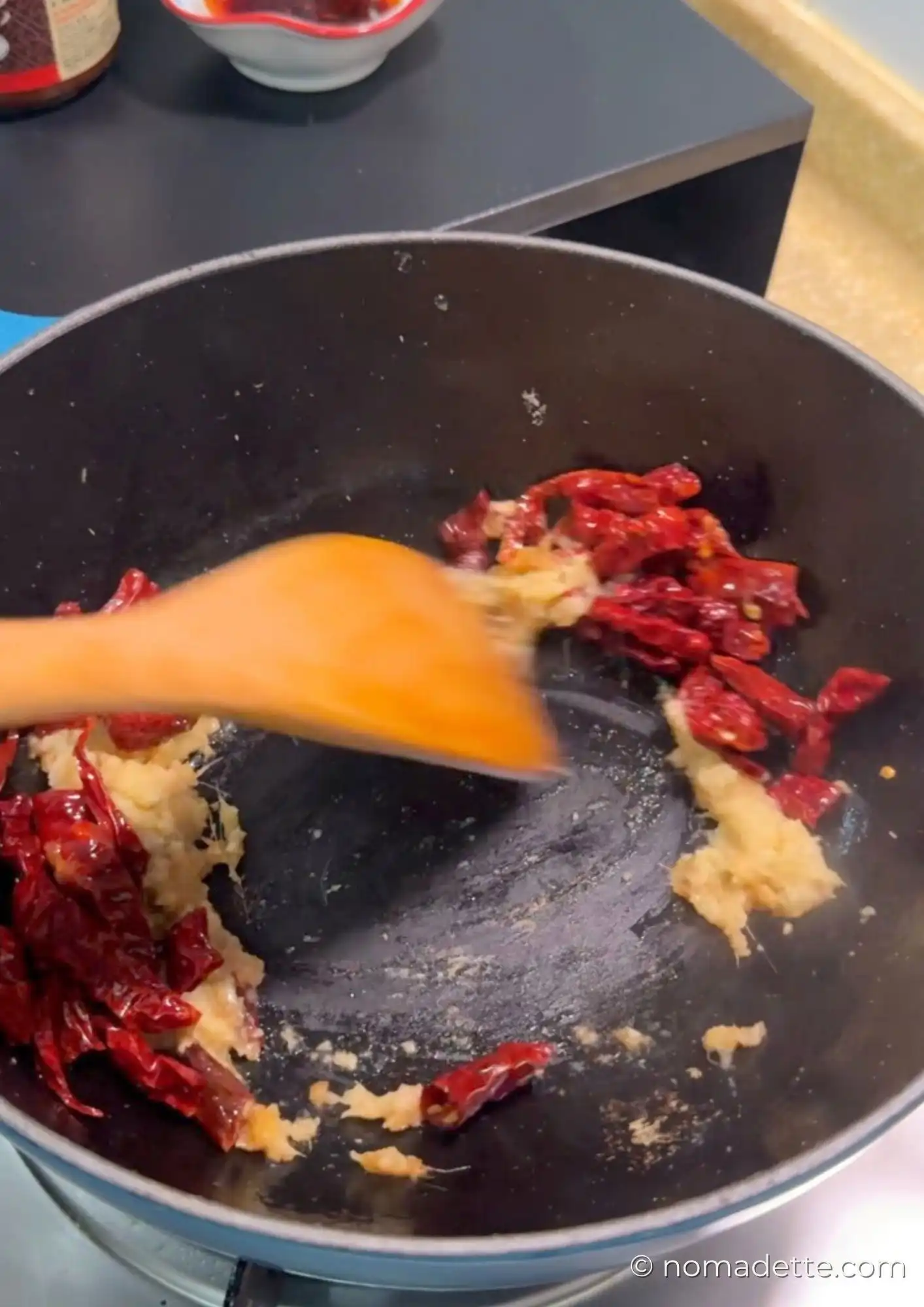
- Heat the vegetable oil in a pan over medium heat.
- Add the ginger, garlic, and dried chillies. Sauté until fragrant, about 1 minute, being careful not to burn the chillies.
2. Cook the Minced Meat
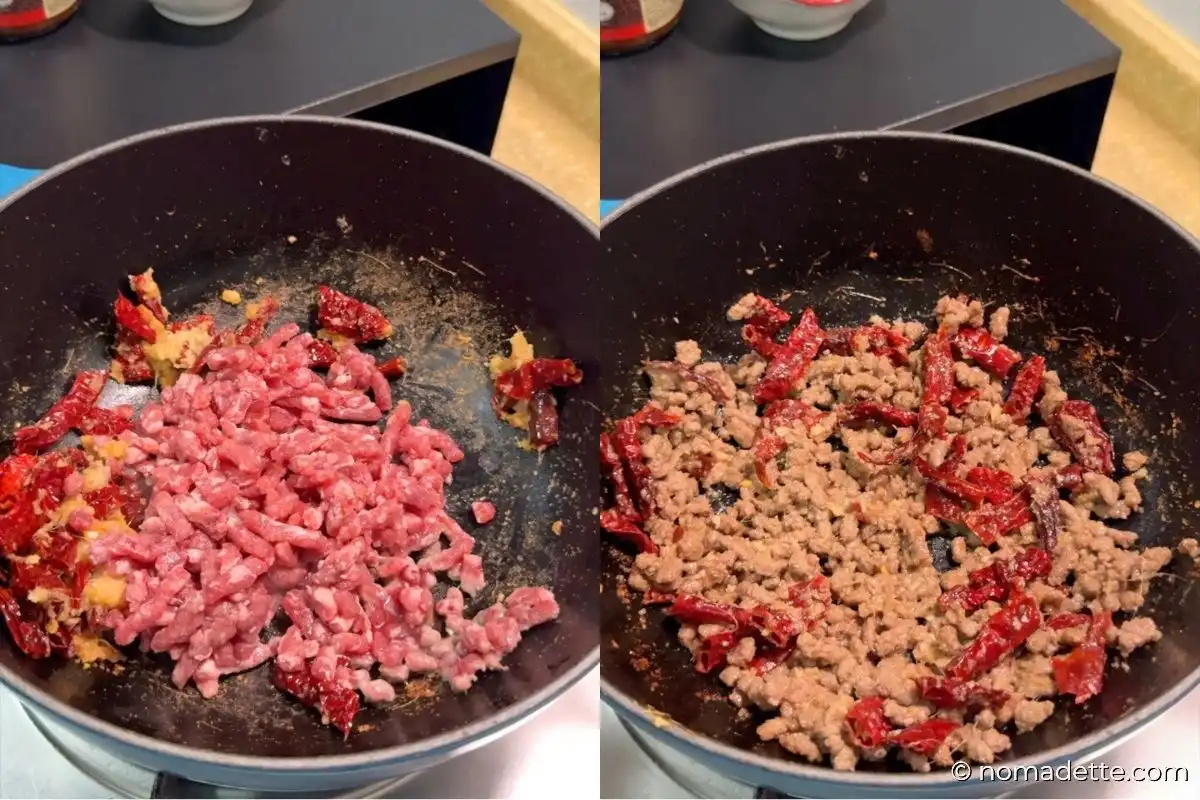
- Add the minced beef (or mince of choice) and stir-fry with the aromatics, breaking it apart with a spatula, until fully cooked, about 2–3 minutes.
- Stir-fry until browned and fully cooked.
3. Build the Flavors
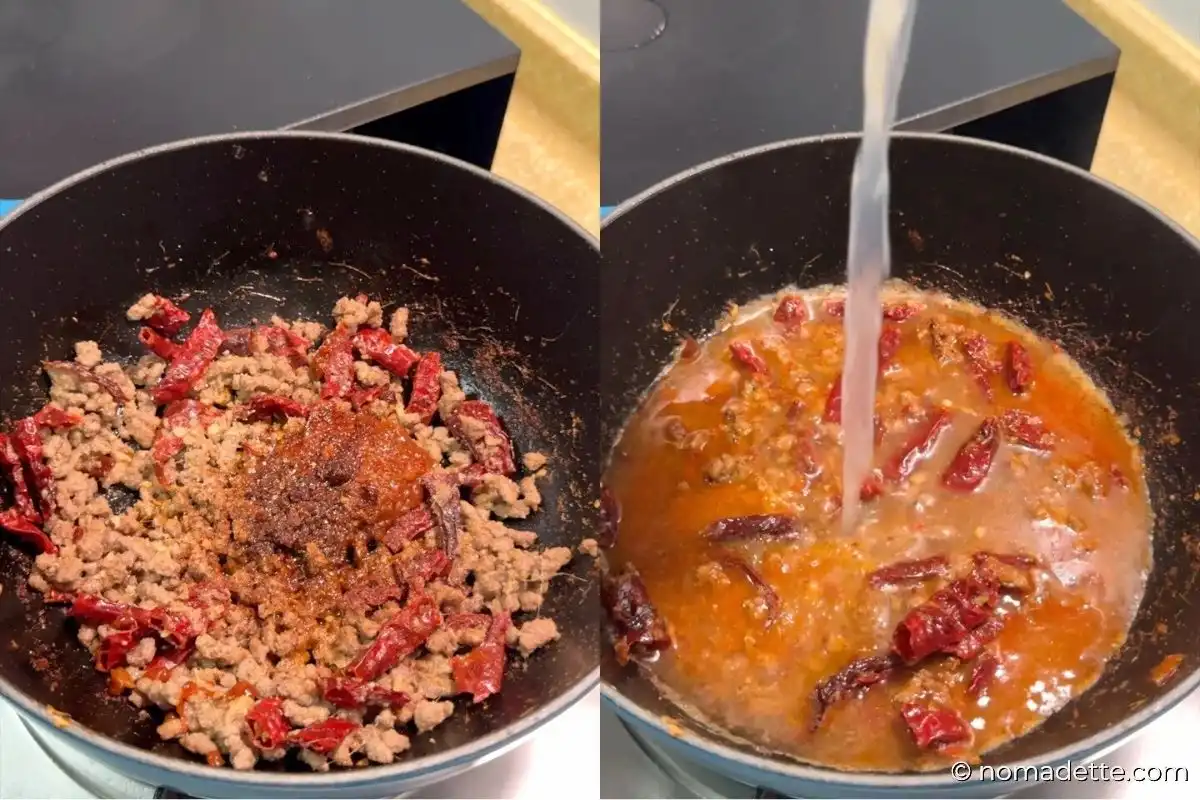
- Add the doubanjiang (or alternative paste of choice), chilli oil, light soy sauce, sugar, five spice powder, and Sichuan peppercorns (if using).
- Stir-fry for about 30 seconds to combine and release the flavours.
- Pour in chicken stock or water and mix well.
4. Add the Tofu
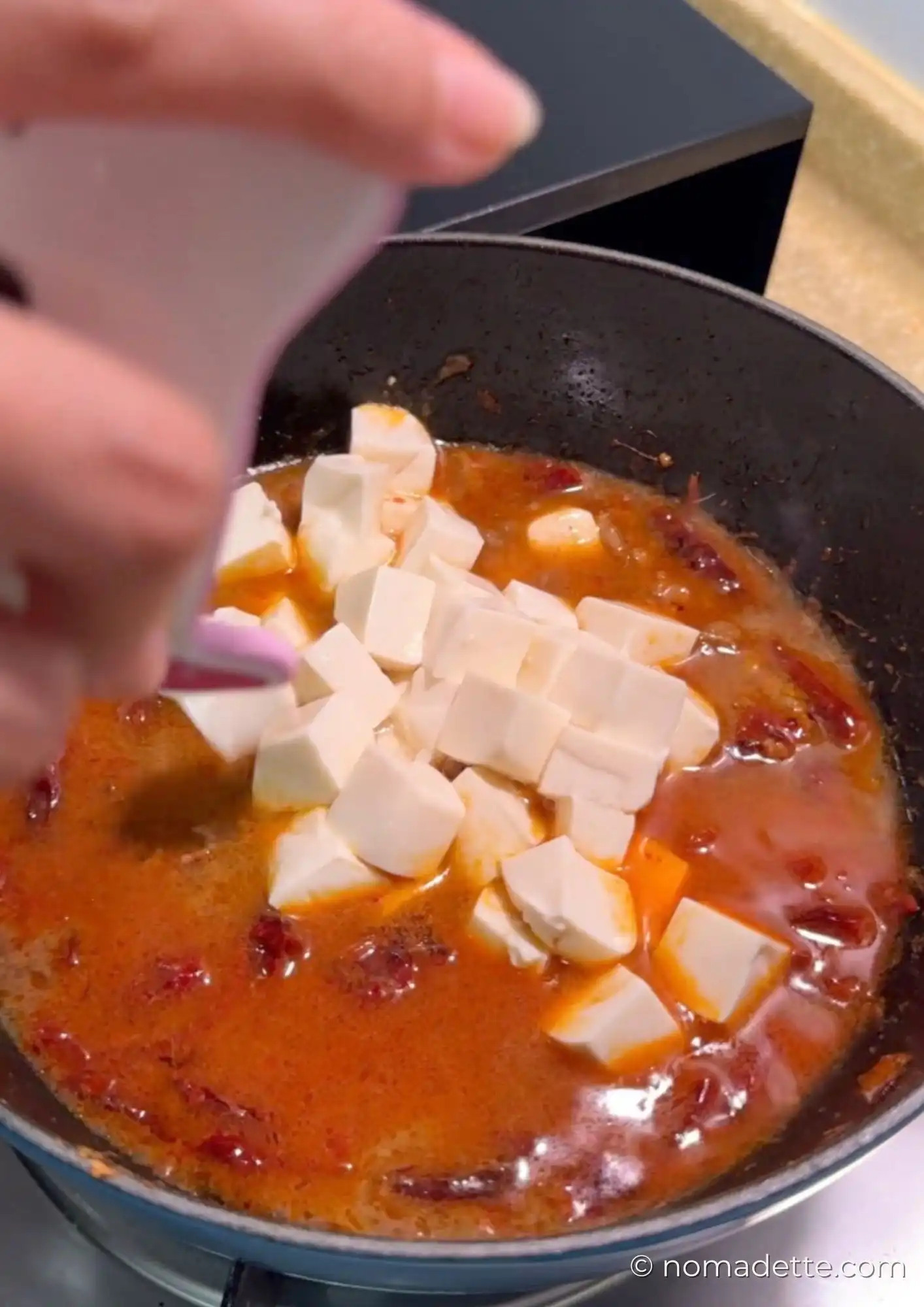
- Cut silken or soft tofu into cubes.
- Gently add to the pan, stirring carefully to avoid breaking.
- Let the sauce come up to a boil and let simmer for a few more minutes to absorb flavors.
5. Thicken the Sauce
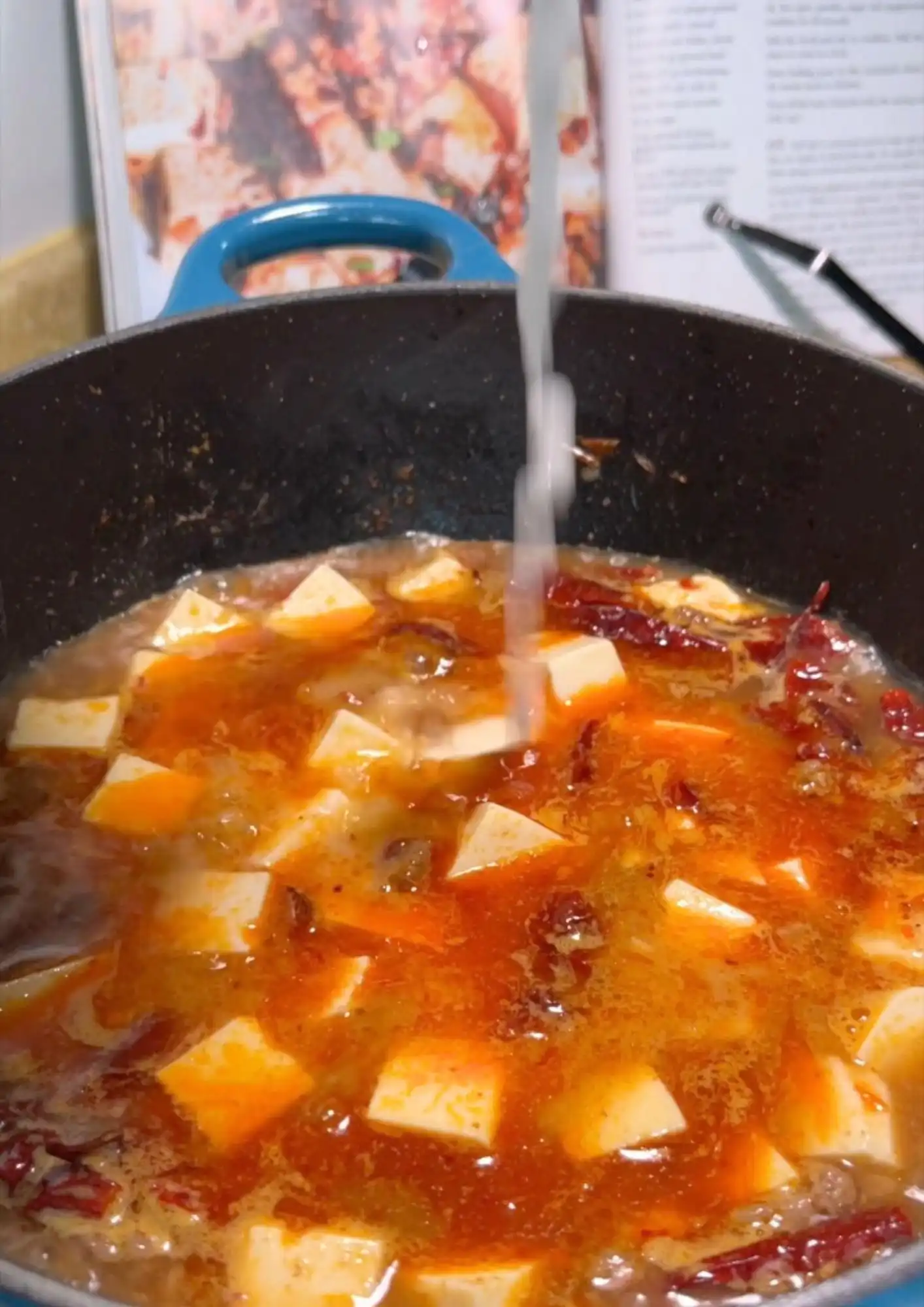
- Mix cornstarch with water to make a slurry in a small bowl.
- Pour in the cornstarch slurry. If you’ve prepared it beforehand, give a quick stir to combine again if it has separated.
- Gently stir and allow the sauce to thicken until it becomes glossy and coats the tofu.
7. Finish and Serve
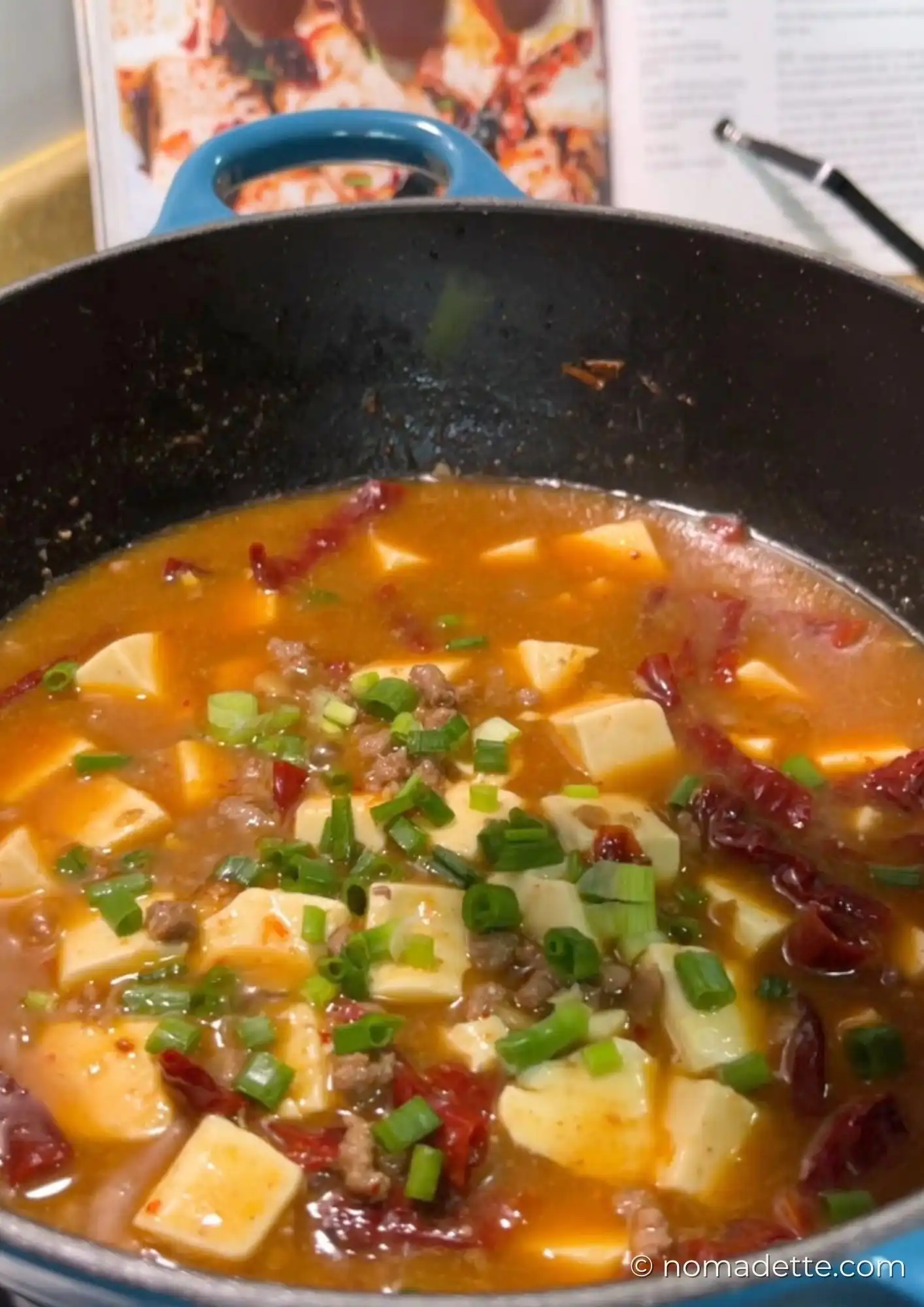
- Taste test sauce. Adjust with light soy sauce or salt, if needed. If it’s too salty, stir in water. Doubanjiang and chili oils have varying saltiness across brands.
- Turn off heat and garnish with chopped spring onions.
- Serve hot with steamed rice and enjoy!
How to Serve Mapo Tofu
Mapo Tofu is best served hot with a generous bowl of steamed rice. The spicy, savoury sauce is made for soaking into fluffy rice!
For a complete meal, I like to serve it with simple sides to balance the bold flavours:
- Steamed vegetables or stir fry – Simple greens like bok choy, broccoli, or Chinese cabbage work beautifully.
- A fried egg – The creamy yolk adds richness and makes this even more satisfying.
- Spicy Cold Smashed Cucumber Salad – A refreshing, crunchy side helps balance the spicy sauce.
- Other Chinese-style dishes – Serve it as part of a larger meal with stir-fries, soups, or other small dishes.
And of course… don’t forget extra rice!
Serving Size
This Mapo Tofu recipe makes 2-3 servings when served with steamed rice and other side dishes, making it a great family-style meal.
If you’re serving this as the main dish with rice only, you may prefer a larger portion or pair it with additional vegetables or protein-rich sides to make it a more filling meal.
The High Protein Upgrade: Mapo Tofu
Mapo Tofu is already a naturally protein-rich dish thanks to the combination of soft tofu and minced beef.
Nutrition estimates will vary depending on the brand of tofu and the type of minced beef used. For reference:
- 300g soft tofu = ~15–21 g of protein
- 150g minced beef = ~30–35 g of protein.
This recipe is written as a family-style dish that serves 2-3 people, especially when served with steamed rice and other side dishes. If you’re enjoying this as a main meal for 2 people, the recipe portion is enough to provide approximately 25g protein per serving.
If you’re looking to increase the protein content even further, here are a few easy upgrades:
- Add more minced beef: The easiest way to increase the protein is simply to add more minced beef. You can increase the amount while keeping the sauce ingredients the same for a meatier, higher-protein version.
- Add more tofu: Tofu is already a great source of plant-based protein. Add extra tofu for a larger portion, or mix in crumbled firm tofu for more texture and protein.
- Add an egg: A fried egg on top is one of my favourite ways to turn this into an even more satisfying rice bowl. The runny yolk mixed with the spicy, savoury Mapo sauce is so good! Onsen egg or omelette on the side works beautifully as well.
- Add a protein-rich side: Serve your Mapo Tofu with edamame, steamed vegetables, or another protein-rich side dish to make it a more complete meal.
Tips & Tricks
Storing & Reheating
Storage
- Fridge: Store leftovers in an airtight container for up to 3 days.
- Freezer: Not recommended, as tofu changes texture when frozen.
Reheating
- Stovetop: Heat in a pan over low heat with a splash of water or stock, stirring gently.
- Microwave: Heat in short bursts, stirring in between, to prevent overcooking.
Watch How to Make Mapo Tofu!
A quick note: this is an older method I used when I first started making Mapo Tofu. I don’t make it this way anymore. This recipe has been updated to cut out extra steps, making it even easier and more efficient.
The recipe video below is an older version, but it’s still delicious and works well. If you’d like to try this older method, you can watch the video here:
More Recipes Like This
If you like this recipe, you might enjoy these too:
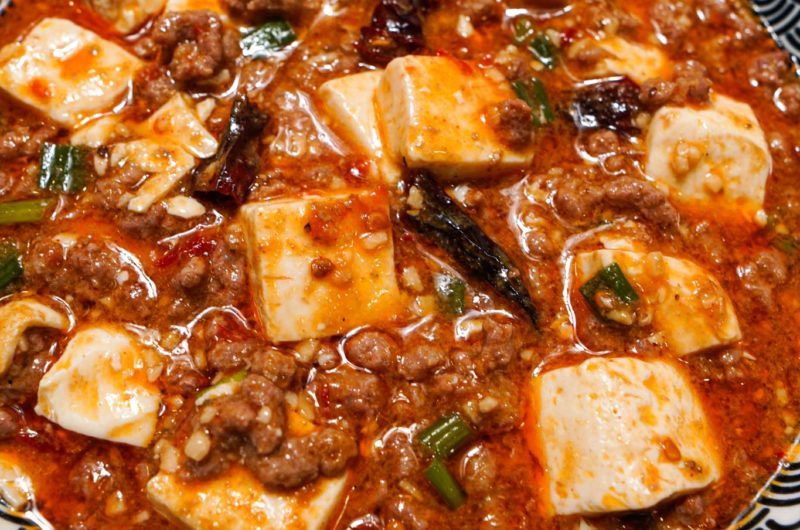
Mapo Tofu
3
servings10
minutes20
minutesA bold and flavorful Sichuan classic—soft tofu braised in a spicy, savory minced meat gravy.
Keep the screen of your device on
Ingredients
- Mapo Tofu
300 g (10 oz) soft tofu, cubed
1 tbsp neutral or vegetable oil
½ inch (1 cm) ginger, grated
2 cloves garlic, minced
3 –4 dried red chillies, sliced (optional)
150 g minced beef (or mince protein of choice)
1 tbsp doubanjiang
1 tbsp chilli oil
1 tsp light soy sauce (to taste)
0.5 tsp sugar
1 tsp ground Sichuan peppercorns (optional)
0.5 tsp Chinese five spice powder (optional)
1 cup low-sodium chicken stock (or water)
cornstarch slurry: mix 2 tsps cornstarch + 60ml water
2 tbsp spring onions, chopped
- To Serve
Steamed rice
Directions
- Saute the aromatics
- Heat neutral oil in a pan over medium heat.
- Add the ginger, garlic, and dried chillies. Sauté until fragrant, about 1 minute, being careful not to burn the chillies.
- Cook the beef and seasonings
- Add the minced beef (or mince of choice) and stir-fry, breaking it apart with a spatula, until fully cooked, about 2–3 minutes.
- Add the doubanjiang, chilli oil, light soy sauce, sugar, five spice powder, and ground Sichuan peppercorns (if using). Stir-fry for about 30 seconds to combine and release the flavours.
- Simmer with tofu
- Pour in the chicken stock (or water) and stir to combine.
- Gently add the tofu cubes. Stir gently to incorporate into the sauce.
- Bring the sauce to a boil.
- Thicken the sauce
- In a small bowl, mix the cornstarch with water to create a slurry. Pour in the cornstarch slurry. If you’ve prepared it beforehand, give a quick stir to combine again if it has separated.
- Gently stir and allow the sauce to thicken until it becomes glossy and coats the tofu.
- Taste test sauce. Adjust with light soy sauce or salt, if needed. If too salty, stir in water.
- Finish and serve
- Turn off the heat and garnish with spring onions. Serve immediately with steamed rice.
Notes
- Low sodium or unsalted chicken stock preferred. If using boxed chicken stock, adjust soy sauce levels, or add more water to dilute the saltiness.
- Be conservative with light soy sauce, and add more as needed at the tasting stage. You may not need additional, depending on the saltiness of the doubanjiang and chilli oil.
Did you make this recipe?
Tag @nomadetteats on Instagram